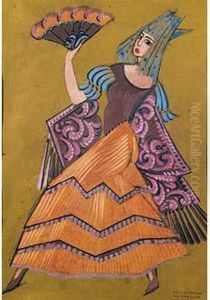
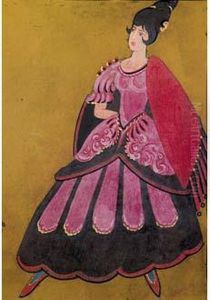
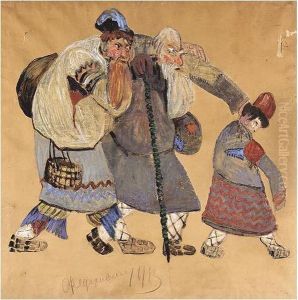
Fedor Fyodorovich Fedorovski was a prominent Russian and Soviet scenographer, painter, and architect, whose career spanned the late Imperial and early Soviet periods. Born on October 16, 1883, in Moscow, Russia, Fedorovski was a key figure in the evolution of theatrical design in the 20th century, blending traditional elements with innovative techniques to create memorable stage environments. His work significantly contributed to the visual identity of Soviet ballet and opera, marking him as one of the era's defining artists in theater arts.
Fedorovski’s journey into the world of art and design began at the Moscow School of Painting, Sculpture, and Architecture, where he honed his skills and developed a keen eye for detail and composition. His early career was influenced by the vibrant cultural scene of Moscow and St. Petersburg, absorbing the nuances of Russian folklore, history, and classical art. This foundation would deeply influence his later work, which is characterized by its rich historical references and dramatic flair.
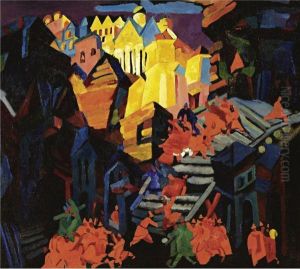
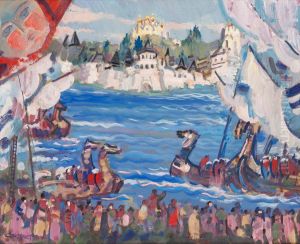
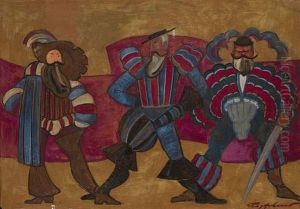
After the Russian Revolution, Fedorovski became actively involved with the burgeoning Soviet theater movement. He worked closely with the Bolshoi Theatre and was instrumental in the visual staging of many productions that sought to embody the ideals and aspirations of the new Soviet society. His designs often featured monumental sets that combined realism with fantastical elements, creating a unique blend that was both awe-inspiring and deeply symbolic. Fedorovski's ability to transform spaces into evocative landscapes made his work stand out, earning him a reputation as a master of his craft.
Throughout the 1920s and 1930s, Fedorovski's influence grew, and he became a central figure in Soviet cultural life. He collaborated with many of the period's leading figures in music and dance, including Sergei Prokofiev and Dmitri Shostakovich, contributing to some of the most significant performances of the time. His work not only reflected the aesthetic shifts occurring in Soviet art but also actively shaped the direction of Soviet stage design.
Fedor Fyodorovich Fedorovski's career was a testament to the power of visual art in storytelling and cultural expression. His legacy is preserved in the many productions he contributed to, as well as in the collections of Russian museums that house his sketches, models, and paintings. Fedorovski passed away on September 18, 1955, in Moscow, but his influence on the world of theatrical design continues to be felt today, serving as an inspiration for generations of designers and artists.