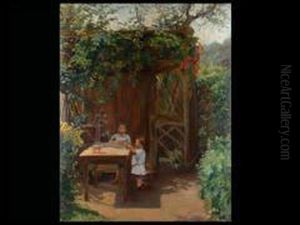
Hedwig Marcella Storck was a German artist known for her contributions to sculpture and painting during the late 19th and early 20th centuries. Born into a period of significant cultural and artistic evolution in Germany, Storck's work reflects the transitions and tensions of her time, navigating between traditional and modernist expressions. Despite the challenges faced by women artists in gaining recognition and opportunities in the male-dominated art world of her era, Storck carved a niche for herself through her distinctive style and thematic choices.
Storck received her artistic training at a time when women were beginning to assert their presence in art academies and circles previously exclusive to men. Her education was likely marked by the study of classical art forms, alongside an exposure to the burgeoning movements of modernism that were starting to take hold across Europe. She adeptly incorporated these influences into her work, which features both the figurative elements characteristic of the academies and the emergent styles of expressionism and symbolism.
Throughout her career, Hedwig Marcella Storck's subject matter frequently explored themes of femininity, nature, and mythology, imbuing her sculptures and paintings with a sense of introspection and depth. Her ability to blend sensitivity with strength in her depictions of both human and natural forms won her acclaim in artistic circles, albeit within the constraints of her time's societal expectations for women.
Storck's legacy is reflective of the broader challenges and achievements of women artists in the late 19th and early 20th centuries. Despite the limited documentation and recognition of her work in comparison to her male counterparts, her contributions offer valuable insights into the roles and representations of women in the arts during a pivotal period of transition. Hedwig Marcella Storck remains an important figure for art historians who seek to understand the nuanced dynamics of gender, creativity, and expression in the context of European art history.