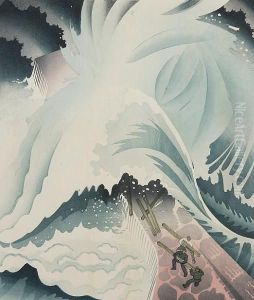
Ian Alec Johnson Cheyne was a Scottish artist renowned for his diverse artistic talents, which spanned painting, etching, and wood engraving. Born on September 5, 1895, in Aberdeen, Scotland, Cheyne showed an early interest in art, which led him to pursue formal education in the field. His artistic journey began at Gray's School of Art in Aberdeen and continued at the Royal Scottish Academy, where he honed his skills and developed a distinctive style that would later define his career.
Throughout his life, Cheyne was deeply influenced by the Scottish landscape, its rugged coastlines, and the vibrant cultural life of the early 20th century. These elements frequently appeared in his works, imbuing them with a sense of place and emotional depth. His ability to capture the essence of Scotland's natural beauty and its quaint villages earned him considerable acclaim.
Cheyne's contributions to the art world were not confined to his paintings. He was also a skilled printmaker, a craft he dedicated much of his career to perfecting. His etchings and wood engravings were celebrated for their intricate detail and technical proficiency, qualities that made his prints highly sought after by collectors and galleries alike.
Beyond his artistic achievements, Ian Alec Johnson Cheyne played a significant role in the Scottish art community. He was an active member of several art societies, including the Royal Scottish Academy and the Royal Society of Painter-Etchers and Engravers. Through these affiliations, he contributed to the development of the arts in Scotland, mentoring younger artists and participating in numerous exhibitions.
Cheyne's work continued to evolve until his death on December 24, 1955. Today, his legacy lives on through his contributions to Scottish art and his influence on the generations of artists who followed. His paintings and prints remain a testament to his love for Scotland and his mastery of his craft, marking him as a significant figure in the history of Scottish art.