Tomislav Krizman was a prominent Croatian painter, graphic artist, and educator, whose work significantly contributed to the development of modern art in Croatia in the first half of the 20th century. Born on August 1, 1882, in Hum na Sutli, then part of the Austro-Hungarian Empire, Krizman's early life was marked by his exposure to the rich cultural and historical tapestry of Central Europe, which would later influence his diverse artistic output.
Krizman's artistic education began at the School of Arts and Crafts in Zagreb, where he honed his skills in drawing and painting. He furthered his studies in Vienna and Munich, two cities that were vibrant centers of artistic innovation at the time. These experiences exposed him to various art movements, including Secessionism, Expressionism, and early forms of abstract art, all of which would leave a lasting imprint on his work.
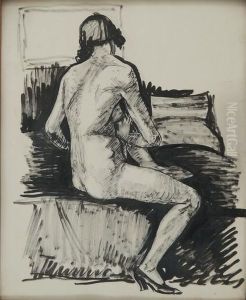
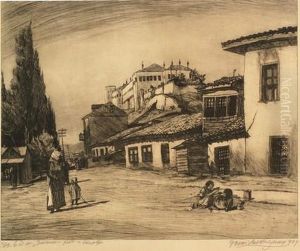
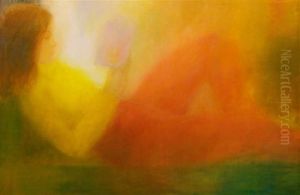
Throughout his career, Krizman was known for his versatility, mastering a wide range of mediums including oil painting, watercolor, drawing, and printmaking. His subject matter was equally diverse, encompassing landscapes, portraits, urban scenes, and later, more abstract compositions. Krizman's style evolved over the years, reflecting the dynamic changes in European art during his lifetime. Initially influenced by Impressionism and the Secessionist movement, his work gradually shifted towards Expressionism and abstraction, particularly evident in his graphic works.
Krizman was also a significant figure in Croatian cultural life beyond his artistic practice. He was a founding member of several art societies, including the Croatian Association of Artists (HDLU), and played a critical role in organizing exhibitions and promoting modern art in Croatia. Furthermore, as a professor at the Academy of Fine Arts in Zagreb, he influenced generations of Croatian artists, instilling in them a sense of artistic innovation and experimentation.
Tomislav Krizman passed away on October 11, 1955, in Zagreb, leaving behind a legacy that continues to be celebrated for its contribution to the modern art movement in Croatia. His work is held in numerous public and private collections, including the Modern Gallery in Zagreb, which houses a comprehensive collection of his paintings, graphics, and drawings, showcasing the breadth and depth of his artistic achievements.