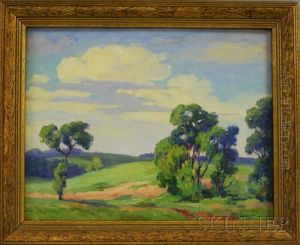
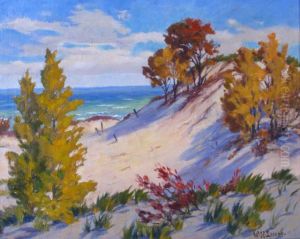
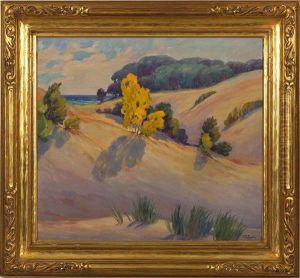
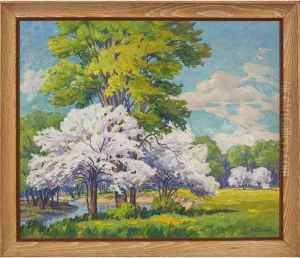
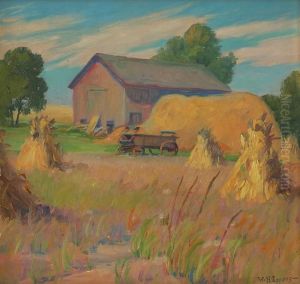
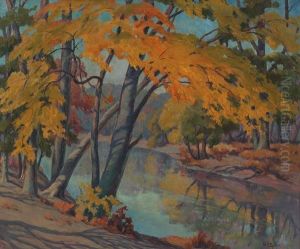
William H. Eppens was an American painter born in 1870 in Davenport, Iowa. Despite being somewhat less known in the broader spectrum of American art history, Eppens made significant contributions to the American Impressionist movement, particularly in the Midwest. His early life in Iowa provided him with a deep appreciation for the American landscape, a theme that would dominate much of his artistic career.
Eppens pursued his artistic education at the Art Institute of Chicago, one of the leading art schools in the United States at the time. His studies there exposed him to the latest trends in European and American art, including Impressionism, which had a profound impact on his style. Eppens was particularly drawn to the Impressionists' fascination with light and color, which he adeptly incorporated into his depictions of the American Midwest.
After completing his studies, Eppens returned to Iowa, where he became a key figure in the local art scene. He was not only a prolific painter but also a dedicated teacher, sharing his knowledge and passion for art with the next generation of artists. His landscapes and cityscapes capture the unique beauty of the American heartland, characterized by a vibrant palette and dynamic brushwork that evoke the fleeting impressions of light and atmosphere.
Eppens exhibited his work widely during his lifetime, both locally and nationally, earning recognition and accolades for his contributions to American art. Despite this, his work was somewhat overshadowed by his contemporaries, and he did not achieve the same level of fame as some other American Impressionists.
William H. Eppens passed away in 1933, leaving behind a rich legacy of artwork that provides a window into the American Midwest of his time. Today, his paintings can be found in museums and private collections, appreciated for their technical skill and evocative portrayal of the American landscape. Through his dedication to his craft and his role as an educator, Eppens played a vital role in the development of American Impressionist art, and his contributions continue to be celebrated by art historians and enthusiasts alike.