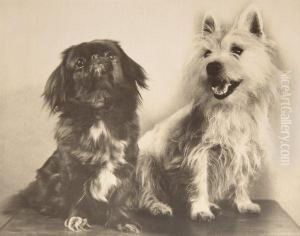
Ylla, born Camilla Koffler in 1911 in Vienna, Austria, was a pioneering photographer renowned for her distinctive approach to animal photography. Her work, characterized by its empathetic and often anthropomorphic portrayal of animals, set her apart in the field of photography and established her as one of the foremost animal photographers of the 20th century. Ylla's journey into photography began after she moved to Paris in the 1930s, where she changed her name, seeking to reinvent herself and to integrate into the vibrant cultural and artistic milieu of the city.
In Paris, Ylla initially worked in a photo studio and gradually started her freelance career, focusing on animals as her primary subject. Her ability to capture the essence and personalities of animals endeared her to many, leading to commissions from various magazines and publishers. Ylla's photographs were notable for their simplicity, directness, and the profound sense of connection she established with her subjects. She often photographed her animal subjects at their eye level, creating a feeling of intimacy and mutual respect between the viewer and the viewed.
Ylla's talents took her around the world, from the streets of Paris to the wilds of Africa. During the 1940s and 1950s, she produced a significant body of work that was published in numerous magazines and books, solidifying her reputation. Her photographic expeditions were not only artistic endeavors but also adventures that showcased her fearless spirit and deep commitment to her craft. Ylla's works were exhibited in several prestigious galleries and her books received critical acclaim for their innovative approach and the emotional depth of the photographs.
Tragically, Ylla's life and career were cut short when she died in a car accident in India in 1955 while on a photographic assignment. Despite her untimely death, Ylla's legacy endures through her photographs, which continue to captivate and inspire audiences with their beauty, sensitivity, and pioneering vision. Her work not only contributed significantly to animal photography but also expanded the possibilities of photography as a medium for empathetic, cross-species communication and understanding.