Charles Drew Cahoon stands as a figure in American art history whose identity and work require careful consideration, distinct from others bearing similar names. An American artist active during a vibrant period of national artistic development, his life spanned from 1861 to 1951. His work often centered on the landscapes and life associated with New England, particularly the iconic Cape Cod region. Understanding his contributions involves navigating the available information, which sometimes presents challenges in distinguishing his specific legacy.
This exploration aims to synthesize the known details of Charles Drew Cahoon's life and art, drawing upon documented records and attributions. We will examine his biographical details, his representative works, the characteristics of his style as described in sources, his place within the context of American art, and the recognition his work has achieved through exhibitions and collections, while also addressing potential points of confusion found in historical accounts.
Biographical Outline and Clarifications
Charles Drew Cahoon was born in 1861 and passed away in 1951. This timeframe places his life and potential career across the late nineteenth and the first half of the twentieth centuries, a period of significant change and diversification in American art. It is critically important to distinguish this artist from another individual mentioned in some historical records, Charles D. Cahoon (1800-1845), who was a prominent Methodist Episcopal Church minister and local political figure in the nineteenth century. The source materials referenced indicate some confusion between these two individuals, attributing activities of the minister to the artist. This account will focus solely on Charles Drew Cahoon, the artist.
Information regarding Charles Drew Cahoon's formal artistic training or specific educational background is notably absent in the provided sources. Whether he was self-taught, apprenticed, or attended art academies remains unclear based on the available documentation. His professional trajectory as an artist is primarily understood through his surviving works and records of their exhibition and sale, rather than a detailed account of his career path or affiliations. His life as an artist appears centered around his practice of painting.
Artistic Focus: Cape Cod and Genre Scenes
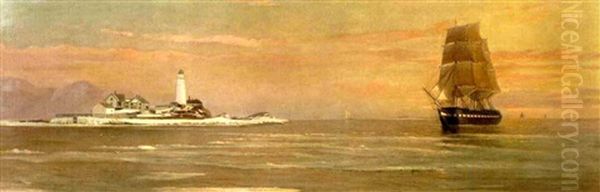
A significant portion of Charles Drew Cahoon's recognized work is tied to Cape Cod, Massachusetts. This peninsula, known for its unique light, coastal landscapes, and maritime heritage, has long attracted artists. Cahoon contributed to the artistic representation of this region through various paintings. Specific works attributed to him capture the essence of Cape Cod life and scenery, offering glimpses into the environment and its inhabitants during his time.
Among the works identified as his are landscapes and genre scenes such as Reading by the Garden, Cape Cod, Autumn Marsh, and Autumn Oak. These titles suggest a focus on the natural beauty of the area, depicting specific locations or seasonal changes. They evoke images of quiet domesticity set against the backdrop of the Cape, or studies of the local flora and marshlands, likely rendered with attention to the particular atmosphere of the coastal environment.
Another notable work mentioned is The Dunes, a title that immediately brings to mind the characteristic sandy landscapes of Cape Cod's outer reaches. The fact that this particular painting reportedly increased in value with subsequent exhibitions suggests it was a well-regarded piece, capturing a subject of enduring interest. Furthermore, a genre scene titled Barber Shop Felines, dated to 1900, indicates a broader interest beyond pure landscape, venturing into depictions of everyday life, perhaps with a touch of narrative or charm.
An additional painting described involved a scene of a young boy observing an older man repairing a windmill toy. This work, sold at auction, further points to Cahoon's engagement with narrative genre subjects, capturing moments of intergenerational connection or quiet activity. These examples collectively suggest an artist engaged with both the natural landscapes and the human elements of his surroundings, particularly in the context of Cape Cod.
Style, Influences, and Attributed Characteristics
Descriptions of Charles Drew Cahoon's artistic style present a complex picture, partly due to potential conflation with other artists in the source materials. Some sources suggest his work was deeply influenced by early American folk art traditions, characterized by qualities like "whimsy, charming appeal, and wisdom." This connection implies a style perhaps marked by directness, flattened perspectives, strong outlines, or decorative elements often associated with folk art.
Further descriptions mention a "bold, vivid style" and a tendency to focus on "single elements" within a composition, such as a tree or an apple, possibly imbuing them with significance. The mention of a work titled The Tree of Life and its connection to religious meaning, along with a supposed familiarity with collage techniques, adds another layer to this stylistic profile, suggesting potential symbolic depth and perhaps some experimentation with materials or composition.
However, it is essential to approach some attributed characteristics with caution. The strong emphasis on folk art aesthetics, the use of "magic realism" involving objects like whalebone or logbooks, and particularly the prominent featuring of mermaids—an iconic motif—are strongly associated with the work of other artists named Cahoon, specifically Ralph Cahoon (1910-1982) and his wife Martha Cahoon (1905-1999). Ralph and Martha Cahoon were indeed active in the mid-20th century, particularly the 1960s, and became famous for their whimsical, folk-art-inspired paintings often featuring mermaids in Cape Cod settings.
Given that Charles Drew Cahoon died in 1951, the references to activity in the 1960s and the specific thematic elements like mermaids seem highly likely to stem from a confusion between Charles Drew Cahoon and Ralph and Martha Cahoon in the source documentation. While Charles Drew Cahoon may have employed a direct or perhaps somewhat naive style in some works, aligning him definitively with the specific folk art revival style and mermaid iconography of Ralph and Martha Cahoon based on the provided sources is problematic. His reliably dated works like Barber Shop Felines (1900) place him earlier, suggesting his style likely evolved within the context of late 19th and early 20th-century realism and landscape painting, perhaps with regionalist inflections.
Artistic Context and Contemporaries
Charles Drew Cahoon's active period placed him amidst a dynamic era in American art. The late nineteenth and early twentieth centuries saw the flourishing of American Impressionism, the continued strength of Realism, the rise of the Ashcan School, and ongoing traditions of landscape and marine painting. Artists flocked to scenic areas like New England, establishing art colonies and capturing the regional character.
In this environment, Cahoon would have been a contemporary of numerous significant American artists. The American Impressionists, many of whom painted in New England, included figures like Childe Hassam, Willard Metcalf, John Henry Twachtman, J. Alden Weir, and Frank Weston Benson. Their focus on light, color, and capturing fleeting moments in landscapes and domestic scenes formed a major trend. Cahoon's landscapes of Cape Cod might be considered in dialogue with, or distinct from, their impressionistic approaches.
Realism remained a powerful force, exemplified by towering figures like Winslow Homer, whose depictions of the New England coast and maritime life set a high standard for marine and genre painting. Thomas Eakins pursued unflinching realism in portraiture and scenes of modern life. Slightly later, the Ashcan School artists, such as George Bellows and Robert Henri, focused on urban realities, though their commitment to depicting contemporary life resonated broadly.
Traditional landscape painting also continued, building on the legacies of artists like George Inness and Worthington Whittredge from the Hudson River School generation. Marine painting specialists like Fitz Henry Lane (earlier) and William Trost Richards created meticulous and atmospheric coastal views that were part of the artistic heritage Cahoon inherited.
Furthermore, the period saw growing interest in American folk art, although its widespread collection and academic study intensified later. Artists like Edward Hicks represent the earlier folk tradition, while figures like Grandma Moses would later gain fame for their "primitive" or folk style. While the direct influence of folk art on Charles Drew Cahoon is debated due to source confusion, the broader context included an awareness of non-academic art forms.
Finally, it is impossible to discuss Charles Drew Cahoon without acknowledging the other prominent Cape Cod artists bearing the same surname: Ralph Cahoon and Martha Cahoon. Their highly recognizable style, developed later in the 20th century, focused on whimsical narratives, often involving sailors and mermaids, rendered in a distinctive folk-inspired manner. Clarifying Charles Drew Cahoon's distinct artistic identity separate from theirs is crucial for art historical accuracy.
Exhibitions, Collections, and Market Recognition
Despite the ambiguities surrounding some aspects of his style, Charles Drew Cahoon's work has received recognition through public exhibitions and the art market. Records indicate his participation in significant showcases of American art, particularly works related to maritime themes and the Cape Cod region.
For instance, paintings such as Reading by the Garden, Cape Cod, Autumn Marsh, and Autumn Oak were reportedly included in an exhibition or auction event at the Peabody Essex Museum in Salem, Massachusetts, around 2005. The Peabody Essex Museum has significant collections related to maritime art and New England history, making it a fitting venue for Cahoon's work. This inclusion suggests his paintings are considered relevant contributions to the artistic representation of the region.
His work The Dunes was noted as being exhibited by Bradford Trust Fine Art, with the observation that its value increased with each showing. This points to a growing appreciation and market demand for his paintings, at least for certain examples. Auction records provide further evidence of market interest. The painting depicting a boy watching an old man fix a windmill toy reportedly sold for $13,200 at an Eldred's auction, significantly exceeding its lower estimate. Eldred's, located on Cape Cod, is well-known for handling regional art, and such a result indicates a solid collector base for Cahoon's work.
The existence of the Cahoon Museum of American Art in Cotuit, Massachusetts, also warrants mention. While this museum is primarily dedicated to the works of Ralph and Martha Cahoon and houses their former studio, it also exhibits a broader range of American art, often with connections to the region. The provided sources suggest Charles Drew Cahoon's work might be found in museum collections, potentially including this institution, although its primary focus lies elsewhere. Inclusion in museum collections, regardless of which specific institutions, signifies a level of artistic merit and historical importance attributed to his work.
Legacy and Conclusion
Charles Drew Cahoon (1861-1951) remains an intriguing figure in the landscape of American art from the turn of the twentieth century. Primarily associated with Cape Cod, his work appears to encompass landscapes, genre scenes, and potentially explorations into symbolic themes, though the precise nature of his style warrants careful assessment due to conflations in some source materials. His reliably attributed works depict the natural beauty and quiet moments of life in coastal New England.
His art has found a place in exhibitions and collections, particularly those focused on American maritime and regional art. Market recognition, evidenced by auction results and reported value appreciation for certain pieces, confirms an ongoing interest among collectors. He worked during a period rich with artistic movements, from Impressionism to Realism, and his paintings offer a perspective on regional American life and landscape from that era.
While disentangling his specific contributions from those of other artists named Cahoon, particularly Ralph and Martha, is essential, Charles Drew Cahoon emerges as an artist worthy of attention in his own right. His paintings provide valuable visual documents of Cape Cod at a particular time, rendered with an artistic sensibility that continues to attract viewers and collectors. Further research and clarification of his oeuvre may well enhance our understanding of this American artist and his place within the broader narrative of art in the United States. His legacy resides in the canvases that capture the enduring allure of the New England coast and the quiet dignity of its scenes.