Cenek Chodera was a Czech artist known for his contributions to modern art, particularly within Czechoslovakia during the 20th century. Born on May 11, 1915, in the town of Zábřeh, Moravia, which was then part of the Austro-Hungarian Empire, Chodera grew up in a region with a rich artistic heritage. This environment undoubtedly influenced his early interest in the arts.
Chodera's artistic education began at the School of Applied Arts in Brno, where he studied from 1930 to 1934. He continued his studies at the Academy of Fine Arts in Prague under the guidance of prominent Czech artists such as Max Švabinský and Willi Nowak. His time at the academy, from 1934 to 1940, allowed him to hone his skills and develop his unique artistic voice.
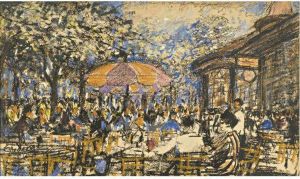
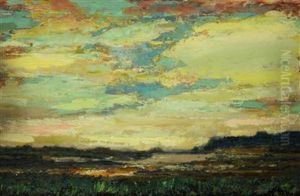
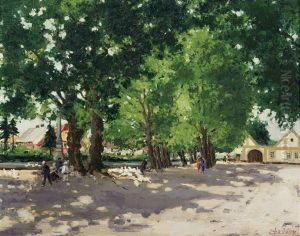
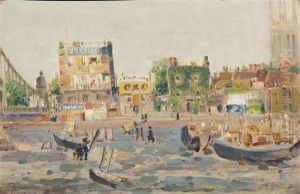
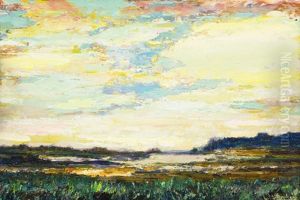
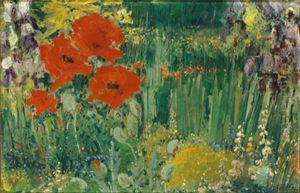
During the 1940s and 1950s, Chodera's work began to gain recognition. His style was characterized by a combination of traditional craftsmanship with contemporary themes and techniques. He was particularly known for his landscape paintings, which often reflected the beauty of the Moravian countryside, as well as for his portraits and still lifes. Chodera's work was not limited to painting; he also engaged in graphic design and illustration, contributing to the visual culture of the time.
Despite the challenges posed by the political climate in Czechoslovakia, particularly during the Communist regime, Chodera continued to work and exhibit his art. He participated in many group exhibitions and had several solo shows, establishing himself as a significant figure in the Czechoslovak art scene.
Cenek Chodera's legacy is marked by his dedication to his craft and his ability to capture the essence of his homeland through his art. He passed away on August 31, 1997, leaving behind a body of work that continues to be appreciated for its artistic merit and cultural significance. Chodera's paintings are held in various collections, both in the Czech Republic and internationally, and his contributions to Czech art are remembered and celebrated.