Eulogio Varela y Sartorio was a Spanish artist whose work spanned from the late 19th century into the mid-20th century, encompassing a period of significant change in the art world. Born in Madrid, Spain, Varela y Sartorio was deeply influenced by the cultural and artistic milieu of his time, which was marked by the transition from traditional academic art to more modern and avant-garde movements. Despite the shifting artistic landscapes, Varela y Sartorio managed to carve out a unique niche for himself, blending classical techniques with emerging trends.
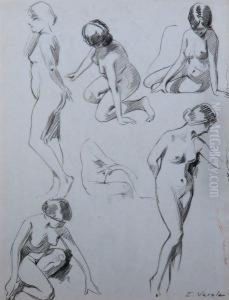
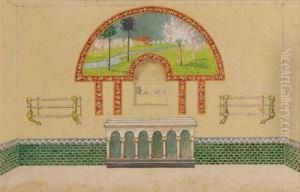
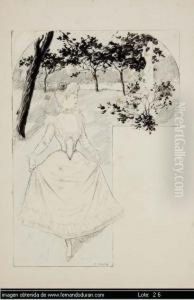
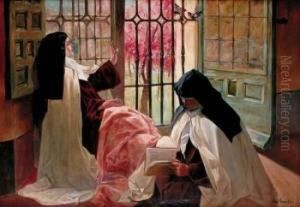
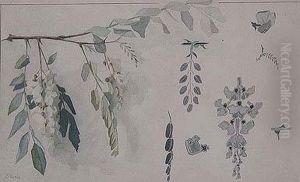
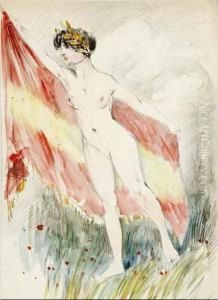
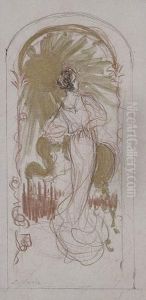
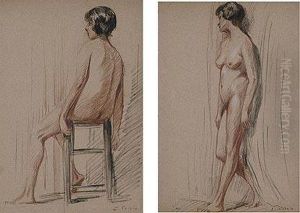
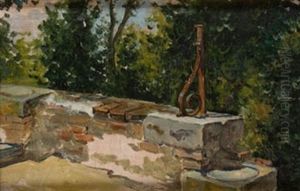
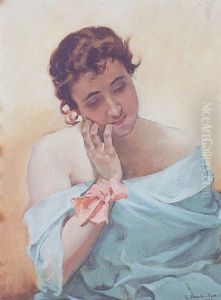
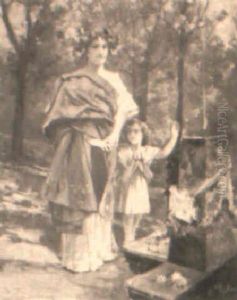
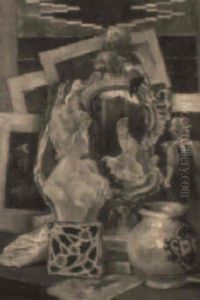
Educated at the Real Academia de Bellas Artes de San Fernando, one of Spain's most prestigious art schools, Varela y Sartorio was exposed to a rigorous training in the arts, which laid the foundation for his diverse career. He was not only a painter but also engaged in illustration, graphic arts, and mural painting, showcasing his versatility across different mediums. His work often depicted scenes of Spanish life, landscapes, and historical events, imbued with a sense of realism and attention to detail that became characteristic of his style.
Throughout his career, Varela y Sartorio was an active participant in the cultural life of Spain, contributing to various exhibitions and artistic societies. His commitment to art extended beyond his personal creations; he was also involved in education, teaching at the School of Arts and Crafts in Madrid, where he influenced a new generation of artists.
Despite his contributions to Spanish art, Eulogio Varela y Sartorio remains a somewhat overlooked figure in art history, overshadowed by his contemporaries who were more directly associated with the major movements of the 20th century. Nevertheless, his work offers a fascinating window into the transitional period of Spanish art, reflecting both the adherence to tradition and the gradual embrace of modernity.
Varela y Sartorio's legacy is preserved in various collections and museums in Spain, where his paintings continue to be appreciated for their beauty and historical value. His long life allowed him to witness and contribute to nearly a century of artistic evolution, marking him as a significant, if underrecognized, figure in the history of Spanish art.