Imre Denes De Bolcskey Paintings


Imre Denes de Bolcskey, also known as Imre de Bolcskey, was a Hungarian artist born on August 12, 1908, in Budapest, Hungary. His early life was marked by the cultural vibrancy of Budapest in the early 20th century, a period when the city was a melting pot of artistic and intellectual currents. Bolcskey's family background and education are not thoroughly documented, but it is known that he was active as an artist and that his work contributed to the Hungarian art scene.

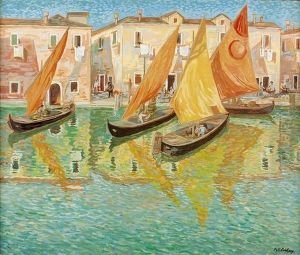
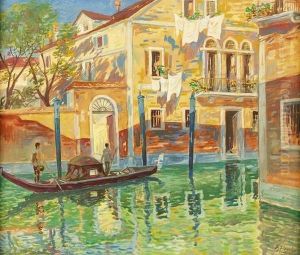
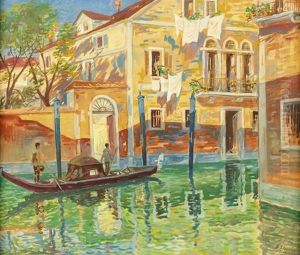
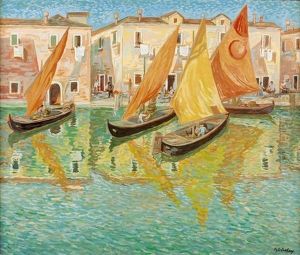
During his artistic career, Imre de Bolcskey was primarily known for his watercolor paintings. His style was characterized by a blend of realism and impressionism, often capturing the essence of his subjects with a delicate touch and a keen eye for light and atmosphere. His oeuvre included landscapes, cityscapes, and still lifes, as well as portraits. Bolcskey's work reflected his deep appreciation for the natural world and his ability to translate it onto the canvas with sensitivity and skill.

Despite his talent, Imre de Bolcskey's career unfolded during a turbulent period in Hungary's history, including the interwar period, World War II, and the subsequent establishment of a communist government. These events inevitably impacted the art community in Hungary and possibly influenced Bolcskey's opportunities and recognition as an artist.

Imre Denes de Bolcskey passed away on April 1, 1961. His legacy as an artist may not be widely known on the international stage, but within Hungarian art circles, he is remembered for his contributions to the country's artistic heritage. Although comprehensive retrospectives of his work are scarce, some of his paintings may be found in private collections and occasionally appear at auctions, where they continue to be appreciated by connoisseurs of Hungarian art.