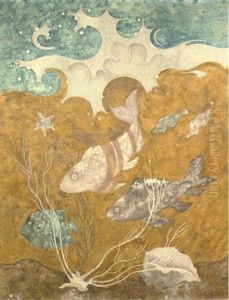
Jaap Gidding Paintings


Jaap Gidding was a Dutch artist and designer, particularly known for his work in the Art Deco style. He was born in 1887 in Groningen, Netherlands, and he played a significant role in the development of Dutch decorative arts during the early 20th century.

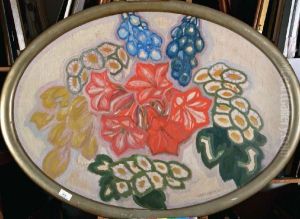
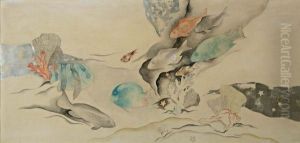
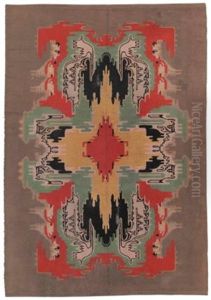
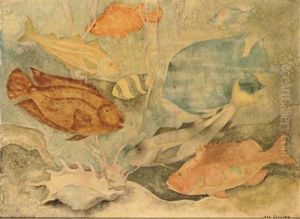
Gidding received his artistic education at the Academy Minerva in his hometown and later at the National Academy of Fine Arts in Amsterdam. He was primarily a textile designer, but his work was not limited to this medium. Gidding's versatility was evident in his ability to design a wide range of items, including carpets, furniture, and interiors, as well as graphic works such as posters and book illustrations.

In the 1920s and 1930s, Gidding's work reflected the exuberance of the Art Deco movement, which was characterized by bold geometric shapes, rich colors, and a sense of elegance and modernity. He gained notable recognition for his interior design projects, which included theaters, ships, and public buildings. His style was marked by a harmonious blend of functionality and aesthetic appeal, often incorporating elements of abstraction and exoticism.

One of Gidding's most famed contributions was his work on the interior design of the Tuschinski Theater in Amsterdam, which is considered a masterpiece of Art Deco architecture and design. He also worked on the interiors of several Dutch passenger ships, which were important showcases for Dutch design and craftsmanship at the time.

Throughout his career, Gidding maintained a commitment to the integration of art and life, believing that beautiful design should be accessible to everyone and not just the elite. As such, his work contributed to the democratization of good design in the Netherlands.

Jaap Gidding's influence extended into teaching as he educated a new generation of designers. His legacy is preserved in the collections of various Dutch museums, where his work continues to be celebrated for its distinctive blend of artistic innovation and practical application. He passed away in 1955, leaving behind a rich body of work that continues to inspire designers and artists today.