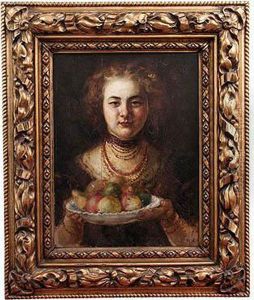
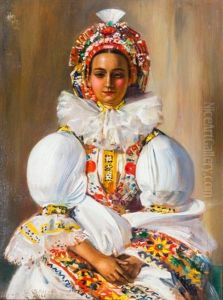
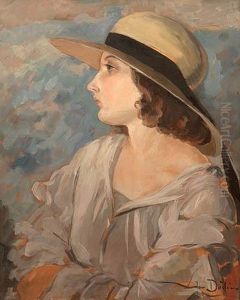
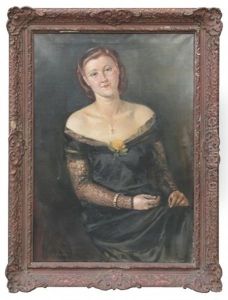
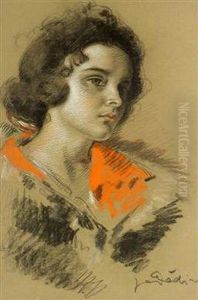
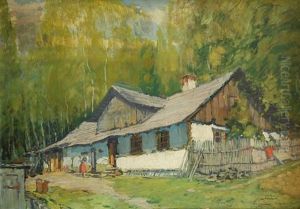
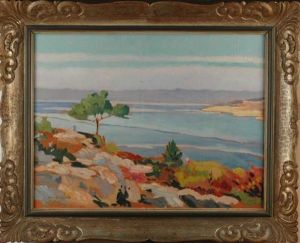
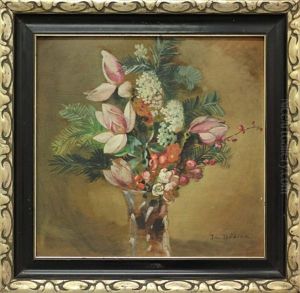
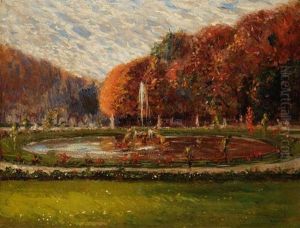
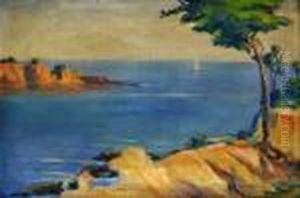
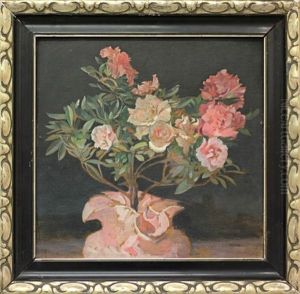
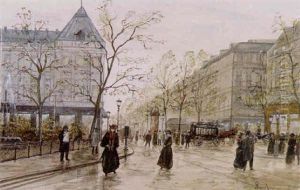
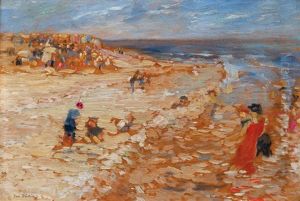
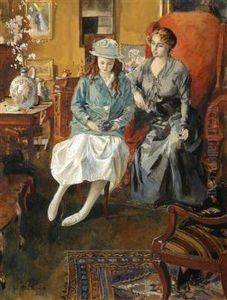
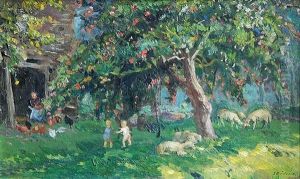
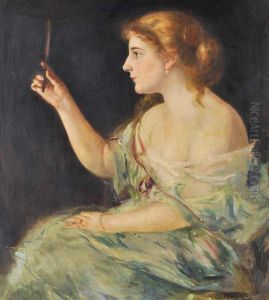
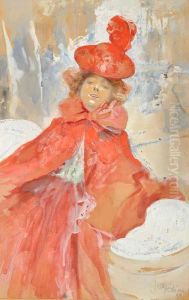
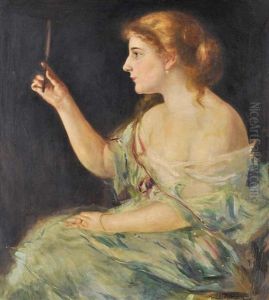
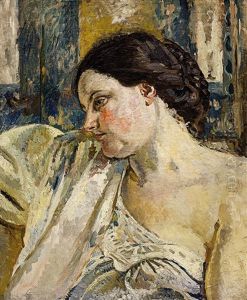
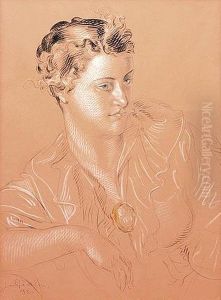
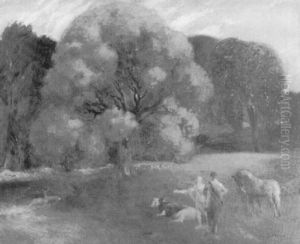
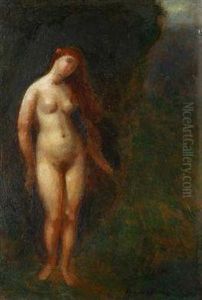
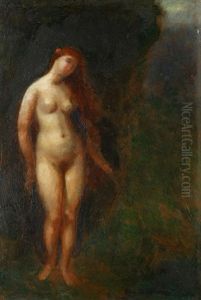
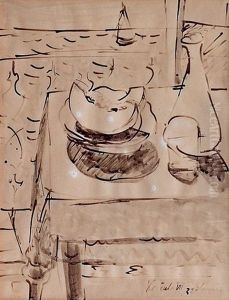
Jan Dedina was a Czech painter and illustrator, recognized for his contributions to the art world in the late 19th and early 20th centuries. Born in 1870 in Říčany, a town near Prague, in what was then the Austro-Hungarian Empire, Dedina showed an early interest in art, which was nurtured by his family's supportive environment. He pursued his artistic education at the Academy of Fine Arts in Prague, where he honed his skills and developed a distinctive style that would later become celebrated.
Dedina's work was heavily influenced by the Symbolist movement, which sought to express the more emotional and spiritual aspects of the human experience through art. His illustrations and paintings often depicted scenes from Czech folklore and mythology, imbued with a sense of national pride and a deep connection to the cultural heritage of his homeland. This thematic focus made his work particularly resonant with the Czech people, especially during periods of nationalistic fervor.
Throughout his career, Dedina experimented with various techniques and mediums, including etching, woodcut prints, and oil painting. His versatility allowed him to contribute illustrations to numerous books and periodicals, thereby broadening his impact and reach. Dedina's illustrations for the epic poem 'The May' by Karel Hynek Mácha stand out as particularly iconic, capturing the romantic and mystical essence of the poem and contributing significantly to its visual legacy in Czech culture.
Despite his success, Dedina's work was not without its critics, some of whom viewed his adherence to Symbolism as outdated in the face of modernist movements. Nevertheless, his contribution to Czech art remained significant, and his works continued to be celebrated for their technical skill, emotional depth, and cultural significance.
Jan Dedina's legacy lives on through his contributions to Czech art and culture. His works are held in high regard and continue to be studied and appreciated for their beauty and historical value. Dedina passed away in 1955, but his influence on the art world and his role in the promotion of Czech cultural identity endure, making him a pivotal figure in the history of Czech art.