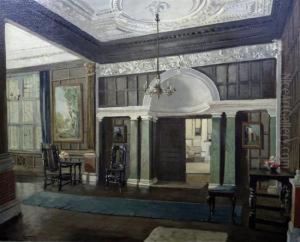
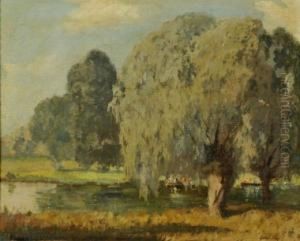
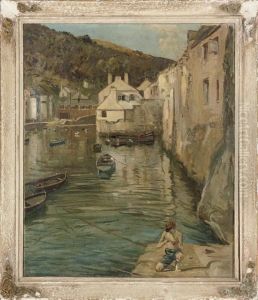
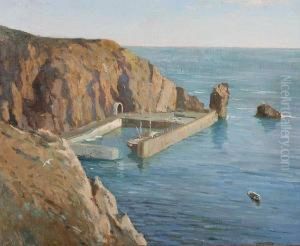
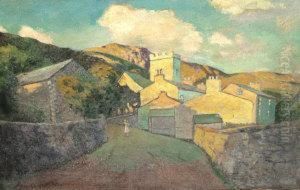
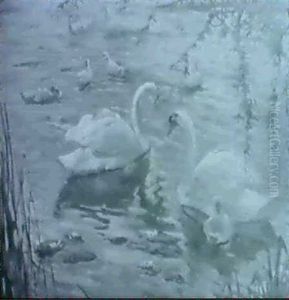
John Laviers Wheatley was a British artist known for his contributions to landscape and portrait painting. Born in 1892 in Birmingham, England, Wheatley developed an early interest in art, which was nurtured through his education at the Birmingham School of Art. His artistic journey was reflective of the early 20th-century British art scene, characterized by a blend of traditional techniques and the emerging modernist tendencies.
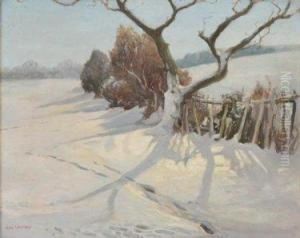
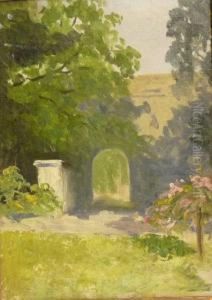
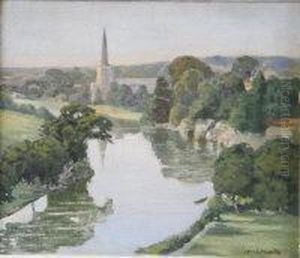
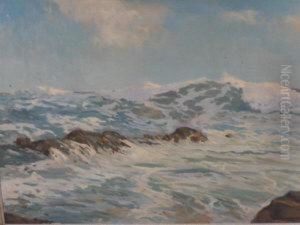
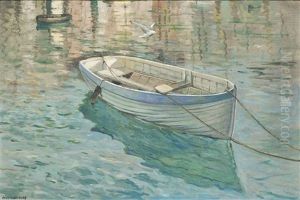
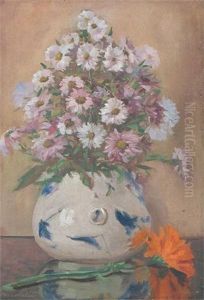
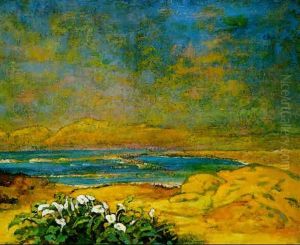
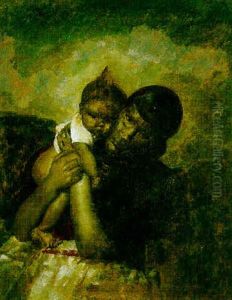
Wheatley's work was profoundly influenced by the changing landscapes of England and the social dynamics of his time. He was adept at capturing the essence of rural and urban scenes, often portraying them with a sensitivity that highlighted the interplay between light, shadow, and color. His landscapes conveyed a sense of tranquility and timelessness, while his portraits were notable for their depth of character and psychological insight.
Throughout his career, Wheatley exhibited his work at various prestigious institutions, including the Royal Academy of Arts in London. His contributions to the art world were recognized by his peers and art critics alike, making him a respected figure among the British artists of his generation.
Despite his accomplishments, John Laviers Wheatley remained a somewhat enigmatic figure, with his life and work receiving less attention in the broader narrative of 20th-century British art. He continued to paint and exhibit until his death in 1955. Today, his paintings are held in several art collections and museums, serving as a testament to his artistic legacy and offering insight into the cultural and aesthetic shifts of his era.