Karl J. Anderson, not to be confused with other individuals of a similar name, was an American artist known for his landscape paintings and his association with the early 20th-century art movements in the United States.
Born on October 13, 1874, in Defiance, Ohio, Anderson showed an early interest in art. He pursued his passion by studying at the Cleveland School of Art in Ohio. To further his education, he traveled to New York City, where he studied at the National Academy of Design and later at the Art Students League under prominent artists such as Kenyon Cox and H. Siddons Mowbray.
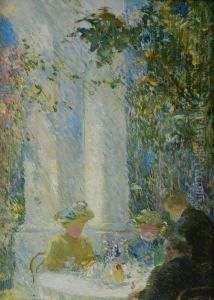
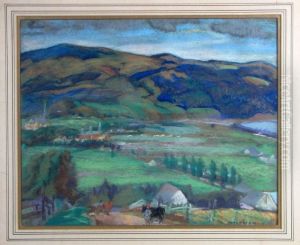
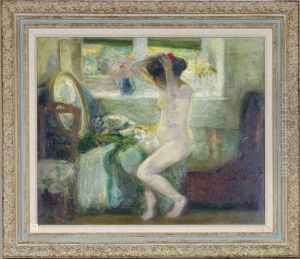
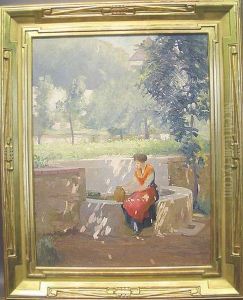
Anderson's work was influenced by the tonalism and impressionism movements, which were popular in the United States at the time. His landscapes often feature a muted color palette and a focus on atmosphere and mood, characteristic of tonalism. However, he also incorporated impressionistic techniques, including loose brushwork and a lighter color palette, to capture the effects of light.
Throughout his career, Anderson exhibited his work at various institutions, including the Pennsylvania Academy of the Fine Arts, the Corcoran Gallery of Art, and the Art Institute of Chicago. His paintings were well-received, and he was able to earn a living through his art, a testament to his skill and the appeal of his work during that period.
Despite his success, Karl J. Anderson remains a relatively lesser-known figure in the pantheon of American artists. His contributions to the American art scene, however, particularly in the Midwest and the East Coast, provide an important example of the diverse approaches to landscape painting during the early 20th century.
Karl J. Anderson passed away at the age of 50, on April 22, 1925. His works continue to be appreciated by collectors and art enthusiasts, and can be found in the collections of various regional museums and in private collections. Although his life was relatively short, his artistic legacy offers a window into the evolving American art landscape of his time.