Olive Edis, born Olive Edith Edis on September 3, 1876, in London, England, was a pioneering British photographer whose work spanned the early 20th century. She is particularly noted for her portraits of eminent personalities of her time and for being one of the first women to be an official war photographer.
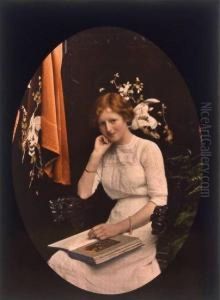
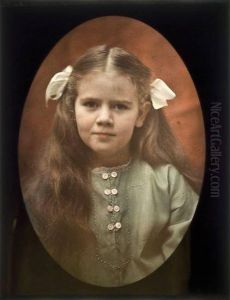
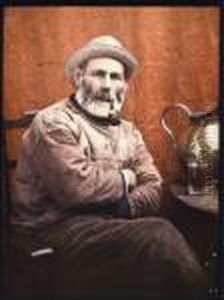
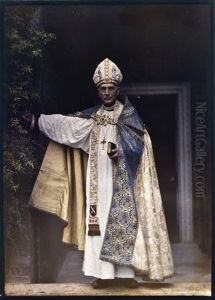
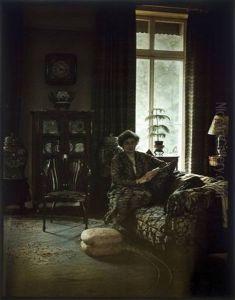
Edis developed an interest in photography early in life and was largely self-taught. In 1905, she opened her first studio in partnership with her sister Katherine in Sheringham, Norfolk. Her talents as a portraitist quickly became apparent. She had a unique ability to capture the personality and essence of her sitters, which ranged from local fishermen to royalty and literary figures. Edis was also one of the early adopters of autochrome, an early color photography process, and is remembered for her impressive color portraits.
Her career took a historic turn during World War I, when she was commissioned to photograph the British Women’s Services and the landscapes of war-torn Europe. In 1919, Edis traveled to France and Belgium as an official war photographer, one of the first women to be given such a role, and created a compelling and insightful record of the aftermath of war.
After the war, Edis continued to photograph notable figures, including prime ministers, authors, and scientists. She also captured the lives of ordinary people, thus providing a broad social commentary through her work. Her portraits were characterized by the use of natural light and a relaxed setting, which helped to bring out the natural demeanor of her subjects.
Edis's work has been displayed in numerous exhibitions, and her photographs are held in various collections, including the National Portrait Gallery in London. Her legacy persists as a pioneering woman in photography and as an artist who greatly contributed to the documentation of her era.
Olive Edis passed away on December 28, 1955, leaving behind a body of work that continues to be appreciated for its historical significance and its artistry. Her contributions to the field of photography have inspired subsequent generations of photographers, particularly women, to pursue the art form professionally.