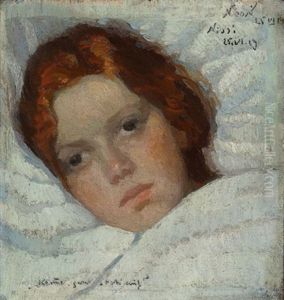
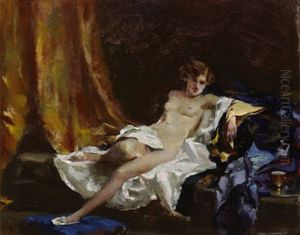
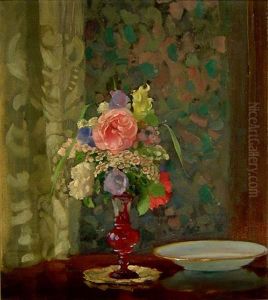
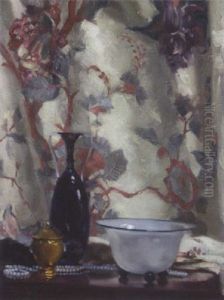
Rudolf Nissl Paintings


Rudolf Nissl was a German psychiatrist and medical researcher known for his contributions to neuropathology rather than being a traditional artist. Born on September 9, 1861, in Frankenthal, Germany, Nissl studied medicine at the University of Munich. He became interested in the pathology of the nervous system, particularly the brain's cellular structures.

During his medical career, Nissl developed a staining technique that allowed for the detailed visualization of neurons. This method, now known as Nissl staining, involves using basic aniline dyes to stain the rough endoplasmic reticulum in neurons, which are also called Nissl bodies. The Nissl staining technique has been fundamental in the study of the histology of the nervous system and has allowed researchers to observe changes in the neuronal structure in various mental disorders.

Nissl's work was pioneering in the field of neuroscience and has had a lasting impact on the study of brain diseases, including schizophrenia and degenerative brain diseases. He worked closely with other prominent figures in early neuroscience, including Alois Alzheimer, and was a part of the 'Munich School' of neuropathology.

Throughout his career, Nissl held several positions, including working at the University of Heidelberg psychiatric clinic. He passed away on August 11, 1909, in Heidelberg, Germany. Although Nissl was not an artist in the conventional sense, his scientific contributions have greatly enriched our understanding of the brain's architecture and function, which in turn has influenced fields that intersect with the visual representation of scientific phenomena.