Jean Charles Joseph Rémond: A Pivotal Figure in French Landscape Painting
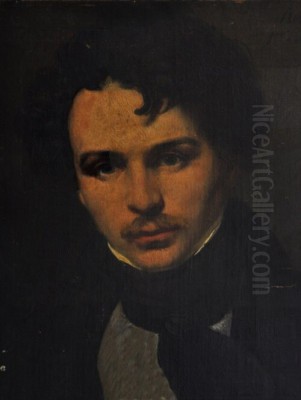
Jean Charles Joseph Rémond stands as a significant, though sometimes overlooked, figure in the evolution of French landscape painting during the 19th century. Born in Paris in 1795 and passing away in the same city in 1875, his lifespan bridged the dominant era of Neoclassicism and the rise of Romanticism and Realism, particularly the Barbizon School. Rémond was not only a prolific painter and lithographer but also an influential teacher whose work and pedagogy connected established traditions with emerging artistic sensibilities. His career, marked by prestigious awards and extensive travel, reflects the changing attitudes towards nature and its depiction in art during a period of profound transformation.
Early Life and Academic Foundations
Born into the vibrant artistic milieu of post-revolutionary Paris, Rémond's artistic inclinations were nurtured from a young age. He sought formal training at the prestigious École des Beaux-Arts, the cornerstone of academic art education in France. His instruction there placed him under the tutelage of two notable masters: Jean-Baptiste Regnault and, more significantly for his landscape focus, Jean-Victor Bertin. Regnault, primarily a history painter, would have provided Rémond with a strong grounding in academic figure drawing and composition, essential elements even for landscape artists within the Neoclassical tradition.
Jean-Victor Bertin, however, was a key influence shaping Rémond's path. Bertin was a leading exponent of the Neoclassical historical landscape, a genre that idealized nature according to principles derived from 17th-century masters like Nicolas Poussin and Claude Lorrain. Bertin's studio was a hub for aspiring landscape painters, emphasizing clarity, structure, and often incorporating historical or mythological themes within meticulously composed natural settings. This rigorous training provided Rémond with the technical skills and aesthetic framework prevalent at the time.
The Prix de Rome and Italian Immersion
A defining moment in Rémond's early career arrived in 1821 when he won the coveted Prix de Rome for historical landscape painting. This prestigious award, granted by the Académie Royale de Peinture et de Sculpture, was the highest honour for young French artists. Rémond secured the prize with his painting The Abduction of Proserpine by Pluto, a work demonstrating his mastery of the Neoclassical style, combining dramatic mythological narrative with an idealized landscape setting. Winning the Prix de Rome was not merely an accolade; it provided a funded residency at the French Academy in Rome, housed in the Villa Medici.
Rémond's time in Italy, lasting approximately four to five years, proved deeply formative. Following in the footsteps of earlier landscape pioneers like Pierre-Henri de Valenciennes, Rémond immersed himself in the Italian countryside. He dedicated himself to the practice of plein air (outdoor) sketching, capturing the effects of light and atmosphere directly from nature. This period allowed him, alongside fellow artists, to explore regions around Rome, Naples, and Sicily, studying the unique topography, ancient ruins, and luminous quality of the Mediterranean light, often away from the commercial pressures of Paris.
This Italian sojourn was crucial for developing his observational skills and a more nuanced approach to light and shadow, sometimes referred to as clair-obscur in his studies. While his finished Salon paintings would often retain Neoclassical compositional structures, the direct studies and sketches made in Italy imbued his later work with a greater sense of naturalism and atmospheric sensitivity. The experience fostered a rapid sketching technique essential for capturing fleeting moments of light and weather.
Artistic Style: Bridging Neoclassicism and Nature
Rémond's artistic output primarily consisted of landscapes, encompassing both the formal historical landscape genre and more naturalistic depictions. His style represents a fascinating blend of his Neoclassical training under Bertin and the growing Romantic-era interest in direct observation of nature. His finished works often maintained the balanced compositions, clear lines, and idealized forms characteristic of Neoclassicism, frequently populated with small figures drawn from mythology or history to elevate the scene.
However, his numerous oil sketches and studies, particularly those from Italy, reveal a more immediate and personal response to the natural world. These works prioritize capturing the effects of light, atmospheric conditions, and the specific character of a location. He showed a keen interest in rendering the textures of foliage, the structure of trees, and the play of sunlight on water and land. Works depicting the Italian countryside, the Alps, or French forests showcase this sensitivity.
Rémond was also an accomplished lithographer. Lithography, a relatively new printmaking technique in the early 19th century, allowed artists to draw directly onto a stone surface, facilitating a more autographic and painterly style of print. His lithographs, such as Troncs de Bouleaux (Birch Trunks), demonstrate his skill in capturing the form and texture of nature through line and tone, further extending his exploration of landscape themes.
Representative Works and Thematic Concerns
Throughout his long career, Rémond produced a substantial body of work. His Prix de Rome piece, The Abduction of Proserpine by Pluto (1821), remains a key example of his early mastery of the historical landscape genre. Subsequent works often reflected his Italian experiences, blending observed detail with idealized composition. View of the Ironworks at Amalfi, Kingdom of Naples (1827) and Neapolitan Memories Inspired by Nature (1831) exemplify this, capturing specific locales while adhering to established compositional norms.
His painting The Death of Abel (1838), exhibited at the Salon, tackled a biblical theme within a landscape setting, showcasing his ability to integrate narrative elements into nature, a hallmark of the historical landscape tradition inherited from painters like Poussin. View of the Alps from Crévola (1835) highlights his interest in majestic mountain scenery, rendered with attention to atmospheric perspective and the quality of light, perhaps reflecting the burgeoning Romantic fascination with the sublime.
Beyond these major Salon pieces, his numerous sketches and studies from nature, often executed in oil on paper, are highly valued today for their freshness and immediacy. He also explored purely naturalistic scenes and occasionally religious themes, such as Angels in St. Peter's Basilica. His work Paysage animé à l'antique, exhibited in Lyon, further points to his continued engagement with classical landscape ideals throughout his career.
The Paris Salon and Official Recognition
The Paris Salon was the epicenter of the French art world in the 19th century, serving as the primary venue for artists to exhibit their work, gain critical attention, and secure patronage. Rémond was a regular participant, beginning his Salon career in 1814. He consistently submitted historical landscapes and views drawn from his travels, establishing a solid reputation within the academic system.
His success was recognized through various awards and honours beyond the early Prix de Rome. While specific details on medals sometimes vary in sources, it's documented that he received accolades at the Salon, reflecting the esteem in which his work was held by the juries and the art establishment. These honours solidified his position as a respected figure in the Parisian art scene. Around 1849, Rémond largely ceased exhibiting at the Salon, choosing instead to focus more intently on his teaching activities and private creation.
Rémond as Educator: Shaping the Next Generation
Jean Charles Joseph Rémond was not only a successful painter but also a dedicated and influential teacher. He maintained a studio in Paris that attracted numerous aspiring artists. His teaching methods likely combined the rigorous academic training he had received from Bertin – emphasizing drawing, composition, and the study of Old Masters – with the insights gained from his own extensive plein air practice. He passed on the tradition of Neoclassical landscape while potentially encouraging a degree of direct observation.
His most famous pupil was undoubtedly Théodore Rousseau. Rousseau would become a central figure, arguably the founder, of the Barbizon School, a movement that radically shifted French landscape painting towards Realism and direct, unidealized depictions of nature, often painted outdoors in the Forest of Fontainebleau. While sources suggest Rousseau initially had a somewhat rebellious attitude towards Rémond's more structured approach, the foundational training he received was nonetheless significant. Rémond's studio provided a link in the pedagogical chain connecting the older generation (like Bertin) to the pioneers of Barbizon.
Another notable student who passed through Rémond's studio was Eugène Fromentin, who later gained fame for his Orientalist paintings and his insightful writing on art. The presence of students like Rousseau and Fromentin underscores the importance of Rémond's atelier as a place where young artists with diverse future paths received formative instruction. Rémond's role as an educator thus extended his influence significantly beyond his own canvases.
Influence, Legacy, and Artistic Context
Jean Charles Joseph Rémond occupies a crucial position in the lineage of French landscape painting. He stands as a bridge between the Neoclassical tradition, as championed by his teacher Jean-Victor Bertin and earlier figures like Pierre-Henri de Valenciennes, and the new approaches emerging with Romanticism and the Barbizon School. He inherited and practiced the historical landscape genre but infused it with a sensitivity to natural effects honed through his Italian plein air studies.
While perhaps not as revolutionary as his student Théodore Rousseau or contemporaries like Jean-Baptiste-Camille Corot (who was also a student of Bertin and similarly transformed by Italian studies), Rémond played a vital role. He upheld the standards of academic landscape painting while simultaneously contributing to the growing practice of direct observation from nature. His work demonstrated how classical structure could be combined with atmospheric naturalism.
His influence extended through his teaching. By training Rousseau, he inadvertently helped lay the groundwork for the Barbizon School, which included major artists like Jean-François Millet, Charles-François Daubigny, Narcisse Virgilio Díaz de la Peña, Constant Troyon, and Jules Dupré. These artists would push landscape painting further towards realism, focusing on humble rural scenes and the direct transcription of visual experience. Rémond's career exemplifies the transition period where academic ideals coexisted and interacted with the burgeoning desire for a more direct, empirical engagement with the natural world.
Later Years and Conclusion
After reducing his participation in the Paris Salon around the mid-century mark, Rémond continued to paint and teach. He remained a respected figure within the Parisian art community until his death in 1875. His long life allowed him to witness the full flowering of the Barbizon School, the rise of Realism with Gustave Courbet, and the beginnings of Impressionism, movements that fundamentally changed the course of landscape painting he had practiced and taught.
In summary, Jean Charles Joseph Rémond was a highly skilled and successful painter who navigated the complex artistic currents of the 19th century. A product of rigorous Neoclassical training under masters like Bertin, he achieved the highest academic honour with the Prix de Rome. His crucial years in Italy deepened his understanding of light and nature through direct plein air study. As both an artist creating works that balanced tradition and observation, and as a teacher who mentored key figures like Théodore Rousseau, Rémond made a lasting contribution. He remains an important figure for understanding the evolution of French landscape painting from the idealized visions of Neoclassicism towards the more naturalistic approaches that would dominate the latter half of the century. His work and career illuminate the vital transition between Claude Lorrain's enduring legacy and the dawn of modern landscape art.