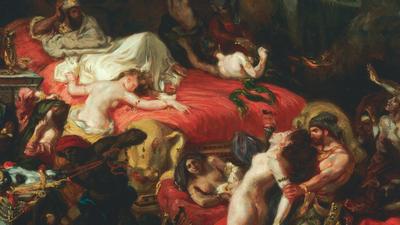
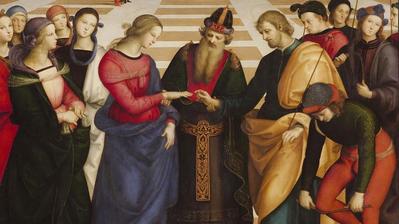
In the heart of the Louvre hangs a monumental masterpiece, The Coronation of Napoleon, completed in 1807 by the Neoclassical master Jacques-Louis David. This massive canvas captures a pivotal moment of power and pageantry within the cold, stone walls of Notre-Dame Cathedral. At the center of the spectacle stands Napoleon, dressed in heavy crimson velvet and golden laurel wreaths. His arms are raised, holding a shimmering crown high above his wife, Josephine. She kneels gracefully on a silk cushion, her white satin train flowing behind her like a river of light. Surrounding them is a sea of spectators, their faces illuminated by a soft, amber glow that cuts through the dim cathedral air.
David’s genius lies in his theatrical composition. He organizes hundreds of figures into a balanced, harmonious scene, drawing the eye directly to the golden crown. The textures are tangible; you can almost feel the weight of the thick ermine fur, the crispness of the lace collars, and the cold smoothness of the marble floors. Warm shadows dance in the background, adding a sense of immense depth and sacred stillness to the crowded space. This painting is more than a historical record; it is a carefully crafted piece of propaganda. By choosing to depict the crowning of the Empress rather than the Emperor crowning himself, David infuses the scene with a sense of elegance and calculated calm. It remains a breathtaking testament to how art can transform a single moment of political ambition into an eternal vision of grandeur.