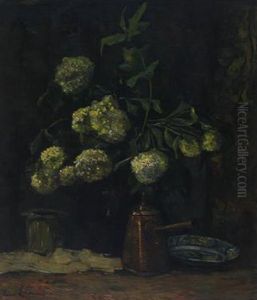
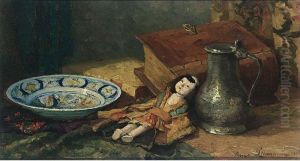
Anna Elisabeth 'Elise' Friederike Lehmann, known as Anna Elisabeth Lehmann, was a German painter and artist born on April 3, 1819, in Dresden. She was part of the 19th-century European art scene, a period characterized by significant transformation and the emergence of various art movements such as Romanticism, Realism, and Impressionism.
Elise Lehmann was born into an era when the roles and opportunities for women in the arts were limited. Despite these challenges, she managed to develop her skills and pursue her passion for painting. Lehmann received her artistic training at the Dresden Academy of Fine Arts, which was one of the few art academies at the time that allowed women to enroll. She was particularly known for her portrait paintings, through which she captured the likenesses and personalities of her subjects with sensitivity and detail.
Throughout her career, Lehmann exhibited her work at various art exhibitions, gaining recognition for her artistic talents. Her work reflected the styles of the mid-19th century, with a focus on fine detail, rich coloration, and an adherence to the academic standards of the time. While she did not achieve the same level of fame as some of her male contemporaries, her contributions to the art world were nonetheless significant, especially in the context of female artists of the era.
Lehmann lived through a period of political upheaval and societal changes in Germany, including the revolutions of 1848 and the eventual unification of Germany in 1871. These events may have influenced her work and the subjects she chose to portray. Despite the lack of extensive documentation on her personal life, it is clear that Lehmann's work was respected by her peers and the art community.
Anna Elisabeth Lehmann died on January 16, 1884, in Dresden. Although her name may not be as widely recognized as some of her contemporaries, her legacy remains as an example of the contributions that women made to the arts during the 19th century. Lehmann's life and work continue to be of interest to art historians who study the role of women in the arts and the broader cultural history of Germany during that time.