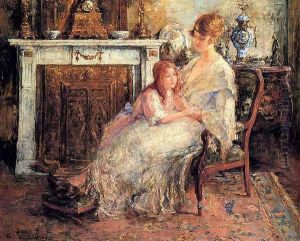
Edward Verschaffelt was a Belgian artist born on July 2, 1874, in Ghent, Belgium. He was primarily known for his work as a sculptor but was also a painter and illustrator. Verschaffelt came from an artistic family; his father was a decorative painter, which provided him an early exposure to the arts. His artistic education began at the Royal Academy of Fine Arts in Ghent, where he studied under the guidance of renowned sculptors such as Jules Van Biesbroeck and Theo Canneel. His education and talent in sculpture soon led to recognition within the Belgian art scene.
After his initial success in Belgium, Verschaffelt traveled to Italy to further his studies and was heavily influenced by the rich tradition of Italian sculpture. He spent time in Rome, which was a hub for artists at the turn of the century. The classical and Renaissance works he encountered there had a lasting impact on his artistic style and approach.
Verschaffelt's work was characterized by a blend of realism and idealism, often focusing on the human figure. He was adept at capturing emotion and movement in his sculptures, which ranged from public monuments to more intimate busts and statuettes. His works were well received, and he garnered various awards and honors throughout his career, including the Godecharle Prize for Sculpture, which further cemented his reputation in the Belgian art world.
During World War I, Verschaffelt served in the Belgian army, and his experiences during the war influenced his later works, which sometimes reflected themes of suffering and resilience. After the war, he continued to produce and exhibit his art, and also took on several commissions for war memorials, contributing to the collective memory and healing of the nation through his art.
Edward Verschaffelt's career spanned several decades, and his contributions to Belgian art were significant. He was also a professor at the Royal Academy of Fine Arts in Ghent, where he influenced the next generation of artists. Verschaffelt died on February 23, 1955, in Ghent. His legacy is preserved in the various works that are displayed in public spaces and museums, continuing to inspire and be admired by art enthusiasts and the general public alike.