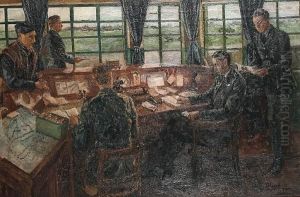
Elva Joan Blacker was an English artist known for her contributions to painting, particularly portraiture, still life, and landscape. Born in 1908, her artistic journey began in an era where the art world was predominantly male-dominated, making her achievements and recognition notable. Blacker's style evolved over the years, reflecting a keen observation of her subjects and a deep understanding of color and form.
Educated at the Slade School of Fine Art in London, one of the most prestigious art schools in the UK, Blacker honed her skills under the tutelage of renowned artists and educators. This period was crucial for developing her technique and artistic voice. The Slade provided her with a solid foundation in both the technical aspects of art and the theoretical underpinnings of the modern art movement of her time.
Throughout her career, Elva Joan Blacker exhibited her work across the United Kingdom, gaining a reputation for her sensitive and nuanced approach to portraiture. Her ability to capture the essence of her subjects was admired, as was her versatility in working with different mediums. Although primarily known for her work in oils, she also experimented with watercolors and drawings, showcasing her adaptability and continuous exploration of artistic expression.
Blacker's landscapes and still lifes, while perhaps less known than her portraits, exhibit a remarkable sensitivity to the natural world and the objects she chose to depict. Her landscapes, often scenes from her travels or her surroundings, are imbued with a sense of atmosphere and mood, reflecting her personal response to the environment. Her still lifes, on the other hand, are carefully composed, highlighting her attention to detail and the interplay of light and shadow.
Elva Joan Blacker's contributions to the art world were recognized in her time, but like many women artists of her generation, she did not always receive the same level of acknowledgment as her male counterparts. Despite this, her work continues to be appreciated by art historians and collectors for its technical skill, emotional depth, and the unique perspective she brought to her subjects. She passed away in 1999, leaving behind a body of work that continues to inspire and resonate with audiences.