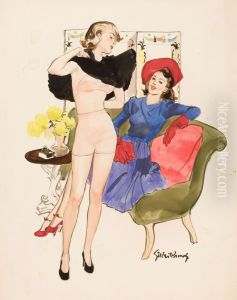
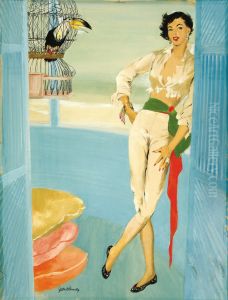
Gilbert Bundy was an American illustrator and cartoonist, known for his distinctive style and contribution to the world of magazine illustration, particularly during the 1930s and 1940s. Born in 1911, Bundy's artistic career began at an early age, displaying a remarkable talent that would soon see him contributing to national publications. Despite the lack of formal art education in his early years, Bundy's natural flair for drawing and keen observation of the human condition propelled him into the limelight of the American magazine industry.
Bundy's work primarily graced the pages of popular magazines such as 'Esquire,' 'The Saturday Evening Post,' and 'Collier's,' among others. His illustrations often depicted scenes of everyday life, characterized by a humorous and sometimes satirical lens. His ability to capture the essence of American culture during the mid-20th century, with all its idiosyncrasies and social nuances, made his work both beloved and highly sought after. Bundy's illustrations were not just mere drawings; they were a commentary on the social and political climate of his time, encapsulated with wit and a sharp eye for detail.
In addition to his magazine work, Gilbert Bundy also made significant contributions during World War II, where he served as a war correspondent and illustrator. His war-time drawings, capturing the life of soldiers and the reality of war, were poignant and impactful, providing a unique visual account of the conflict and its effects on the human spirit.
Tragically, Gilbert Bundy's life and career were cut short when he died in 1955 at the age of 44. Despite his relatively brief career, Bundy left behind a legacy that has had a lasting impact on the world of illustration. His work continues to be celebrated for its artistic merit and historical significance, offering insight into American culture and the art of illustration during a pivotal era in history.