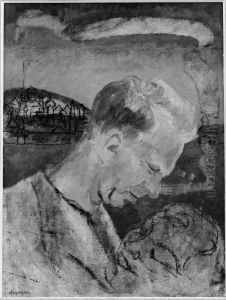
Harry Harryan was an Armenian-American painter known for his contributions to abstract expressionism, a movement that flourished in New York City after World War II. Born in 1931 in Armenia, Harryan moved to the United States where he would eventually become a part of the dynamic post-war art scene. His work is characterized by its vibrant color and dynamic brushwork, which aimed to convey deep emotional and existential themes through non-representational forms.
While not as widely recognized as some of his contemporaries, Harryan's paintings were nonetheless influential in certain art circles. He was part of a generation of artists who sought to break away from traditional forms of representation and narrative in art, seeking instead to express the complexities of human experience through color, form, and texture. Over the years, he participated in various group exhibitions and had several solo shows, gradually building a reputation for his unique approach to color and composition.
Harryan's career spanned several decades, during which time he experimented with different styles and techniques. His early work was marked by a focus on geometric abstraction, but he later moved towards a more fluid and spontaneous style that was in line with the abstract expressionist ethos of direct and emotive application of paint on canvas. Despite the evolution of his style, his work consistently demonstrated a commitment to exploring the possibilities of abstraction.
Harry Harryan's contributions to the art world continued until his death in 1996. His legacy is preserved in the collections of those who appreciated his innovative approach to painting, as well as in the memories of the art community that recognized his passion and dedication to his craft. His work remains a testament to the rich and diverse landscape of American abstract art in the post-war era.