Louis Marius Gueit was a French painter known for his landscape and historical scenes. Born on April 8, 1789, in Nice, which at that time was part of the Kingdom of Sardinia, Gueit went on to pursue his passion for art at a young age. He received his initial training in his hometown before moving to Paris to further his studies.
In Paris, Gueit became a student of the renowned French painter Pierre-Narcisse Guérin, who was a leading figure in the neoclassical movement in French painting. Under Guérin's tutelage, Gueit honed his skills and developed a style that combined neoclassical elements with a romantic sensibility, which became a distinctive feature of his works.
Gueit's career progressed, and he began to gain recognition for his work. He exhibited at the Paris Salon, an official art exhibition of the Académie des Beaux-Arts in Paris, which was the greatest formal art event in the Western world at the time. Through these exhibitions, Gueit's paintings reached a wider audience, and he started to build a reputation as a talented landscape and historical painter.
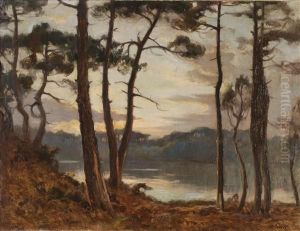
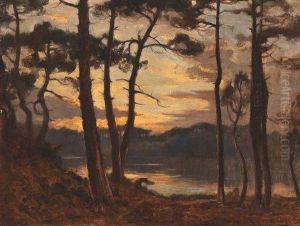
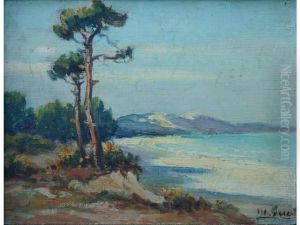
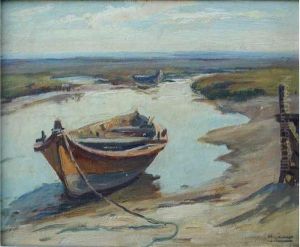
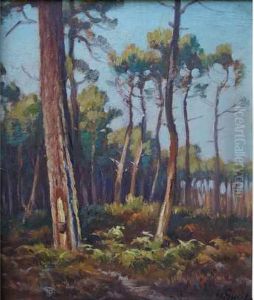
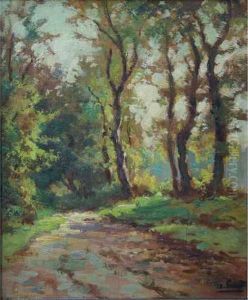
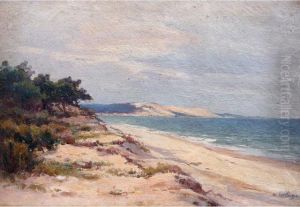
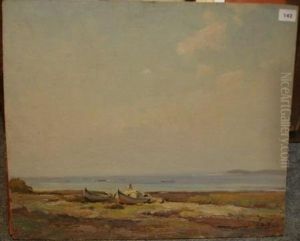
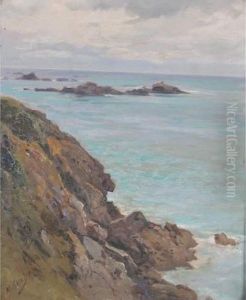
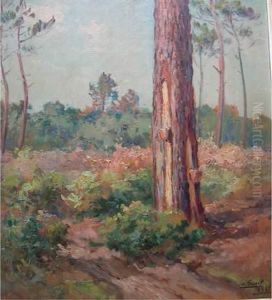
Throughout his career, Gueit produced a variety of works, including landscapes of the French countryside and scenes depicting historical events. His paintings were characterized by their attention to detail, vivid coloration, and the ability to capture the emotional essence of a scene.
Despite his achievements, Gueit did not gain the same level of fame as some of his contemporaries. Nevertheless, his contributions to French art during a period of significant cultural and political change were notable. His works can be seen as a bridge between the neoclassical tradition and the emerging romantic movement that would dominate European art in the 19th century.
Louis Marius Gueit passed away on March 9, 1867, in Paris, France. Today, his works are held in various private collections and museums, and he is remembered as a skilled painter who captured the spirit of his time through his landscapes and historical paintings.