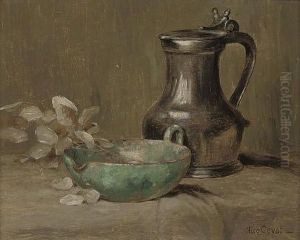
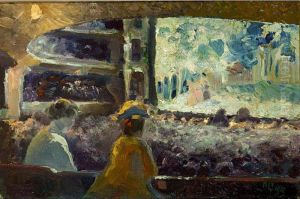
Nicolas Friedrich H. Cevat was a multifaceted artist known for his contributions to the art world as a painter, illustrator, and teacher. Born in 1928, Cevat spent his early years in a Europe that was rapidly changing due to political upheavals and the onset of World War II. These early experiences would later influence his art, which often explored themes of conflict, resilience, and the human condition. Cevat's style evolved over the years, but he remained deeply committed to exploring the expressive possibilities of color and form.
Cevat pursued his art education in the post-war era, a time when the art world was witnessing the rise of abstract expressionism and other avant-garde movements. He studied at several prestigious art schools across Europe, where he was exposed to a variety of artistic influences and techniques. This diverse education helped him develop a unique artistic voice that was both reflective of contemporary trends and deeply personal. Throughout the 1950s and 1960s, Cevat established himself as a prominent figure in the European art scene, participating in numerous exhibitions and gaining recognition for his innovative approach to painting.
In addition to his work as an artist, Cevat was also a passionate educator. He believed in the power of art to transform individuals and societies, and he dedicated a significant portion of his career to teaching. Cevat worked as a professor at various art institutions, where he inspired generations of young artists with his commitment to artistic exploration and excellence. His teaching philosophy emphasized the importance of mastering foundational skills while also encouraging experimentation and personal expression.
Cevat's later works often reflected a contemplative approach to life and art, characterized by a more subdued palette and a focus on abstract compositions. Despite these changes, his art continued to resonate with audiences, and he remained an active participant in the art community until his death in 2021. Nicolas Friedrich H. Cevat left behind a legacy that not only includes his own impressive body of work but also the impact he had on his students and the broader art world. His contributions to the field of art are remembered and celebrated by those who were touched by his vision and passion.