Octave Gallian was a French painter and sculptor, born in 1922 in Marseille, France, and passed away in 2012. His artistic journey began in the vibrant cultural setting of Marseille, a city known for its rich history and as a melting pot of artistic talent. Gallian was deeply influenced by the Mediterranean landscape, its luminous quality of light, and the vivid colors inherent to the region. These elements became a hallmark of his work, imbuing it with a distinctive brightness and vitality that captured the essence of the South of France.
Gallian's artistic education was classical, studying at the École des Beaux-Arts in Marseille, where he honed his skills in painting, sculpture, and drawing. His early work was characterized by a strong adherence to traditional techniques, but as he matured as an artist, he began to experiment with more modernist influences, incorporating elements of Fauvism and Cubism. This evolution in his style allowed him to develop a unique visual language that was both rooted in the classical tradition and vibrantly contemporary.
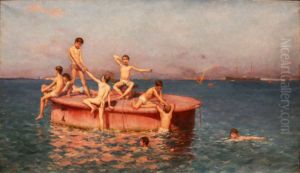
Throughout his career, Gallian exhibited his work widely in France and internationally, gaining recognition for his contributions to the post-war art scene in Europe. His paintings often featured the landscapes of Provence, seascapes, and scenes from daily life in Marseille, rendered in bold, expressive colors and dynamic compositions. Gallian's sculptures, on the other hand, revealed his mastery of form and his ability to capture the human figure with sensitivity and strength.
Beyond his achievements in painting and sculpture, Gallian was also a respected teacher, sharing his knowledge and passion for art with a younger generation of artists. He was deeply committed to the artistic community in Marseille, playing a significant role in fostering a supportive environment for artists in the post-war period.
Octave Gallian's legacy is that of an artist who was deeply connected to his roots in the South of France, yet open to the influences of the broader art world. His work continues to be celebrated for its vibrant color, dynamic energy, and the emotional depth with which he portrayed the landscapes and people of his beloved Provence.