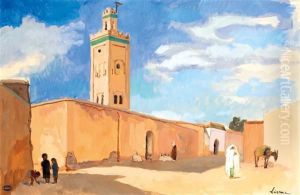
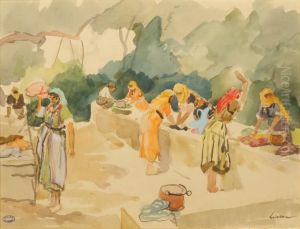
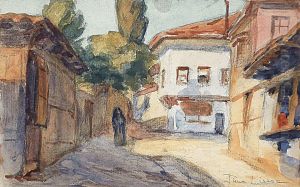
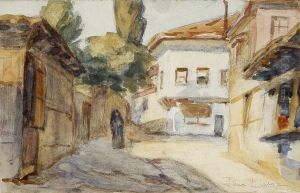
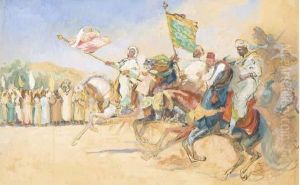
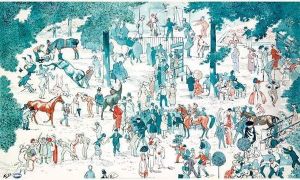
Pierre Lissac was a French artist and illustrator whose work captured the essence of early 20th-century French culture. Born in 1879, Lissac lived through a period of great transformation in both society and the arts. His career spanned several decades, during which he developed a distinctive style that combined elements of Art Nouveau and Art Deco, reflecting the dynamic changes of his time. Lissac's illustrations and paintings often depicted elegant scenes, fashionable figures, and the vibrant life of Paris, earning him recognition and admiration within the artistic community.
Lissac's artistic journey began in Paris, where he was exposed to the thriving art scene of the late 19th and early 20th centuries. He studied at the École des Beaux-Arts, where he honed his skills and developed a keen interest in the illustrative arts. Early in his career, Lissac contributed to various magazines and publications, showcasing his ability to capture the nuances of everyday life with charm and sophistication. His work was not limited to illustrations; he also painted, designed posters, and engaged in decorative arts, demonstrating his versatility and creativity.
Throughout his career, Pierre Lissac participated in numerous exhibitions, both in France and internationally, where his work received critical acclaim. His illustrations for books and literary works are particularly notable, blending artistic skill with literary sensitivity to enhance the reader's experience. Despite the changing trends in art throughout his lifetime, Lissac remained true to his unique vision, seamlessly integrating modernist influences without losing the elegance and poise that characterized his work.
Lissac's contributions to art were recognized with several awards and honors, solidifying his status as a respected figure in the French art world. His legacy is preserved through his works, which continue to be celebrated for their beauty and historical value. Pierre Lissac passed away in 1960, leaving behind a rich body of work that captures the spirit of an era. Today, his art is featured in collections and exhibitions around the world, testament to his enduring influence and the timeless appeal of his artistic vision.