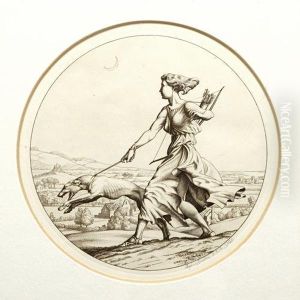
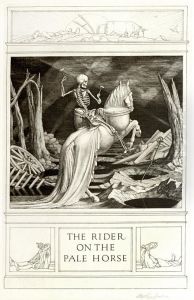
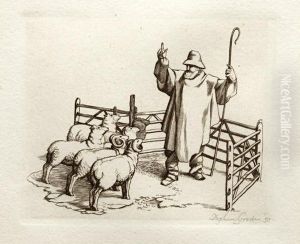
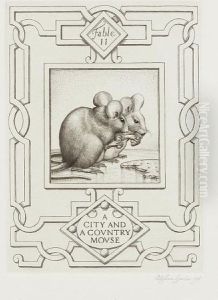
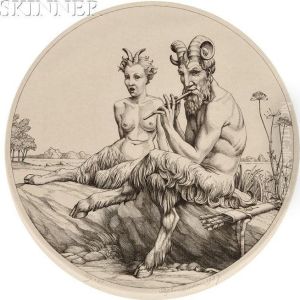
Stephen Gooden, born in 1892 in London, England, was an eminent British engraver renowned for his work in book illustration and currency and stamp design. He is best known for his revival of the art of copper engraving, a technique that had waned in popularity by the late 19th century. Gooden's mastery of the medium brought him to the forefront of the British art scene in the early to mid-20th century, making him a pivotal figure in the arts and crafts movement of the time.
Gooden's education in art began at the Slade School of Fine Art, University College London, and later, the Central School of Arts and Crafts. His early career saw a focus on bookplates, which garnered him significant attention and acclaim. However, it was his book illustrations, particularly for fine press books, that cemented his reputation. Gooden's works were characterized by their exquisite detail, precision, and a sense of whimsy, often drawing on classical and mythological themes. Among his notable projects were illustrations for the Nonesuch Press editions of works by authors such as Geoffrey Chaucer and Jonathan Swift, which are highly prized by collectors today.
Beyond his contributions to book illustration, Gooden's talents extended to designing currency and postage stamps, including work for the Bank of England. His designs are notable for their intricacy and elegance, qualities that made them both aesthetically pleasing and difficult to counterfeit. This aspect of his career highlights his versatility and the high regard in which his skills were held.
Stephen Gooden's legacy is that of a key figure in the revival and promotion of engraving as a fine art in the 20th century. His work not only embodies the technical skill and artistic sensibility of his era but also contributed to the resurgence of interest in traditional printmaking techniques. Gooden passed away in 1955, leaving behind a body of work that continues to be celebrated for its beauty and craftsmanship.