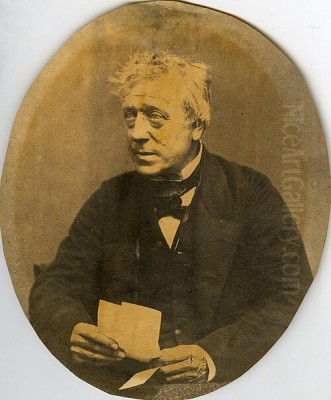
Alfred Stannard (1806-1889) was a British painter who carved his niche within the esteemed Norwich School of painters, a significant regional art movement in England. While perhaps not possessing the towering fame of its founders, Stannard was a diligent and skilled artist whose contributions to landscape and marine painting reflect the core tenets of this influential group. His life and work offer a fascinating glimpse into the artistic milieu of 19th-century Norfolk and the enduring appeal of its natural beauty.
The Artistic Cradle: The Norwich School of Painters
To understand Alfred Stannard, one must first appreciate the context of the Norwich School, the first provincial art movement of its kind in Britain. Founded informally around 1803 by John Crome and later significantly shaped by John Sell Cotman, the school drew its inspiration directly from the local Norfolk landscape. Its members were captivated by the serene beauty of the Broads, the bustling coastal life, and the rustic charm of the countryside.
The Norwich School artists, including figures like James Stark, George Vincent, Joseph Stannard (Alfred's elder brother), and John Thirtle, shared a common aesthetic. They were profoundly influenced by the Dutch Golden Age landscape painters, such as Meindert Hobbema and Jacob van Ruisdael, admiring their naturalism, attention to detail, and mastery of light and atmosphere. The Norwich painters sought to capture the specific character of their local environment with honesty and affection, often working en plein air to observe nature directly. Their exhibitions, primarily through the Norwich Society of Artists, provided a vital platform for showcasing their talents and fostering a regional artistic identity.
Early Life and Artistic Beginnings
Born in Norwich in 1806, Alfred Stannard was immersed in an artistic environment from a young age. His elder brother, Joseph Stannard (1797-1830), was already establishing himself as a talented painter and etcher within the Norwich School. Joseph's precocious talent and early death at the age of 33 undoubtedly cast a long shadow, but also likely provided an early impetus for Alfred's own artistic pursuits. It is highly probable that Alfred received his initial artistic training from his brother and was exposed to the circle of artists associated with the Norwich School.
The Stannard family became a notable artistic dynasty. Joseph married the talented still-life and landscape painter Emily Coppin (later Emily Coppin Stannard), and Alfred himself would go on to father several children who pursued artistic careers, most notably Eloise Harriet Stannard, who became a celebrated painter of still life. This familial dedication to the arts underscores the deep-rooted creative spirit that permeated their lives in Norwich.
Alfred Stannard's Artistic Style and Subjects
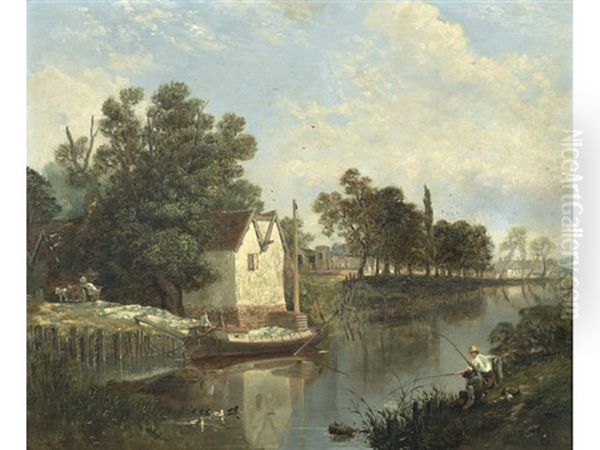
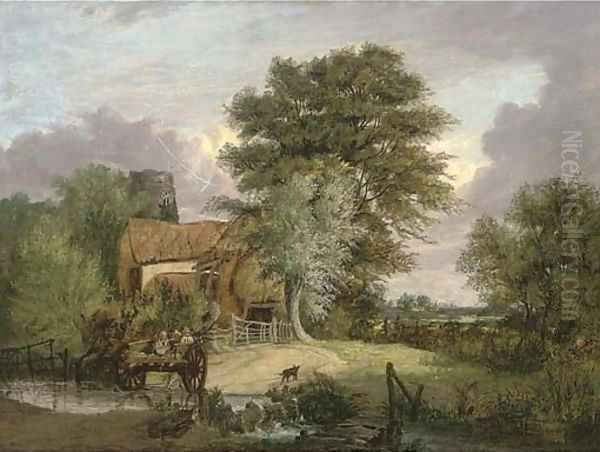
Alfred Stannard's body of work primarily consists of landscapes and marine paintings, themes central to the Norwich School. His style is characterized by a careful observation of nature, a subtle use of colour, and a competent handling of light and shadow to create atmospheric effects. While perhaps not as bold or innovative as Crome or Cotman, Stannard's paintings possess a quiet charm and a sincere appreciation for the Norfolk scenery.
His landscapes often depict the tranquil waterways of the Norfolk Broads, with their distinctive wherries and windmills, or pastoral scenes featuring cattle and rural figures. Works such as "A View on the River Yare, near Norwich" or "Norfolk Landscape with Cattle by a Stream" exemplify his ability to capture the gentle, unassuming beauty of his native county. He paid close attention to the rendering of foliage, water, and sky, imbuing his scenes with a sense of peace and authenticity.
Stannard was also an adept marine painter. The Norfolk coast, with its fishing villages, bustling ports like Great Yarmouth, and ever-changing maritime weather, provided rich subject matter. His coastal scenes, often featuring fishing boats, shipping, and dramatic skies, demonstrate a keen understanding of nautical details and the dynamic interplay of sea and sky. Titles like "Shipping off the Coast" or "Fishing Boats in a Breeze" are representative of this aspect of his oeuvre. He shared this interest in marine subjects with his brother Joseph, whose marine paintings were particularly admired.
Exhibitions and Recognition
Alfred Stannard was a regular exhibitor with the Norwich Society of Artists, the primary venue for the school's members. He also sought wider recognition by sending works to London exhibitions, including the Royal Academy and the British Institution. While he achieved a degree of success and was respected within his local artistic community, his national reputation did not reach the heights of some of his contemporaries.
It has been suggested that his fame might have been somewhat overshadowed by other leading figures of the Norwich School, and perhaps even by the posthumous reputation of his brother Joseph, or later, the distinct success of his daughter Eloise. However, his consistent output and dedication to his craft ensured his place as a valued member of the second generation of Norwich painters. His works were collected by local patrons who appreciated his faithful depictions of the scenery they knew and loved.
Contemporaries and Influences
Alfred Stannard worked alongside and was influenced by a notable group of artists. His primary connection was, of course, to the Norwich School. He would have known and interacted with James Stark, a prominent pupil of John Crome, known for his detailed woodland scenes. George Vincent, another key figure, was celebrated for his lively depictions of rural life and waterways. The legacy of John Crome, with his robust naturalism, and John Sell Cotman, with his more stylized and poetic approach, formed the bedrock of the school's aesthetic.
Beyond the immediate Norwich circle, the broader context of British landscape painting in the 19th century was dominated by giants like John Constable and J.M.W. Turner. While their grand Romantic visions differed in scale and ambition from the more intimate focus of the Norwich School, their emphasis on direct observation of nature and the expressive power of landscape resonated across the British art world. The Dutch masters, particularly Hobbema, Ruisdael, and marine painters like Willem van de Velde the Younger, remained crucial touchstones for Stannard and his peers, influencing their composition, light, and subject matter. Other notable landscape painters of the era, such as David Cox and Peter De Wint, also contributed to the flourishing tradition of British watercolour and oil landscape painting.
Representative Works
Identifying specific, universally acclaimed "masterpieces" by Alfred Stannard can be challenging, as his reputation is built more on a consistent body of competent and charming works rather than a few iconic pieces. However, several paintings are frequently cited and are representative of his skill and typical subject matter:
"Thorpe Water Frolic, Norwich": This subject, depicting a popular local regatta or festival on the River Wensum at Thorpe St Andrew, was painted by several Norwich artists, including his brother Joseph. Alfred's versions capture the lively atmosphere, the array of boats, and the scenic backdrop of the village. These paintings are valuable historical documents as well as pleasing artistic compositions.
"View on the River Yare": Numerous views of the Yare and other Norfolk rivers exist, showcasing his ability to render calm waters, reflective surfaces, and the lush vegetation of the riverbanks. These often include wherries, the traditional trading barges of the Broads.
"Coastal Scene with Shipping": These works demonstrate his proficiency in marine painting, capturing the movement of waves, the rigging of ships, and the atmospheric conditions of the coast.
"Norwich Market Place": Like other Norwich artists, Stannard occasionally depicted urban scenes. His views of the historic Norwich Market Place would have captured the bustling activity and architectural character of the city center.
"Landscape with Windmill and Cattle": A quintessential Norwich School theme, combining pastoral elements with iconic local structures like windmills, reflecting the agricultural heart of Norfolk.
These titles represent types of works he produced. His paintings are held in various public collections, notably the Norwich Castle Museum & Art Gallery, which has the most extensive collection of Norwich School art.
The Stannard Artistic Legacy
Alfred Stannard was part of an impressive artistic family. His brother Joseph, despite his short life, was a significant talent. Alfred's son, Alfred George Stannard (1828-1885), also became a painter, continuing the family tradition in landscape and coastal scenes, though his work is less widely known than his father's or uncle's.
However, the most celebrated artist among Alfred Stannard's descendants was his daughter, Eloise Harriet Stannard (1829-1915). She specialized in still-life painting, particularly fruit and flowers, and achieved considerable recognition for her exquisitely detailed and beautifully composed works. Her style, while distinct from her father's landscapes, shared the meticulous observation and skilled execution characteristic of the Norwich School's broader ethos. Eloise exhibited regularly at the Royal Academy and other prestigious venues, becoming one of the most accomplished female still-life painters of the Victorian era. Alfred Stannard's role as her father and likely her first teacher is an important part of his legacy.
Other members of the extended Stannard family also pursued art, including Emily Coppin Stannard (Joseph's wife), who was a highly regarded painter of still lifes and, occasionally, landscapes and animals. The collective output of the Stannard family represents a significant contribution to the art of Norfolk.
Later Years and Enduring Contribution
Alfred Stannard continued to paint throughout his long life, remaining based in Norwich. He witnessed the evolution of the Norwich School from its vibrant early days to its gradual decline as an active movement, though its influence persisted. He passed away in 1889, leaving behind a substantial body of work that documents the landscapes and maritime life of his beloved Norfolk.
While he may not have achieved the same level of fame as John Crome, John Sell Cotman, or even his brother Joseph Stannard, Alfred Stannard was a dedicated and proficient artist who played a consistent role in the Norwich School. His paintings are valued for their charm, their faithful representation of local scenery, and their embodiment of the Norwich School's distinctive aesthetic. He contributed to the rich artistic heritage of the region and helped to sustain the tradition of landscape painting that celebrated the unique beauty of Norfolk. His work, often characterized by its gentle realism and quiet dignity, continues to be appreciated by collectors and enthusiasts of British 19th-century art, offering a window into a specific time and place captured with an artist's affectionate eye. His role within the Stannard artistic dynasty, particularly as the father of Eloise Harriet Stannard, further solidifies his place in the annals of British art history.