The 19th century was a golden age for printmaking, an era where the engraver's art was paramount in disseminating images to a burgeoning middle class eager for art and information. Before the widespread adoption of photography for reproduction, engravings were the primary means by which paintings, landscapes, and topical scenes reached a broad public. Within this vibrant artistic landscape, Charles Mottram (1807-1876) distinguished himself as one of Britain's most skilled and prolific engravers, renowned for his meticulous technique and his ability to translate the essence of diverse artistic visions onto the steel plate.
The Rise of a London Engraver
Born in England in 1807, Charles Mottram emerged as a prominent figure in London's bustling art world. The city was a hub for publishing and printmaking, and engravers were in high demand. Mottram's career coincided with significant advancements in printing technology, particularly the widespread use of steel engraving. This medium allowed for finer lines and a greater number of impressions than copperplate engraving, making it ideal for detailed reproductive work and large print runs.
Mottram mastered various engraving techniques, including steel engraving, aquatint, and woodcut, demonstrating a versatility that allowed him to tackle a wide array of subjects and styles. He became particularly celebrated for his reproductive engravings, translating the works of popular contemporary painters into prints that could be enjoyed in homes across Britain and beyond. His skill lay not just in technical precision but also in his interpretative ability, capturing the spirit and nuances of the original paintings.
Technical Virtuosity and "Sky Tints"
A hallmark of Mottram's work was its exquisite detail. He possessed a remarkable ability to render complex textures, intricate patterns, and subtle gradations of light and shadow. This meticulousness was crucial for faithfully reproducing the often highly detailed narrative and landscape paintings popular during the Victorian era. His engravings were praised for their clarity and fidelity to the source material, making the works of famous artists accessible to a wider audience.
One of the distinctive features of Mottram's engravings was his adept use of "sky tints." This technique involved skillfully modulating tones in the sky to create a sense of depth, atmosphere, and luminosity. It added a visual dynamism to his prints, particularly in landscapes and seascapes, making them more vivid and engaging. The application of these tints, often achieved through delicate work with the ruling machine and careful etching, showcased his mastery over the medium and contributed significantly to the aesthetic appeal of his prints. The ruling machine, an instrument that allowed for the precise engraving of parallel lines, was a tool Mottram wielded with exceptional skill, contributing to the refined finish of his plates.
Collaborations and Reproductive Masterpieces
Charles Mottram's reputation was built significantly on his collaborations with, and reproductions of, leading artists of his time. His ability to translate diverse artistic styles into the engraved medium made him a sought-after craftsman.
He notably engraved works after the celebrated animal painter Sir Edwin Landseer (1802-1873). Landseer's paintings, often depicting animals with anthropomorphic qualities or dramatic Highland scenes, were immensely popular. Mottram's engravings of works like The Challenge helped solidify Landseer's widespread fame, bringing these iconic images into countless Victorian homes. The dramatic stag, a recurring motif for Landseer, found a powerful new life through Mottram's incisive lines.
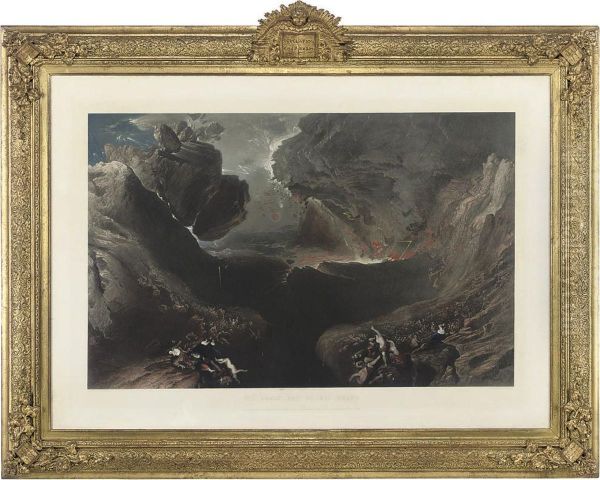
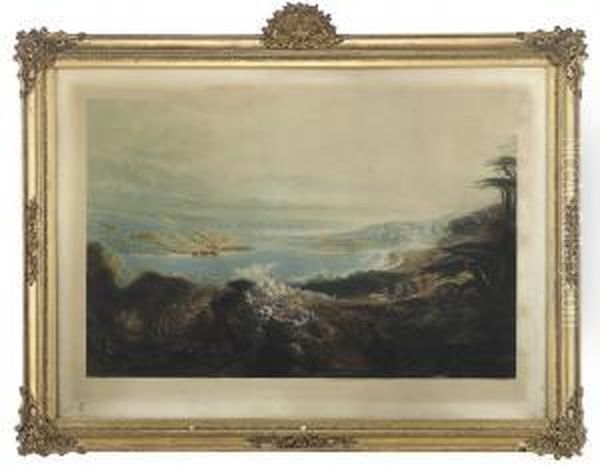
Another significant artist whose work Mottram translated was John Martin (1789-1854). Martin was famed for his grandiose, apocalyptic, and biblical scenes, characterized by vast perspectives and dramatic lighting. Mottram's engraving of Martin's The Last Judgment triptych (which also included The Great Day of His Wrath and The Plains of Heaven) was a monumental undertaking, requiring immense skill to capture the sublime terror and awe of the original paintings. These prints were highly successful, catering to the public's taste for the spectacular and the moralistic.
Mottram also worked with painters of contemporary life and landscape. He produced engravings after William Henry Bartlett (1809-1854), an artist known for his topographical views of various countries, which were popular in illustrated books and as standalone prints. Bartlett's detailed drawings of picturesque landscapes and urban scenes provided fertile ground for Mottram's precise engraving style.
His engraving of the Boston Harbor View, based on a watercolor by John William Hill (1812-1879), an American artist associated with the Pre-Raphaelite movement in the US, demonstrates Mottram's reach across the Atlantic. This panoramic view, bustling with maritime activity, showcased his ability to handle complex compositions and render the vibrancy of urban life. The print's enduring popularity, evidenced by its reprinting well into the 20th century, speaks to its quality and appeal.
The French animal painter Rosa Bonheur (1822-1899) was another artist whose work Mottram engraved. Bonheur was internationally acclaimed for her realistic and powerful depictions of animals. Mottram's engravings of her works, such as Brittany Cattle, helped introduce her art to a British audience, further enhancing her considerable reputation. Her most famous work, The Horse Fair, was also widely disseminated through prints by other engravers, highlighting the era's demand for such reproductions.
Mottram's versatility extended to battle and historical scenes, as seen in his engravings after Thomas Jones Barker (1815-1882). Barker specialized in dramatic military encounters and historical events, and Mottram's engravings effectively conveyed the dynamism and pathos of these subjects. Barker's paintings, such as The Relief of Lucknow, were popular patriotic images, and engravings played a crucial role in their dissemination.
He also engraved works by Frances Anne Hopkins (1837-1919), a British artist who documented Canadian voyageur life. Mottram's engraving of her large painting Canoes in a Fog, Lake Superior (also known as part of the Canadian North-West Fur Trade Route series) is a notable example. Hopkins' unique depictions of Canadian landscapes and the fur trade provided fresh subject matter, and Mottram's skill ensured these scenes were rendered with atmospheric depth and narrative clarity.
The Pre-Raphaelite Brotherhood, with its emphasis on detail and literary or religious themes, also provided subjects for engravers. Mottram is noted to have depicted works by artists like William Holman Hunt (1827-1910). Hunt's meticulously detailed and symbolically rich paintings, such as The Light of the World or The Scapegoat, would have presented a significant but rewarding challenge for an engraver of Mottram's calibre.
Other artists whose works were widely engraved during this period, and whose oeuvres Mottram might have encountered or whose popularity reflects the artistic milieu he worked in, include landscape giants like J.M.W. Turner (1775-1851) and John Constable (1776-1837). While specific engravings by Mottram after these two might be less documented than others, the demand for landscape prints was immense. Turner, in particular, actively supervised the engraving of his works, understanding the medium's power. Marine painters like Clarkson Stanfield (1793-1867) and Orientalist artists such as David Roberts (1796-1864) also saw their works achieve wide circulation through engravings.
Mottram's engraving of Samuel Rogers at His Breakfast Table, after a drawing by John Doyle (1797-1868), known by his pen name "HB" for his political caricatures, shows another facet of his work – portraiture and genre scenes. Samuel Rogers was a prominent poet and patron of the arts, and such images catered to public interest in literary and cultural figures.
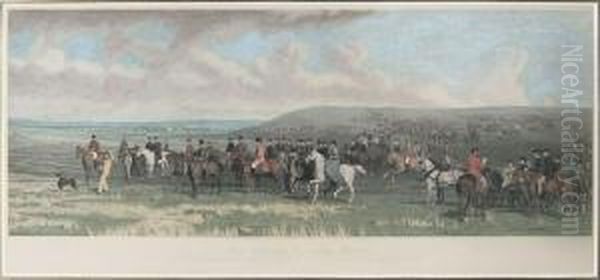
The work The Ashdown Coursing Meeting, engraved by Mottram after a painting by S. Pearce (likely Stephen Pearce, 1819-1904, known for equestrian portraits and sporting scenes), reflects the Victorian enthusiasm for sporting subjects. These prints captured the dynamism and social aspects of such events. Similarly, The Departure of the Queen from Kingstown (original painter less consistently cited, but the event itself was newsworthy) would have appealed to patriotic sentiment and interest in royal occasions.
Exhibitions and Recognition
Charles Mottram was a respected member of the London art community. He regularly exhibited his works at the Royal Academy of Arts, one of the most prestigious art institutions in Britain. His consistent presence at these exhibitions, from his early career until his death in 1876, indicates the high regard in which his engravings were held by his peers and the public. These exhibitions provided a crucial platform for engravers to showcase their skills and for the public to see the latest reproductions of popular paintings.
His prints were not only admired during his lifetime but continued to be popular long after his death. Many of his plates remained in use, and impressions were issued well into the 20th century, a testament to the enduring quality of his craftsmanship and the timeless appeal of the images he helped create. The survival of many of his printing plates in good condition further underscores the technical excellence of his work.
Artistic Style and Thematic Range
Charles Mottram's artistic style is characterized by its clarity, precision, and atmospheric sensibility. While primarily a reproductive engraver, his interpretations were not merely mechanical copies. He brought a nuanced understanding of light, shade, and texture to his work, effectively translating the painterly qualities of oils and watercolors into the linear language of engraving.
His thematic range was broad, reflecting the diverse tastes of the Victorian public. He excelled in:
Landscapes and Cityscapes: From the rugged Highlands of Scotland (after Landseer) to the bustling port of Boston (after Hill) and the misty lakes of Canada (after Hopkins), Mottram captured a wide variety of natural and urban environments. His "sky tints" were particularly effective in these genres.
Historical and Biblical Scenes: His engravings after John Martin are prime examples of his ability to handle epic, dramatic compositions filled with intricate detail and emotional intensity.
Animal Subjects: Works after Landseer and Bonheur demonstrate his skill in rendering the anatomy and character of animals, a subject of immense Victorian fascination.
Genre and Sporting Scenes: Engravings like The Ashdown Coursing Meeting catered to the public's interest in everyday life, social events, and sporting pursuits.
Literary and Figurative Works: Illustrations for literature and depictions of prominent figures also formed part of his oeuvre.
His ability to adapt his technique to suit such varied subjects and the styles of different painters was a key to his success. Whether it was the sublime Romanticism of Martin, the detailed realism of the Pre-Raphaelites, or the picturesque charm of Bartlett's views, Mottram found a way to convey the essence of the original.
The Legacy of Charles Mottram
Charles Mottram's death in 1876 marked the end of a significant career in the world of 19th-century printmaking. His legacy, however, extends far beyond his lifetime. His engravings played a crucial role in the democratization of art, making images accessible to a public that might never have had the opportunity to see the original paintings. In an age before mass media as we know it, prints like Mottram's shaped popular visual culture and contributed to the fame of the artists whose work he reproduced.
His technical mastery, particularly in steel engraving and the use of "sky tints," set a high standard for reproductive engraving. His works are still collected today, valued both for their historical significance as documents of Victorian taste and for their intrinsic artistic merit as fine examples of the engraver's art. They offer a window into the 19th-century art world, revealing the subjects that captivated the public and the artists who rose to prominence.
Mottram worked alongside other notable engravers of his era, such as Samuel Cousins (1801-1887), who was renowned for his mezzotints after artists like Landseer and Sir Thomas Lawrence (1769-1830), or the Finden brothers, William (1787-1852) and Edward Francis (1791-1857), who produced numerous landscape and illustrative engravings. The collective output of these skilled artisans shaped the visual landscape of the Victorian era. Even artists like George Baxter (1804-1867), who developed his own color printing process, contributed to this explosion of popular imagery. Mottram's contribution stands out for its consistent quality and the breadth of his subject matter.
Conclusion
Charles Mottram was more than just a copyist; he was a skilled interpreter and a master craftsman who played a vital role in the 19th-century art ecosystem. His meticulous engravings brought the works of celebrated painters to a vast audience, shaping public taste and contributing to the visual culture of the Victorian era. Through his dedication to the art of engraving, his technical innovations like the "sky tints," and his prolific output, Mottram secured his place as one of the foremost British engravers of his time. His works remain a testament to his skill and a valuable resource for understanding the art and visual preoccupations of the 19th century, ensuring that the images he so carefully translated onto steel continue to be appreciated.