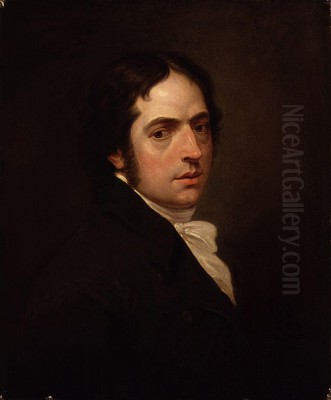
Edward Dayes (1763–1804) stands as a significant, albeit sometimes overlooked, figure in the landscape of late eighteenth-century British art. A versatile artist, he was a proficient watercolourist, a skilled draughtsman, an accomplished engraver, and an ambitious historical painter. His career, though tragically cut short, left an indelible mark on the development of British topographical art and influenced a generation of painters, most notably J.M.W. Turner. This exploration delves into the multifaceted career of Dayes, examining his origins, artistic development, key works, interactions with contemporaries, and his enduring, if complex, legacy.
Early Life and Artistic Formation
Born in London in 1763, Edward Dayes emerged from a background described by some sources as humble, even impoverished. This early environment likely instilled in him a resilience and determination that would characterize his professional life. His formal artistic training began under the tutelage of William Pether, a respected mezzotint engraver. This apprenticeship would have provided Dayes with a strong foundation in draughtsmanship and the technical intricacies of printmaking, skills that would serve him well throughout his career, not only in producing his own engravings but also in understanding the reproductive potential of his painted works.
Seeking to broaden his artistic horizons beyond engraving, Dayes enrolled in the prestigious Royal Academy Schools. The Royal Academy, founded in 1768 under the patronage of King George III and with Sir Joshua Reynolds as its first president, was the epicentre of artistic training and exhibition in Britain. Here, Dayes would have been exposed to the prevailing academic theories, which prioritized historical and mythological subjects – the so-called "grand manner" – over landscape and portraiture, though the latter were commercially more viable. He became a member of the Royal Academy in 1780, indicating an early recognition of his talents. His studies would have involved drawing from antique casts and life models, and he would have absorbed the artistic currents of the time, including the burgeoning interest in the Picturesque and the Sublime.
The Rise of a Topographical Master
Dayes initially made his mark as a topographical watercolourist. Topographical art, which focused on accurate and detailed depictions of specific places, was immensely popular in Britain during the late 18th and early 19th centuries. It catered to a growing domestic tourist market and a national pride in the British landscape and its antiquities. Dayes excelled in this genre, producing numerous views of London, as well as landscapes and architectural subjects throughout England and Wales.
His style in watercolour was characterized by a refined elegance, often employing a palette of cool, subtle greys, blues, and greens, which lent his scenes a distinct atmospheric quality. He was adept at capturing the play of light and shadow, and his compositions were carefully structured, often incorporating human figures to add scale and narrative interest. His works were not mere transcriptions of reality but were imbued with a sense of poetic sensibility. He was particularly drawn to ancient abbeys, castles, and cathedrals, subjects that resonated with the Romantic era's fascination with the past and the "imperfect beauty" of ruins.
Key works from this period include Norwich Cathedral from the River Wensum (c. 1792) and The Entrance to St. Augustine's Abbey, Canterbury (c. 1790). These paintings showcase his meticulous attention to architectural detail, his delicate handling of wash, and his ability to evoke a sense of place and history. His depictions of Dartmouth Castle and various views of the Lake District further cemented his reputation. Dayes was influenced by earlier masters of the topographical tradition, such as Paul Sandby, often called the "father of English watercolour," and Michael "Angelo" Rooker, whose precise draughtsmanship was widely admired. He also learned from contemporaries like Thomas Hearne and Thomas Malton Jr., who specialized in architectural views.
Dayes's topographical watercolours were significant in elevating the status of the medium. Previously often seen as a preparatory medium for engravers or as an amateur pursuit, watercolour in the hands of artists like Dayes, John Robert Cozens, and Francis Towne began to be recognized as a legitimate art form in its own right, capable of sophisticated artistic expression.
Ambitions in Historical Painting
Despite his success as a topographical artist, Edward Dayes harboured ambitions to excel in historical painting, the most esteemed genre according to academic hierarchy. This ambition reflected a desire for greater artistic recognition and intellectual standing. Historical paintings, typically depicting scenes from the Bible, classical mythology, or significant historical events, were considered the ultimate test of an artist's skill, imagination, and erudition.
In 1798, Dayes exhibited The Fall of the Rebel Angels at the Royal Academy. This work, reportedly one he spent a considerable amount of time on, drew its subject from John Milton's epic poem Paradise Lost. It demonstrated his engagement with grand literary themes and his study of classical and Renaissance art, particularly in the depiction of heroic nudes and dramatic compositions. The influence of established Royal Academicians like Sir Joshua Reynolds, with his advocacy for the "grand style," and perhaps the more visionary works of James Barry or Henry Fuseli, can be discerned in Dayes's approach to such subjects.
Also in 1798, he exhibited two other historical subjects, Lycurgus Entering Athens and Theseus Entering Athens (some sources mention Theocritus, but Theseus is more likely for a classical Athenian subject). These works, with their classical themes and compositions, were well-received by some critics and found favour with publishers, indicating a market for such images, often disseminated through engravings.
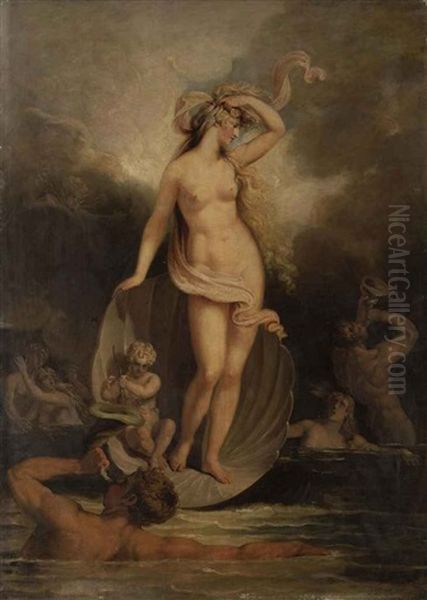
His most ambitious historical work in oil was The Triumph of Beauty, exhibited in 1800 at a venue in Soho Square. Inspired by a poem by Mark Akenside, this painting was a complex allegorical composition that aimed to embody classical ideals of beauty and virtue. While it showcased his technical skill and intellectual aspirations, it did not achieve the widespread critical acclaim he might have hoped for, perhaps due to the shifting tastes of the time or the immense competition in this field from artists like Benjamin West, then President of the Royal Academy, or Angelica Kauffman, one of the few female founding members of the RA.
Dayes's foray into historical painting, while not as commercially successful as his topographical work, is crucial for understanding the breadth of his artistic vision. He sought to bridge the perceived gap between the "lesser" genre of landscape and the "higher" genre of history, demonstrating that an artist could excel in both.
Teaching and Influence
Edward Dayes was also an influential teacher, and his most famous pupils were J.M.W. Turner and Thomas Girtin, two artists who would go on to revolutionize British watercolour painting. Both young men worked in Dayes's studio, likely colouring prints and copying his drawings, a common practice in artistic apprenticeships of the period.
Turner, in particular, is known to have copied Dayes's works extensively in his formative years. While Turner would eventually develop a far more radical and expressive style, Dayes's emphasis on careful observation, structured composition, and the subtle rendering of atmospheric effects provided a crucial foundation. Girtin, whose career was also tragically short, developed a broader, more poetic style of watercolour that built upon the foundations laid by artists like Dayes, moving towards a more romantic and less strictly topographical approach.
The relationship between Dayes and his pupils was not always smooth. Dayes was known to have a somewhat difficult temperament, and there were reports of friction, particularly with Girtin. Nevertheless, his impact as an instructor is undeniable. His methodical approach to teaching drawing and colouring landscapes, later codified in his posthumously published writings, provided a systematic framework for aspiring artists. He taught them the importance of sketching from nature, understanding perspective, and mastering the techniques of wash application.
Printmaking and Publications
Dayes's early training as an engraver under William Pether remained a vital part of his artistic practice. He produced numerous engravings himself and also worked closely with other engravers and publishers to disseminate his topographical views to a wider audience. Many of his watercolours of picturesque scenery and architectural antiquities were translated into prints for inclusion in illustrated books and albums, which were highly popular.
He contributed illustrations to various copperplate magazines and notably provided a significant number of drawings for topographical publications, such as those depicting British scenery. For instance, he is known to have worked on projects for publishers like John Raphael Smith. This engagement with the print market not only provided a steady income but also greatly expanded his reputation beyond the circles of original art collectors.
Beyond his visual art, Dayes was also a writer on art. After his death, his widow published a collection of his writings in 1805, titled The Works of the Late Edward Dayes. This volume included essays on painting, critiques of contemporary artists (his Sketches of Modern Artists), and, significantly, his Instructions for Drawing and Colouring Landscapes. This instructional treatise laid out his principles of landscape art, covering topics such as composition, perspective, colour theory, and the depiction of different natural effects. It provides valuable insight into his artistic philosophy and teaching methods and was a useful resource for art students of the period.
Interactions with Contemporaries
Edward Dayes was an active participant in the London art world of his time. He exhibited regularly at the Royal Academy from 1786 until his death, and also at the Society of Artists. His interactions with fellow artists were varied. He collaborated with engravers and publishers, and as a teacher, he directly shaped the next generation.
He would have known many of the leading figures of the day. Joseph Farington, a fellow Academician and influential diarist, recorded aspects of the London art scene, and Dayes likely featured in such circles. While Dayes admired the academic ideals promoted by Sir Joshua Reynolds, he also operated within the burgeoning market for watercolours alongside artists like Paul Sandby, Michael "Angelo" Rooker, Thomas Hearne, and the slightly younger generation that included his own pupils.
There is also evidence of his awareness of, and perhaps influence from, continental artists working in Britain. Philippe Jacques de Loutherbourg, a Franco-British painter known for his dramatic landscapes, seascapes, and innovative stage designs for David Garrick at Drury Lane, was a prominent figure in London. De Loutherbourg's dynamic compositions and interest in the Sublime may have resonated with Dayes's own attempts to imbue his landscapes and historical scenes with dramatic power.
However, Dayes's personality was sometimes a source of conflict. He was described as ambitious and perhaps somewhat embittered by what he perceived as a lack of due recognition, particularly his failure to be elected as a full Royal Academician, remaining an Associate. His critical writings on other artists, while insightful, could also be sharp, reflecting a certain professional jealousy or frustration.
Challenges and Tragic End
Despite his considerable talents and industry, Edward Dayes faced significant professional and personal challenges. The art market was competitive, and while his topographical watercolours were popular, the financial rewards may not have always matched his efforts or his ambitions for grander historical works. His temperament, often described as proud and perhaps difficult, may have hindered some professional relationships.
The most significant challenge was his deep-seated frustration with his professional standing. He yearned for full membership of the Royal Academy, a distinction that eluded him. This, combined with other personal or financial pressures, appears to have taken a severe toll on his mental well-being. In May 1804, at the age of just 41, Edward Dayes tragically took his own life.
His suicide cast a shadow over his memory for some time and perhaps contributed to a period of relative neglect by art historians. However, it also prompted his widow to ensure his artistic and literary contributions were not forgotten, leading to the posthumous publication of his Works.
Artistic Style and Characteristics Summarised
Edward Dayes's artistic style is multifaceted, reflecting his diverse activities. In his topographical watercolours, he is known for:
Elegant Draughtsmanship: A precise and delicate line, particularly in architectural details.
Subtle Colour Palette: Predominantly cool tones – greys, blues, and muted greens – creating a refined and often tranquil atmosphere.
Atmospheric Effects: Skillful rendering of light, shadow, and aerial perspective to convey depth and mood.
Picturesque Compositions: Careful arrangement of elements, often incorporating ruins, rustic figures, and natural features to create harmonious and engaging scenes.
Focus on British Heritage: A recurring interest in cathedrals, abbeys, castles, and historic towns.
In his historical paintings, his characteristics include:
Classical Ambition: A desire to emulate the grand manner, with subjects drawn from mythology, classical history, and epic literature.
Academic Composition: Formal, often complex arrangements of figures, adhering to academic principles.
Heroic Figuration: Attempts at depicting idealized human forms, though perhaps not always with the anatomical mastery of specialists in the genre.
Dramatic Intent: A striving for emotional impact and narrative clarity, though sometimes constrained by a more reserved temperament compared to contemporaries like Fuseli.
His engravings reflect the precision of his draughtsmanship, translating his painted compositions into a reproducible format accessible to a broader public. His writings reveal a thoughtful and articulate mind, deeply engaged with the theory and practice of art.
Legacy and Art Historical Position
The art historical position of Edward Dayes is complex and has undergone re-evaluation. For a period, he was primarily remembered as the teacher of Turner and Girtin, his own achievements somewhat overshadowed by theirs. His topographical work, while respected, was sometimes seen as typical of its era rather than groundbreaking. His historical paintings were often viewed as ambitious but not entirely successful attempts to break into a higher genre.
However, more recent scholarship has afforded Dayes a more nuanced and significant place in British art history. He is now recognized as a key figure in the "second generation" of English watercolourists, building on the foundations of artists like Paul Sandby and pushing the medium towards greater sophistication and expressive potential. His topographical works are valued not only for their historical record but also for their artistic merit and their contribution to the Picturesque aesthetic.
His influence on Turner, even if Turner rapidly surpassed him, was formative. Dayes provided essential technical grounding and an appreciation for the careful observation of nature and architecture. His attempts at historical painting, while perhaps not reaching the heights of some contemporaries, demonstrate the intellectual ambitions of artists working outside the absolute elite of the Royal Academy and reflect the broader cultural currents of the late Enlightenment and early Romantic periods.
His posthumously published Instructions for Drawing and Colouring Landscapes also contributed to his legacy, offering practical guidance that was valued by students for many years. He is seen as an important transitional figure, whose career bridged the more purely descriptive topographical art of the mid-18th century and the more expressive, romantic landscape painting that would flourish in the early 19th century with artists like Turner, Girtin, and later John Constable.
Conclusion
Edward Dayes was an artist of considerable talent, versatility, and ambition. As a watercolourist, he produced an extensive body of work that captured the beauty and historical resonance of the British landscape with elegance and precision. His topographical views contributed significantly to the development and appreciation of watercolour as an independent art form. As a teacher, he played a crucial role in the early careers of J.M.W. Turner and Thomas Girtin, two of Britain's greatest watercolourists.
His aspirations in historical painting reveal an artist striving for the highest levels of academic achievement, engaging with grand themes and complex compositions. Though his life was cut tragically short, and his contemporary recognition perhaps not commensurate with his talents, Edward Dayes left a lasting legacy. His work provides a vital link in the evolution of British art, and his contributions to both topographical and historical painting, as well as to art education through his writings, secure him an important, if sometimes understated, place in the annals of art history. He remains a testament to the rich and diverse artistic culture of late eighteenth-century Britain.