Emmanuel Joseph Lauret: A French Vision of the Orient
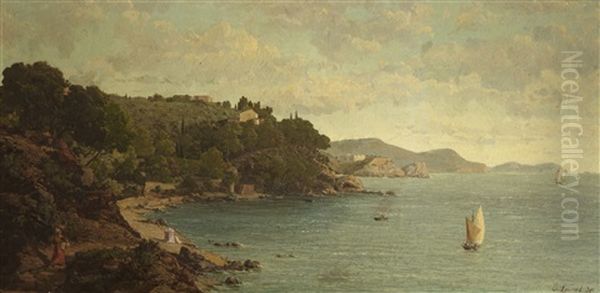
Emmanuel Joseph Lauret stands as a notable, if somewhat enigmatic, figure within the rich tapestry of 19th-century French art. Born in 1809 and passing away in 1882, Lauret dedicated his artistic endeavors to capturing the allure and perceived exoticism of the East, firmly placing him within the Orientalist movement. As a French painter, his career unfolded during a period of intense European fascination with North Africa, the Middle East, and the broader Islamic world, a fascination fueled by colonial expansion, travel narratives, and a romantic desire for the unfamiliar. Lauret's contribution to this genre, though perhaps not as widely celebrated today as some of his contemporaries, offers a valuable lens through which to examine the artistic currents and cultural preoccupations of his time.
The Rise of Orientalism in 19th-Century Europe
To understand Emmanuel Joseph Lauret's work, one must first appreciate the broader context of Orientalism. This artistic and cultural movement, which swept across Europe, particularly in France and Britain, during the 19th century, was characterized by a deep-seated interest in the "Orient"—a term then used to describe a vast and diverse region encompassing North Africa, the Ottoman Empire, Persia, India, and East Asia. This fascination was not monolithic; it ranged from scholarly inquiry and ethnographic documentation to romanticized fantasies and stereotypical portrayals.
The Napoleonic campaigns in Egypt and Syria (1798-1801) are often cited as a significant catalyst, opening up these regions to European eyes and bringing back a wealth of artifacts and imagery. Subsequent colonial ventures, such as France's conquest of Algeria beginning in 1830, further intensified this engagement. Artists, writers, and scholars were drawn to the perceived exoticism of these lands: their vibrant marketplaces, distinct architectures, unfamiliar customs, and the dramatic interplay of light and shadow in desert landscapes.
Painters played a crucial role in shaping the European imagination of the Orient. They traveled, sketched, and returned to their studios to create elaborate canvases that often blended meticulous observation with imaginative reconstruction. These works catered to a public eager for glimpses into worlds that seemed vastly different from their own. While Orientalist art produced many visually stunning and historically significant pieces, it has also been subject to critical re-evaluation in post-colonial discourse, often critiqued for perpetuating stereotypes, objectifying cultures, and serving imperial narratives. However, within its historical context, it was a dominant and influential artistic force.
Emmanuel Joseph Lauret: Life and Artistic Pursuits
Biographical details about Emmanuel Joseph Lauret remain somewhat sparse in readily accessible records. We know he was French, lived from 1809 to 1882, and was active as a painter. His primary professional focus was the depiction of Oriental and Islamic themes, suggesting that, like many of his peers, he may have traveled to North Africa or the Middle East, or at least drew heavily upon the visual resources and travelogues available at the time. The precise locations of his birth and death are not widely documented, leaving aspects of his personal journey to speculation.
His professional background was firmly rooted in painting. The 19th century in France was a period of dynamic artistic development, with the Académie des Beaux-Arts still holding considerable sway, but also witnessing the rise of Romanticism, Realism, and eventually Impressionism. Lauret's adherence to Orientalist themes places him within a popular and commercially viable branch of academic and Romantic art. His works were evidently recognized in the art market of his time and continue to appear at auctions, indicating a sustained, if modest, level of appreciation among collectors.
There is no significant record of Lauret being embroiled in major artistic controversies or scandals, nor are there widely circulated anecdotes or mysteries surrounding his personal life, unlike some of his more flamboyant contemporaries. His legacy appears to rest squarely on his artistic output and his contribution to the Orientalist genre.
Thematic Focus: The Allure of Algeria and Beyond
Lauret's oeuvre is particularly noted for its depictions of Algerian landscapes and scenes inspired by the Islamic world. France's involvement in Algeria, beginning with the invasion in 1830 and leading to full-scale colonization, made the region a prominent subject for French Orientalist painters. Artists were drawn to its diverse geography, from the coastal cities to the Atlas Mountains and the Sahara Desert, as well as the distinct cultures of its inhabitants.
Works such as Paysage d'Algérie (Algerian Landscape) directly attest to this focus. While the specific scene within Algeria is not detailed in the title, one can imagine it capturing the unique light, arid terrain, or perhaps a glimpse of local architecture or daily life that so captivated European artists. The "Islamic themes" mentioned in descriptions of his work suggest an interest in the cultural and religious aspects of the regions he depicted, which could include portrayals of mosques, traditional attire, or scenes of communal life.
The general character of Orientalist painting often involved a careful rendering of details – textiles, ornamentation, architectural features – combined with a romanticized or dramatized atmosphere. Lauret’s work would likely have shared these characteristics, aiming to transport the viewer to a world perceived as both ancient and exotically vibrant.
Artistic Style and Techniques
Emmanuel Joseph Lauret was proficient in several artistic media, demonstrating versatility in his practice. Oil on canvas was a primary medium, aligning with the academic traditions of the time and allowing for rich color, detailed rendering, and the creation of substantial, finished works suitable for exhibition and sale. His oil paintings, such as Village au bord de l'oasis, would have utilized the medium's capacity for capturing the intense light and deep shadows characteristic of desert environments, as well as the textures of buildings and the nuances of human figures.
Lauret also worked in watercolor and pencil, as evidenced by pieces like L'homme au panier (The Man with the Basket). Watercolor, with its transparency and fluidity, was well-suited for capturing immediate impressions, atmospheric effects, and the vibrant colors of Oriental scenes, often used for sketches made on location or for more intimate compositions. The combination with pencil suggests a careful preparatory drawing underpinning the watercolor washes, allowing for precision in form alongside the expressive qualities of the paint.
Furthermore, the mention of Village oriental animé (Lively Oriental Village) being executed in pastel indicates another facet of his technical repertoire. Pastels, with their pure, powdery pigments, offer a unique brilliance and softness, capable of producing rich, velvety textures and subtle gradations of color. This medium would have been effective in depicting the bustling activity and colorful details of a village scene.
Overall, Lauret's style can be categorized within the broader Orientalist movement, which itself drew from Romanticism's emphasis on emotion and the exotic, and often incorporated the detailed realism favored by academic painters. His works likely balanced a desire for ethnographic accuracy (or at least, perceived accuracy) with an artistic license that aimed for picturesque and evocative compositions.
Notable Works by Emmanuel Joseph Lauret
Several works by Emmanuel Joseph Lauret are cited, providing insight into his subjects and artistic preoccupations:
_Village au bord de l'oasis_ (Village on the Edge of the Oasis): This oil painting, by its very title, evokes a classic Orientalist scene. Oases, with their life-giving water and lush vegetation contrasting sharply with the surrounding arid desert, were potent symbols of refuge and exotic beauty. Lauret's depiction would likely have focused on this contrast, perhaps showing traditional mud-brick or stone dwellings, palm trees, and figures engaged in daily activities, all under the strong North African sun. The composition might emphasize the harmony between human settlement and the natural environment, or the resilience of life in a harsh landscape. Such a piece would have appealed to the European desire for picturesque and idyllic visions of the Orient.
_Paysage d'Algérie_ (Algerian Landscape): As a general title, this suggests a broader engagement with the Algerian environment. It could encompass a variety of scenes: rugged mountains, coastal views, expansive desert plains, or fertile valleys. French artists in Algeria were fascinated by the quality of light, the unique flora, and the geological formations. Lauret's interpretation would have aimed to convey the specific atmosphere and character of the Algerian terrain, filtered through the lens of 19th-century European aesthetics.
_L'homme au panier_ (The Man with the Basket): This work, noted as a watercolor and pencil piece created in 1850 and signed in Algiers, offers a more specific glimpse into Lauret's output. The medium suggests a potentially more intimate or observational study. The subject – a man with a basket – is a common genre motif, allowing the artist to focus on costume, physiognomy, and perhaps the social context of the individual. Its creation in Algiers points to direct observation and engagement with the local environment and its people. The estimated auction value of €500-€700 for a work of its size (29.5 x 23 cm) indicates its collectibility. (It is worth noting that some sources attribute a work of this title and description to a "Jean-Joseph Lauteur," which may indicate a different artist or a variation in the recording of Lauret's name; however, within the context of information provided for Emmanuel Joseph Lauret, it is often listed among his works.)
_Village oriental animé_ (Lively Oriental Village): Executed in pastel, this title suggests a scene bustling with activity. Orientalist painters frequently depicted vibrant marketplaces, crowded streets, or communal gatherings, filled with diverse figures in colorful attire. The use of pastel would lend itself to capturing the fleeting moments and the rich textures of such a scene. The "liveliness" implies movement, social interaction, and perhaps a sense of the exotic energy that European artists often sought to convey.
_Vue du Fort du Cap Brunet et de la rade de Toulon_ (View of Fort du Cap Brunet and the Harbor of Toulon): This title is somewhat of an outlier if Lauret's focus was predominantly Orientalist, as Toulon is a port city in southern France. However, it's not uncommon for artists to have diverse portfolios. Toulon, a major naval base, was a significant departure point for French expeditions to North Africa. Lauret might have depicted it for its maritime importance, its picturesque qualities, or perhaps in connection to his own travels. This work demonstrates a broader landscape interest beyond purely Oriental themes.
These works, collectively, paint a picture of an artist engaged with both the specific landscapes of North Africa and the broader visual vocabulary of Orientalism, while also occasionally turning his attention to scenes closer to home.
Lauret in the Context of His Contemporaries
Emmanuel Joseph Lauret was working during a period when Orientalism was at its zenith, and he was one of many artists contributing to this genre. To fully appreciate his place, it's useful to consider him alongside some of the leading figures and other practitioners of Orientalist art:
Eugène Delacroix (1798-1863): A towering figure of French Romanticism, Delacroix's visit to Morocco and Algeria in 1832 was transformative for Orientalist art. His vibrant colors, dynamic compositions, and romanticized depictions of North African life, as seen in works like Women of Algiers in their Apartment and The Fanatics of Tangier, set a powerful precedent and inspired a generation of artists. Lauret would have been working in the artistic climate shaped by Delacroix's influential vision.
Jean-Léon Gérôme (1824-1904): One of the most famous academic Orientalists, Gérôme was known for his highly detailed, almost photographic realism. He made numerous trips to Egypt and the Near East, producing iconic images like The Snake Charmer and Prayer in the Mosque. His meticulous attention to architectural detail, costume, and ethnographic subjects (though often staged or composited) defined a particular strain of Orientalism that was immensely popular. Lauret's work, while perhaps not achieving Gérôme's level of fame, would have shared the same market and audience.
Jean-Auguste-Dominique Ingres (1780-1867): Though he never traveled to the East, Ingres was a key figure in shaping the Orientalist fantasy, particularly through his sensual and idealized depictions of odalisques and harem scenes, such as La Grande Odalisque. His work contributed to the eroticized and often imaginary construction of the Oriental woman in European art.
Théodore Chassériau (1819-1856): A student of Ingres who later fell under Delacroix's influence, Chassériau traveled to Algeria and created works that combined classical grace with Romantic exoticism, such as Tepidarium. His early death cut short a promising career that bridged different Orientalist approaches.
Eugène Fromentin (1820-1876): Both a painter and a writer, Fromentin was renowned for his depictions of Algerian landscapes and scenes of Arab horsemen and falconry. His books, such as "A Summer in the Sahara," provided literary counterparts to his visual art, offering nuanced observations of North African life. Lauret's Algerian landscapes would resonate with Fromentin's focus.
Alexandre-Gabriel Decamps (1803-1860): An early French Orientalist, Decamps traveled in the Near East and was known for his genre scenes, often imbued with a sense of realism and sometimes humor, such as The Turkish Patrol.
Prosper Marilhat (1811-1847): Known as "the Egyptian," Marilhat spent time in Egypt and Syria, producing luminous landscapes and architectural views, such as View of Ezbekieh Square in Cairo. His work was praised for its depiction of light and atmosphere.
Alberto Pasini (1826-1899): An Italian painter who worked extensively in Paris, Pasini was celebrated for his meticulously detailed and colorful scenes of marketplaces, caravans, and architectural views from Constantinople, Persia, and Syria.
Ludwig Deutsch (1855-1935) and Rudolf Ernst (1854-1932): These Austrian painters, both active in Paris, became famous for their highly polished, detailed, and often academic depictions of Oriental interiors, scholars, guards, and daily life, contributing to the later phase of Orientalism.
Frederick Arthur Bridgman (1847-1928): An American artist who studied under Gérôme in Paris and spent considerable time in Algeria, Bridgman produced large-scale, detailed paintings of North African life, such as The Funeral of a Mummy.
John Frederick Lewis (1804-1876): A British painter who lived for many years in Cairo, Lewis was admired for his incredibly detailed watercolor and oil paintings of Cairene interiors and street scenes, capturing the intricacies of light and texture with remarkable skill.
Lauret operated within this vibrant and competitive artistic milieu. While he may not have achieved the same level of international renown as Delacroix or Gérôme, his work contributed to the vast body of Orientalist art that captivated 19th-century audiences and continues to be studied and collected today. His choice of subjects and media aligns with the prevailing trends and interests of this movement.
Market Reception and Legacy
The fact that Emmanuel Joseph Lauret's works, such as Village au bord de l'oasis and L'homme au panier, appear in art auctions and have established market values (e.g., Village au bord de l'oasis estimated between €2000-€3000) indicates an ongoing interest among collectors of 19th-century and Orientalist art. This suggests that his paintings possess aesthetic qualities and historical significance that continue to attract buyers.
The art market for Orientalist works has seen fluctuations but has generally remained robust, particularly for high-quality pieces by recognized artists. These paintings are valued not only for their artistic merit but also as historical documents (however subjective) of a particular European engagement with the East. Lauret's contributions, focusing on Algerian and Islamic themes, tap into this enduring appeal.
His legacy is primarily that of a competent and dedicated practitioner within the Orientalist school. While not a radical innovator, he skillfully employed the visual language of his time to create evocative depictions of lands and cultures that held a powerful sway over the European imagination. His paintings offer insights into the artistic conventions, thematic preoccupations, and cultural exchanges (or appropriations) that characterized 19th-century Orientalism.
Unanswered Questions and Areas for Further Research
Despite the available information, aspects of Emmanuel Joseph Lauret's life and career remain somewhat obscure. The lack of detailed biographical information, such as his specific place of birth, his artistic training, the extent of his travels, and his personal correspondence or journals, makes it challenging to construct a comprehensive portrait of the artist. Further archival research in France might unearth more details about his exhibition history, his patrons, and his connections within the artistic community.
The precise nature and duration of his presumed travels to North Africa or the Middle East would be particularly illuminating. Did he spend extended periods in Algeria, like Fromentin or Bridgman? Or were his visits shorter, more akin to sketching tours? Understanding the depth of his firsthand experience would provide a richer context for interpreting his work.
Additionally, a more thorough iconographic analysis of his known paintings could reveal recurring motifs, specific locations, or particular cultural practices that interested him. Comparing his work more directly with that of his contemporaries who depicted similar scenes could also highlight his unique contributions or stylistic preferences.
Conclusion: A Dedicated Orientalist Voice
Emmanuel Joseph Lauret was a French painter of the 19th century who dedicated a significant portion of his artistic output to the Orientalist genre. Living from 1809 to 1882, he participated in a widespread European artistic fascination with the landscapes, cultures, and peoples of North Africa and the Islamic world, with a particular focus on Algeria. Working in oil, watercolor, and pastel, he created evocative scenes such as Village au bord de l'oasis and Paysage d'Algérie, which found a market among contemporary audiences and continue to be collected today.
While perhaps not reaching the pinnacle of fame occupied by giants like Delacroix or Gérôme, Lauret was a skilled artist who contributed to the rich and complex tradition of Orientalist painting. His work reflects the aesthetic sensibilities and cultural preoccupations of his era, offering a window into the European vision of the "Orient." As an art historian, one recognizes in Lauret a dedicated practitioner whose canvases add to our understanding of this significant, if sometimes problematic, chapter in the history of art. His paintings serve as visual records of a particular historical moment, capturing the allure of the exotic that so powerfully gripped the 19th-century imagination, and they remain a testament to his artistic engagement with a world beyond the familiar horizons of Europe.