Hal Robinson (1875-1933) was an American painter whose career unfolded during a dynamic period in American art. Active in the late nineteenth and early twentieth centuries, Robinson dedicated himself primarily to landscape painting, capturing the serene beauty of the American East Coast. While perhaps not as widely known today as some of his contemporaries, his work offers valuable insight into the artistic sensibilities of his time, particularly the enduring appeal of nature and the evolving ways artists sought to represent it.
Robinson's life spanned a period of significant artistic transition in the United States. The dominant influence of the Hudson River School painters like Thomas Cole and Asher B. Durand, with their detailed and often dramatic depictions of the American wilderness, was giving way to newer styles. European movements, particularly French Impressionism, were making a profound impact, encouraging artists to explore light, color, and fleeting moments. Simultaneously, Tonalism offered a more introspective, moody approach to landscape. Robinson's work appears to navigate these currents, reflecting an appreciation for both observed nature and atmospheric effect.
An Artist of the East Coast
While specific details about Hal Robinson's earliest years contain some conflicting accounts in various records, it is established that he was an American painter born in 1875. He spent a significant portion of his artistic life connected to the East Coast of the United States. New York City served as a base for him at times, a bustling hub for artists during this era. However, his artistic inspiration often drew him to quieter locales.
His painting activities centered significantly around the picturesque landscapes of the East Coast. Locations such as Old Lyme, Connecticut, are associated with his work. Old Lyme, in particular, was becoming famous as an art colony, attracting numerous painters drawn to its charming scenery and the camaraderie of fellow artists. It became a center for American Impressionism, a place where artists adapted French Impressionist techniques to American subjects.
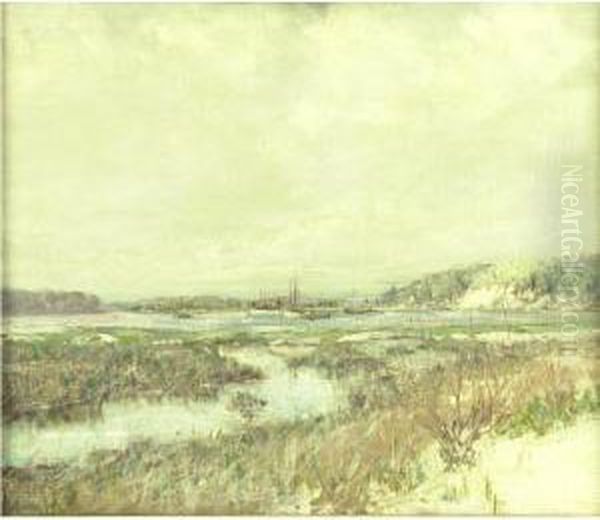
Robinson's focus on this region places him firmly within a tradition of American artists who found inspiration in the specific character of their local environment. His paintings often depict scenes that feel familiar and rooted in the American landscape – gardens, farms, coastal views, and the gentle interplay of light and shadow across the land.
Artistic Style and Subjects
Hal Robinson is best known for his landscape paintings. His preferred subjects included the cultivated beauty of gardens and the rustic charm of farm scenes. These settings allowed him to explore the changing seasons, the effects of light at different times of day, and the harmonious relationship between human activity and the natural world. His approach often emphasized tranquility and a sense of peacefulness.
Beyond rural landscapes, Robinson also demonstrated skill in capturing cityscapes. While perhaps less common than his nature scenes, these works would have offered a contrast, depicting the built environment and urban life during a period of rapid growth and change in American cities. This versatility suggests an artist interested in the diverse facets of American life and scenery.
Additionally, Robinson was noted for painting intimate scenes, suggesting an interest in genre painting or interior views. These works likely focused on quiet moments, perhaps domestic settings or figures in contemplative poses, rendered with sensitivity to mood and atmosphere. This breadth of subject matter – from expansive landscapes to focused intimate views – indicates a comprehensive artistic vision.
Stylistically, Robinson's work likely absorbed influences from the prevailing artistic trends. His focus on light and atmosphere, particularly in garden and farm scenes, suggests an affinity with Impressionism. American artists like Childe Hassam, Willard Metcalf, J. Alden Weir, and John Henry Twachtman, many of whom were associated with the Old Lyme art colony, were exploring similar themes, using broken brushwork and a brighter palette to capture the immediacy of visual experience.
However, the description of his work sometimes also hints at Tonalist sensibilities – a focus on mood, subtle color harmonies, and evocative atmosphere, characteristics found in the works of painters like George Inness and James McNeill Whistler. It is plausible that Robinson, like many artists of his generation, synthesized elements from different styles to create his own distinct artistic voice.
Notable Works
Identifying specific masterpieces can be challenging for artists with less extensive documentation, but certain works by Hal Robinson are noted as representative of his output. "Snug Harbor" is one such title mentioned in connection with his name. While visual details are scarce in textual records, the title itself evokes a sense of peace and refuge, likely depicting a calm coastal scene, perhaps featuring boats moored in a sheltered bay, rendered with his characteristic attention to light and atmosphere.
Another work associated with him is "The Shimmering Stream." This title strongly suggests a landscape focused on the effects of light on water, a classic Impressionist theme. One can imagine a painting capturing the dappled sunlight filtering through trees onto a flowing brook, emphasizing movement, reflection, and the transient beauty of nature. Such a work would align perfectly with his reputation as a skilled landscape painter attuned to the nuances of the natural world.
These titles, "Snug Harbor" and "The Shimmering Stream," reinforce the image of Robinson as an artist drawn to the poetic and peaceful aspects of the landscape. They suggest a focus on capturing not just the physical appearance of a place, but also its mood and the sensory experience of being there.
Exhibitions and Recognition
Hal Robinson achieved a degree of recognition within the art world of his time, evidenced by his participation in significant exhibitions. In 1896, his work was shown at the prestigious National Academy of Design in New York City. The Academy's annual exhibitions were major events, showcasing the work of established and emerging artists across the country. Inclusion in such a show indicates that Robinson was actively engaged with the professional art scene and that his work met the standards of the Academy's jury.
Further evidence of his standing comes from his participation in the 1910 Biennial exhibition at the Corcoran Gallery of Art in Washington, D.C. The Corcoran Biennials were important surveys of contemporary American painting. Being selected for this exhibition placed Robinson alongside many of the leading artists of the day and exposed his work to a national audience.
Beyond exhibitions, the enduring presence of his work in various collections speaks to its perceived quality and appeal. Paintings by Hal Robinson are held in institutions such as the CIGNA Museum and Art Collection in Philadelphia. His work has also been handled by commercial galleries over the years, including the Paydon Gallery and the McDonald Gallery (likely in New York or Washington D.C., given his exhibition history). The acquisition of his work by both public-facing museums and private galleries indicates a sustained interest and value attributed to his art.
Context within American Art
To fully appreciate Hal Robinson's contribution, it's helpful to place him within the broader context of American art at the turn of the twentieth century. This was a period of searching for a distinctly American artistic identity, even as artists absorbed international influences. The legacy of the Hudson River School was still felt, but artists were increasingly looking to Europe, particularly France.
The impact of French Impressionism, pioneered by artists like Claude Monet and Camille Pissarro, was transformative. American artists traveled abroad, studied in Paris, and returned eager to apply Impressionist principles to American subjects. This led to the flourishing of American Impressionism, characterized by a brighter palette, looser brushwork, and a focus on capturing the effects of light and atmosphere. Artists like Childe Hassam became leading figures, known for their sun-drenched depictions of New England landscapes and vibrant city scenes.
Simultaneously, Tonalism offered a different path. Influenced partly by the Barbizon School in France and the aestheticism of James McNeill Whistler, Tonalist painters like George Inness, Dwight Tryon, and Thomas Dewing favored moody, atmospheric landscapes rendered in subtle, harmonious tones. Their work was often more poetic and introspective than the brighter canvases of the Impressionists.
Hal Robinson's work seems to occupy a space informed by both these major trends. His landscape subjects and apparent interest in light connect him to Impressionism, especially the American variant practiced in art colonies like Old Lyme. However, the descriptions of his work sometimes suggest a quietude and sensitivity to mood that also aligns with Tonalist aesthetics. He was painting at a time when these styles coexisted and often overlapped.
His contemporaries included not only the Impressionists and Tonalists but also artists forging different paths. The Ashcan School, led by figures like Robert Henri and including artists such as John Sloan and George Bellows, focused on gritty urban realism, depicting the everyday life of the city with unvarnished honesty. While Robinson also painted cityscapes, his approach was likely less focused on social commentary and more on the visual character of the urban environment. Other major figures like Winslow Homer, though older, continued to be influential with their powerful depictions of nature and the sea.
Robinson's career unfolded amidst this rich and varied artistic landscape. He was part of a generation of American artists grappling with modernity, exploring new ways of seeing and painting, and contributing to the diverse tapestry of American art in the early twentieth century.
Legacy and Assessment
Hal Robinson remains a figure primarily known to specialists and collectors interested in American landscape painting of his period. While he may not have achieved the lasting fame of some of his contemporaries like Hassam or Inness, his work holds a legitimate place within the history of American art. His dedication to capturing the landscapes and scenes of the American East Coast contributes to our understanding of the regional character of American painting.
His paintings, particularly those focusing on gardens, farms, and tranquil natural settings, reflect a persistent strand in American art – the appreciation for nature as a source of beauty, solace, and national identity. His ability to work across different subjects, including landscapes, cityscapes, and intimate scenes, speaks to his versatility as an artist.
The inclusion of his work in exhibitions at the National Academy of Design and the Corcoran Gallery during his lifetime, along with its presence in museum and gallery collections today, confirms his status as a recognized professional artist of his era. His paintings serve as examples of the competent, sensitive landscape work being produced by numerous American artists who absorbed the lessons of Impressionism and Tonalism and applied them to their native surroundings.
While detailed critical assessments or extensive biographical studies may be lacking compared to more prominent figures, Hal Robinson's surviving works offer quiet testimony to his skill and artistic vision. He was a chronicler of the American scene, capturing the gentle beauty of the East Coast landscape with a sensitivity that continues to resonate with viewers interested in the art of the period.
Conclusion
Hal Robinson was a dedicated American painter who contributed to the rich tradition of landscape art in the United States during the late nineteenth and early twentieth centuries. Known primarily for his depictions of gardens, farms, and other East Coast scenes, he skillfully captured the interplay of light and atmosphere, often imbuing his work with a sense of tranquility. His participation in major exhibitions and the inclusion of his paintings in various collections underscore his recognition during his lifetime and secure his place, albeit a modest one, in the annals of American art history. His work remains a valuable window into the artistic currents and aesthetic preferences of his time, celebrating the enduring beauty of the American landscape.