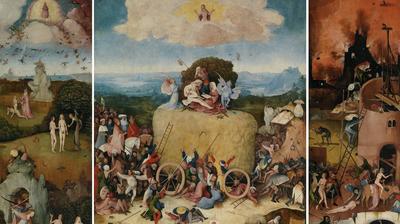
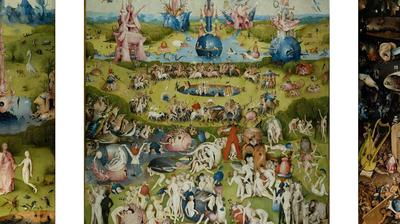
Step into the unsettling world of Hieronymus Bosch’s The Temptation of Saint Anthony, a masterpiece completed in 1501. This triptych invites us into a surreal landscape where the boundaries between reality and nightmare dissolve into a haunting vision of spiritual struggle. At the center sits Saint Anthony, his weathered face a mask of quiet resolve amidst a chaotic sea of tormentors. Look closely at the grotesque creatures surrounding him: fish with legs, bird-headed demons, and hollowed-out structures that pulse with a life of their own. Every corner of the panel is alive with frantic movement, creating a sense of claustrophobic tension that pulls the eye through a labyrinth of madness.
Bosch’s artistry lies in his masterful use of atmospheric depth and vivid, jewel-like colors. Notice the eerie contrast between the cool, pale blues of the distant horizon and the fiery, smoldering reds of the burning cities behind him. The brushwork is precise yet fluid, capturing the slimy textures of reptilian skins and the jagged edges of broken ruins. A flickering, unnatural light bathes the scene, casting long, sharp shadows that heighten the feeling of unease. This painting is not merely a depiction of faith, but a profound exploration of the human psyche and the constant noise of internal conflict. It remains a timeless study of resilience in the face of overwhelming darkness. Through Bosch's lens, we witness the quiet endurance of the soul against a world turned upside down.