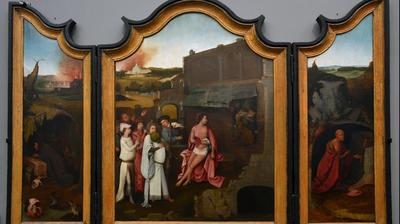
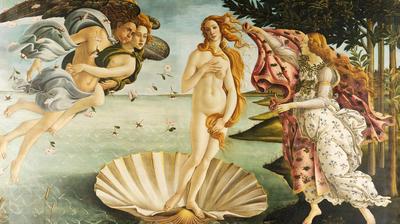
Created around 1510 by the visionary Hieronymus Bosch, The Haywain Triptych is a sprawling masterpiece of moral storytelling. Across three oak panels, we witness a chaotic journey from the lush Garden of Eden to the fiery, suffocating depths of a mechanical hell. At the center, a massive golden wagon overflowing with dry hay dominates the landscape. People from every walk of life—kings, peasants, and monks—scramble frantically around the wheels. Some reach out with trembling hands to grab a mere fistful of straw, while others are crushed beneath the heavy rolling weight. A thin, pale angel kneels atop the hay, gazing upward in a silent, lonely prayer, unnoticed by the brawling crowds below.
Bosch uses a vibrant yet unsettling palette. The central panel glows with warm amber tones and sun-drenched yellows, creating a false sense of prosperity. However, look closer at the edges, and the colors shift into muddy browns and bruised purples. The brushwork is precise and flickering, capturing the frantic energy of the figures with needle-like detail. The composition is a deliberate mess of movement, pulling the eye in every direction to mimic the dizzying nature of human greed. This work serves as a chilling mirror, capturing the fleeting, fragile nature of worldly desires. It is a world where humanity is so blinded by the golden shimmer of hay that they fail to see the demons pulling them toward the dark horizon. It remains a haunting reminder that while beauty may fade, the consequences of our choices endure.