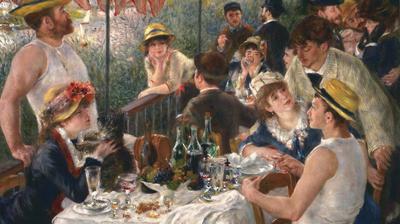
In 1876, Pierre-Auguste Renoir captured a fleeting moment of Parisian joy in his masterpiece, Bal du moulin de la Galette. This sun-drenched canvas transports us to a Sunday afternoon in Montmartre, where the city’s youth gather to dance, drink, and lose themselves in the rhythm of the day. Look closely at the swirling crowd. Friends lean in to share a quiet laugh at a wooden table, while couples drift across the dance floor in a gentle embrace. There is a sense of effortless movement—the rustle of silk dresses, the soft clinking of glasses, and the blurred energy of life in motion. Renoir’s genius lies in his treatment of light. Notice how the golden sunlight filters through the acacia trees, scattering dappled patches of brightness across the dark jackets and pale skin of the revelers. He avoids harsh outlines, using feathered brushstrokes and a vibrant palette of violets, blues, and warm pinks to blend the figures into their environment.
This soft glow creates a hazy, dreamlike atmosphere where every surface seems to shimmer with warmth. Beyond the technique, the painting celebrates the simple beauty of modern leisure. It is a visual poem dedicated to happiness and the fleeting sparkle of a summer afternoon. It remains an eternal invitation to step out of the shadows and into the light of a joyful world.