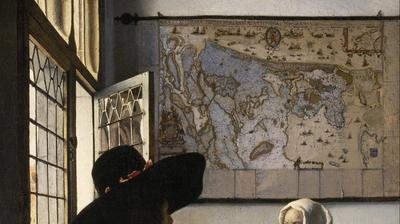
In a quiet, sun-drenched studio in 1667, Johannes Vermeer captured a masterpiece that serves as a profound tribute to his own craft: The Art of Painting. Within this staged interior, a painter sits with his back to us, his brush poised to capture the likeness of a young woman. She stands bathed in soft window light, adorned with a laurel wreath and holding a heavy book—a living embodiment of Clio, the muse of history. The scene is framed by a heavy, ornate curtain pulled to one side, inviting us to peer into this private sanctuary. Notice the intricate details: the heavy folds of the tapestry, the checkered marble floor stretching into the distance, and the immense, weathered map hanging on the far wall. Every surface feels tangible, from the polished wood of the chairs to the delicate brass chandelier hanging above.
Vermeer’s mastery of light creates a serene, almost spiritual atmosphere. A gentle glow washes over the room, softening the edges of the furniture and casting warm shadows that give the space a remarkable sense of depth. The cool blues and rich ochres are applied with such precision that the air itself feels still and silent. This is more than a simple studio scene; it is an allegory of the enduring power of art. By placing the muse at the center, Vermeer suggests that painting does not merely record the present, but preserves the glory of history for eternity. It remains a timeless meditation on the quiet beauty of the creative spirit.