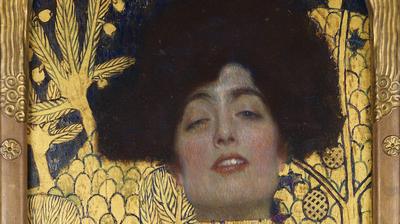
In 1907, Gustav Klimt completed one of the most iconic portraits in art history: the Portrait of Adele Bloch-Bauer I. Often referred to as "The Woman in Gold," this masterpiece stands as the pinnacle of Klimt’s Golden Phase, a breathtaking fusion of portraiture and decorative mosaic. At the center, Adele rests within a heavy, upholstered chair. Her slender hands are delicately clasped, one wrist curving elegantly against her chest. Her face emerges from the brilliance with a pale, porcelain-like fragility. She gazes outward with heavy-lidded, melancholic eyes and slightly parted lips, exuding an air of quiet sophistication and elusive longing.
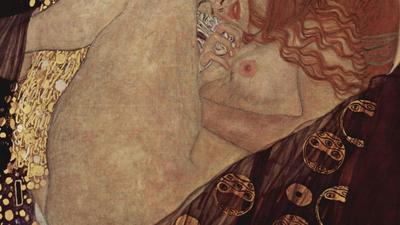
The canvas is a shimmering sea of gold leaf, silver, and oil paint. The dress and background merge into a flat, decorative plane filled with intricate symbols—swirling spirals, Egyptian eyes, and geometric squares. These textured patterns create a rhythmic, tactile surface that catches the light like a jewel box. The contrast between the hyper-realistic softness of her skin and the rigid, metallic opulence of her surroundings creates a hypnotic visual tension. Beyond its dazzling exterior, the painting captures a unique balance between the intimate human spirit and the overwhelming grandeur of wealth. It is a timeless sanctuary where the subject is immortalized, encased forever in a radiant, golden cocoon. In this work, the boundaries between the person and the ornament dissolve into a singular, eternal glow.