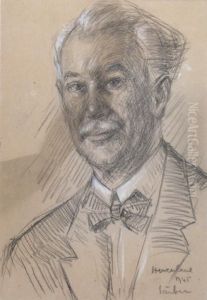
Gheorghe Sârbu, often referred to as Gh. Sârbu, was a Romanian painter, known for his dedication to realism and his role in the Romanian fine arts community. Born on July 20, 1923, in Bucharest, Romania, he developed an interest in art at an early age. Despite the political and social upheavals of the time, including World War II and the rise of communism in Romania, Sârbu remained committed to his artistic pursuits.
Sârbu's work was grounded in the realistic representation of subjects, ranging from portraits and nudes to landscapes and still lifes. His style evolved over the years, but he consistently sought to capture the essence of his subject matter with a keen eye for detail and a deep appreciation for the interplay of light and shadow. Although he worked within the constraints of the socialist realism that was prevalent during much of his career, his individual approach often transcended the limitations of the genre.
Throughout the 1950s and 1960s, Gh. Sârbu became a respected member of the Romanian artists' community. He participated in numerous exhibitions and his work was featured in art galleries across Romania. Sârbu's paintings were also exhibited internationally, earning him recognition beyond his homeland.
In addition to his painting, Sârbu was an influential art educator. He taught at the Nicolae Grigorescu Institute of Fine Arts in Bucharest, where he influenced generations of Romanian artists. His commitment to teaching was a testament to his belief in the power of art to enrich lives and society.
Gh. Sârbu's contributions to Romanian art were widely acknowledged during his lifetime. He received several awards and honors, including prestigious national prizes for his artwork. His legacy continues to be celebrated in Romania and among art historians who study Eastern European art.
Sârbu passed away on December 28, 2006, leaving behind a rich body of work that continues to be admired for its technical mastery and its evocative portrayal of Romanian life and landscapes. His art remains a significant part of Romania's cultural heritage and serves as an inspiration for contemporary Romanian artists.