The Dutch Golden Age, a period of unprecedented artistic, scientific, and commercial flourishing in the 17th century Netherlands, produced a constellation of brilliant painters. Among them, Frans Hals the Elder stands as a titan, renowned for his revolutionary approach to portraiture. Within this luminous sphere moved his son, Harmen Hals, a painter who followed in his father's footsteps yet remained, by historical consensus, in his formidable shadow. This exploration delves into the life of Harmen Hals, while necessarily navigating the extensive and impactful career of his father, Frans, to understand the artistic environment that shaped him and the legacy he inherited.
The Life and Times of Harmen Hals
Harmen Hals was born into an artistic dynasty in Haarlem, a vibrant center of painting in the Dutch Republic. Baptized on September 2, 1611, he was one of several children of the celebrated painter Frans Hals and his first wife, Anneke Harmsdr. (Annetje Harmensdochter Abeel). Tragedy struck the young family early; Anneke passed away in 1615, leaving Frans Hals to care for their young children, including Harmen, who was not yet an adult. This early loss undoubtedly shaped the family dynamics and perhaps Harmen's upbringing.
Following the path laid out by his father, Harmen Hals pursued a career as a painter. He would have received his initial training within his father's bustling workshop, a common practice at the time where sons often learned the craft directly from their fathers. By the 1630s, Harmen began to establish himself as an independent artist. Like his father, he became a member of the Haarlem Guild of Saint Luke, the city's official organization for painters and other craftsmen. Membership in the guild was crucial for any artist wishing to take on apprentices, sell their work openly, or receive official commissions.
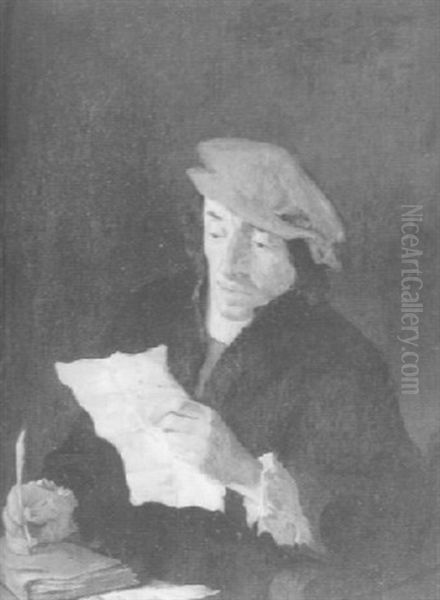
Despite his lineage and training, historical records and art historical consensus suggest that Harmen's artistic talents, while present, did not reach the extraordinary heights of his father. Information regarding his specific body of work, distinctive stylistic traits, and the breadth of his oeuvre remains relatively scarce. This scarcity can be attributed to several factors: perhaps a smaller output, a style that was not deemed distinct enough from his father's or other contemporaries to warrant extensive contemporary commentary, or the unfortunate loss or misattribution of his works over the centuries. It is often the fate of artists who are children of giants to be overshadowed, their individual contributions less meticulously documented or preserved.
Harmen Hals was active within the Haarlem art scene, likely participating in its communal activities and possibly collaborating on projects, though specific details of such engagements are not widely known. He continued to live and work in Haarlem, the city intrinsically linked with his family's name. Harmen Hals passed away and was buried in Haarlem on February 15, 1669, leaving behind a legacy as a painter who practiced his craft within the rich artistic milieu of the Dutch Golden Age, forever connected to, yet distinct from, his more famous father.
The Colossus: Frans Hals the Elder
To understand Harmen Hals and his artistic context, one must first appreciate the monumental figure of his father, Frans Hals the Elder (c. 1582/83 – 1666). Frans Hals is considered one of the triumvirate of Dutch Golden Age masters, alongside Rembrandt van Rijn and Johannes Vermeer. His impact on the art of portraiture was profound and his influence extended to generations of artists.
Frans Hals was likely born in Antwerp, then part of the Spanish Netherlands (now Belgium), to Franchois Hals, a cloth merchant from Mechelen, and Adriaentje van Geertenryck. Following the Fall of Antwerp to Spanish forces in 1585 during the Eighty Years' War, his Protestant family, like many others, emigrated north to the Dutch Republic, settling in Haarlem. It was in Haarlem that Frans Hals received his artistic training, possibly under Karel van Mander, though this apprenticeship is debated by some scholars. He joined the Haarlem Guild of Saint Luke in 1610.
Frans Hals's personal life was marked by both joy and hardship. After the death of his first wife, Anneke Harmsdr., in 1615, he married Lysbeth Reyniers in 1617. He had numerous children from both marriages, several of whom, including Harmen, Jan, Frans Hals the Younger, Reynier, and Nicolaes, also became painters. Despite his artistic success, Frans Hals faced persistent financial difficulties throughout his life, a common plight for many artists of the era who often lived commission to commission. There are records of him being pursued by creditors, including a baker and a shoemaker. In his later years, he received a modest annual pension from the municipal authorities of Haarlem, a testament to his standing despite his financial woes.
Frans Hals's Revolutionary Portraiture and Major Works
Frans Hals revolutionized portraiture with his remarkably lively and spontaneous technique. He moved away from the stiff, formal poses that characterized much of earlier portrait painting, instead capturing his sitters with an immediacy and vivacity that made them seem almost alive. His brushwork was notably free, broad, and dynamic, often leaving individual strokes visible, a technique that was quite radical for its time and prefigured the Impressionists of the 19th century.
His oeuvre is rich with iconic images. Among his most celebrated single portraits are:
_The Laughing Cavalier_ (1624): Perhaps his most famous work, this portrait is a masterpiece of characterization. The sitter's enigmatic smile, confident gaze, and sumptuously rendered attire have captivated viewers for centuries. The lively brushwork is particularly evident in the lace and embroidery.
_The Gypsy Girl_ (also known as La Bohémienne, c. 1628-30): This painting showcases Hals's ability to capture fleeting expressions and a sense of informality. The girl's direct, slightly mischievous gaze and rosy cheeks exude a vibrant, earthy charm.
_The Merry Drinker_ (or The Jolly Toper, c. 1628-30): A quintessential example of Hals's "tronies" (character studies or head-and-shoulders portraits often depicting exaggerated expressions or stock characters). The subject's joyful exuberance is palpable, conveyed through a ruddy complexion, a wide grin, and a raised glass.
_Malle Babbe_ (c. 1633-35): A powerful and somewhat unsettling depiction of a Haarlem folk figure, possibly a barmaid or a woman known for her boisterous behavior, often referred to as the "Witch of Haarlem." An owl perches on her shoulder, adding to the enigmatic quality of the work. The brushwork is exceptionally loose and expressive.
_Portrait of Willem Coymans_ (1645): This work demonstrates Hals's skill in capturing the confident demeanor of the rising Dutch merchant class. The pose is relaxed yet dignified.
_Boy with a Lute_ (or The Lute Player, c. 1625-26): Another engaging tronie, this painting captures a young musician in a moment of lively performance, looking directly at the viewer.
_Portrait of Aletta Hanemans_ (1625) and _Portrait of Jacob Pietersz Olycan_ (1625): These pendant portraits of a wealthy Haarlem brewer and his wife showcase Hals's ability to convey both individual personality and social status.
Numerous _Portrait of a Man_ and _Portrait of a Woman_ paintings, housed in museums worldwide (e.g., Städel Museum, Frankfurt; Royal Collection, UK; National Gallery of Denmark), further attest to his prolific output and consistent quality in capturing the likeness and character of his sitters.
Frans Hals was also a master of the group portrait, a genre particularly popular in the Netherlands for depicting civic guards, charitable institution regents, and other corporate bodies. He infused these often-static compositions with unprecedented dynamism and psychological insight. Key examples include:
_Banquet of the Officers of the St George Civic Guard_ (1616): His first major commission, this work already shows his innovative approach. Instead of a rigid lineup, the officers are depicted in lively interaction around a banquet table, their individual personalities shining through.
_Banquet of the Officers of the St Adrian Militia Company_ (1627 and 1633): These works further developed his ability to create a sense of camaraderie and spontaneous movement within a large group. Each figure is individualized, yet contributes to the cohesive whole.
_The Regents of the St Elizabeth Hospital of Haarlem_ (1641): Here, Hals captures the sober dignity of the hospital governors.
_The Regentesses of the Old Men's Almshouse_ (c. 1664) and _The Regents of the Old Men's Almshouse_ (c. 1664): These late works are remarkable for their psychological depth and somber palette. Painted when Hals was in his eighties, they possess a stark realism and profound humanity, with some critics noting a more critical or melancholic tone.
The Distinctive Artistic Style of Frans Hals
The hallmarks of Frans Hals's style are his energetic brushwork, his ability to capture fleeting moments and expressions, and his psychological acuity.
Bold and Free Brushwork: Hals's technique was often described as "rough" or "alla prima" (wet-on-wet), suggesting he worked quickly and directly on the canvas. This approach allowed him to convey a sense of immediacy and vitality. His brushstrokes are often visible, varied in direction and thickness, contributing to the texture and dynamism of the painted surface. This was a departure from the smooth, highly finished surfaces favored by many of his contemporaries.
Capturing Character and Emotion: Hals was a master at depicting the human face and its myriad expressions, particularly smiles and laughter, which were notoriously difficult to render convincingly. From the subtle, knowing smile of The Laughing Cavalier to the unrestrained joy of The Merry Drinker, he captured the essence of his sitters' personalities. He did not idealize his subjects but presented them with an honest, unvarnished realism.
Innovation in Composition: Especially in his group portraits, Hals broke with convention. He arranged figures in dynamic, asymmetrical compositions that suggested natural interaction and movement, rather than a static, posed arrangement. This created a sense of a captured moment in time.
Use of Color and Light: While his early works could be quite colorful, Hals's palette became more subdued in his later years, often dominated by blacks, whites, grays, and earth tones. However, even with a limited palette, he achieved remarkable effects through his masterful handling of light and shadow, which he used to model form and highlight expressions. His blacks are particularly renowned for their richness and variety.
Realism and Humour: Many of Hals's genre scenes and tronies exhibit a robust sense of humor and an engagement with everyday life. He depicted common people—musicians, drinkers, fisherfolk—with the same keen observation and vitality as his wealthier patrons.
Anecdotes, Controversies, and the Artist's Life
Frans Hals's life, like his art, was not without its dramatic elements. While much of what is "known" about his personality comes from later, sometimes embellished, accounts, certain facts are documented.
His financial struggles were persistent. Despite being a sought-after portraitist, he frequently incurred debts. In 1652, his belongings were sold to pay off a debt to a baker. This has led to speculation about his lifestyle. Arnold Houbraken, an early biographer writing in the early 18th century, portrayed Hals as a habitual drunkard and a somewhat unruly character, even suggesting he mistreated his apprentices, including Adriaen Brouwer. However, modern scholarship tends to view these accounts with skepticism, as Houbraken often relied on anecdotal evidence and moralizing tropes. There is little contemporary evidence to support claims of excessive drinking or abusive behavior. For instance, the record of his second wife, Lysbeth Reyniers, being admonished for brawling does not directly implicate Hals himself in such behavior.
The notion that his "rough" style was due to haste or carelessness was a criticism leveled even during his lifetime and in the centuries immediately following his death. However, what some saw as a flaw, later generations, particularly the Impressionists, recognized as genius—a deliberate artistic choice that infused his work with unparalleled life.
Despite his financial difficulties, Hals held positions of respect within the artistic community. He served as a director of the Haarlem Guild of St. Luke in 1644. His late-life poverty, culminating in his receiving municipal alms, is a poignant aspect of his biography, highlighting the precariousness of an artist's life even for one of his stature. He died in Haarlem in 1666 and was buried in the choir of the Grote Kerk (St. Bavo's Church), a place of honor.
Frans Hals and His Contemporaries: A Network of Influence
Frans Hals was a central figure in the Haarlem art world and his influence was significant, both on his direct pupils and on the broader artistic trends of the Dutch Golden Age.
His pupils reportedly included his sons, as mentioned, and other notable artists such as Adriaen Brouwer, Adriaen van Ostade, Judith Leyster, and Jan Miense Molenaer. Leyster, in particular, was a highly talented painter whose work sometimes shows a clear affinity with Hals's style in its vivacity and brushwork. She and her husband, Jan Miense Molenaer, were prominent figures in Haarlem's artistic circles, and Hals is known to have painted portraits of them, though these are now lost.
His brother, Dirck Hals (1591–1656), was also a painter, specializing in "merry company" genre scenes, depicting elegant figures in domestic interiors. While their styles differed, they were part of the same artistic milieu.
Hals's relationship with other leading Dutch masters like Rembrandt van Rijn is not extensively documented in terms of direct personal interaction, but they were the two dominant figures in Dutch portraiture. While Rembrandt's style evolved towards deep psychological introspection and dramatic chiaroscuro, Hals maintained his focus on capturing outward vitality and character through his distinctive brushwork. Both artists, however, pushed the boundaries of portraiture beyond mere likeness.
Other Haarlem contemporaries with whom Hals would have interacted include painters like Pieter Claesz and Willem Claeszoon Heda, masters of the still life genre, which also flourished in Haarlem. The city's artistic community was relatively close-knit. For example, in 1660, Frans Hals, along with fellow Haarlem painter Pieter Molijn (a landscape artist), was called upon to assess the art collection of Coenraad Coymans. He also had connections with artists like Thomas Wyck, a painter of Italianate landscapes and genre scenes, and Jan van de Cappelle, a marine painter and notable art collector who owned several works by Hals.
The influence of Frans Hals extended far beyond his lifetime. After a period of relative obscurity in the 18th century, his work was "rediscovered" in the 19th century and became immensely popular, particularly with Realist and Impressionist painters. Artists like Gustave Courbet, Édouard Manet, and Vincent van Gogh deeply admired Hals's free brushwork and his ability to capture life with such immediacy. Manet, in particular, made copies of Hals's work and adopted aspects of his technique. Van Gogh wrote admiringly of Hals's use of color, especially his varied blacks, and his expressive power. Other artists who acknowledged his influence include James Abbott McNeill Whistler and John Singer Sargent, whose own bravura brushwork echoes that of the Haarlem master.
The Enduring Legacy and Historical Position of Frans Hals
Frans Hals's position in art history is secure as one of the most innovative and influential portraitists of all time. He is celebrated for:
Pioneering a new approach to portraiture: He broke free from the constraints of formal, static representation, infusing his portraits with unprecedented life, movement, and psychological presence.
Mastery of brushwork: His bold, visible brushstrokes were revolutionary and anticipated later movements like Impressionism. He demonstrated that a "rough" finish could convey more vitality than a meticulously smooth surface.
Capturing the spirit of an age: His portraits provide a vivid panorama of Dutch society in the Golden Age, from wealthy merchants and civic guards to common folk and character types. They reflect the confidence, dynamism, and burgeoning individualism of the Dutch Republic.
Influence on subsequent generations: His rediscovery in the 19th century had a profound impact on the development of modern art, inspiring artists to experiment with freer techniques and more direct observation.
He is considered a cornerstone of the Dutch realist tradition, and his ability to convey character with such economy and verve remains a benchmark for portrait painters. His works are prized possessions of major museums worldwide and continue to engage and inspire viewers with their timeless humanity.
Harmen Hals: In the Shadow of a Giant
Returning to Harmen Hals, it is clear that his artistic journey was inextricably linked to that of his father. Growing up in Frans Hals's studio, he would have been immersed in his father's innovative techniques and artistic philosophy from a young age. While he became a painter in his own right and a member of the St. Luke's Guild, the sheer brilliance and overwhelming reputation of Frans Hals inevitably cast a long shadow.
It is not uncommon for the children of exceptionally famous artists to find it challenging to establish a distinct artistic identity. Their work is often, rightly or wrongly, compared to that of their parent, and they may struggle to emerge from that influential orbit. While Harmen Hals contributed to the artistic fabric of Haarlem during the Golden Age, his individual achievements have been largely eclipsed by his father's monumental legacy. The limited surviving information about his specific works and style makes a full assessment of his independent contribution difficult. He remains a figure primarily understood through his familial connection to one of art history's most celebrated painters.
Conclusion: A Tale of Two Painters
The story of Harmen Hals is intertwined with the much larger narrative of Frans Hals the Elder. While Harmen pursued the family profession and was an active painter in 17th-century Haarlem, his fame and documented impact are modest compared to his father's. Frans Hals was a true revolutionary, an artist whose bold brushwork, keen psychological insight, and ability to capture the fleeting essence of life transformed the art of portraiture. His influence resonated through his contemporaries, his students like Judith Leyster and Adriaen Brouwer, and profoundly impacted later masters such as Manet and Van Gogh.
Harmen Hals represents one of the many skilled artists who contributed to the rich tapestry of the Dutch Golden Age, working within a tradition while his father actively reshaped it. Understanding Harmen requires acknowledging the towering presence of Frans, a master whose works continue to speak to us with undiminished power and vitality, securing his place as one of the great figures in the history of Western art. The study of Harmen reminds us of the complex dynamics within artistic families and the challenges of forging an independent path in the shadow of genius.