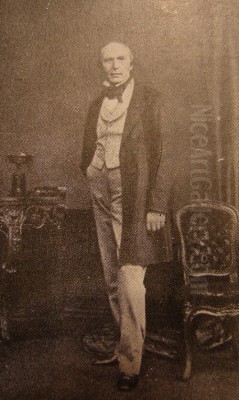
Louis Haghe (17 March 1806 – 9 March 1885) stands as a pivotal figure in the art world of 19th-century Britain. Born in Tournai, Belgium, into a family with a strong architectural lineage—his father and grandfather were both architects—Haghe's artistic inclinations were nurtured from a young age. He initially received training in watercolour painting, a medium he would return to with great success later in his career. However, it was his early apprenticeship in the burgeoning field of lithography in Tournai, under the guidance of Jean Baptiste de la Barrière, that would first define his professional path and secure his lasting reputation. This foundational training equipped him with the technical prowess that would soon revolutionize aspects of printmaking in his adoptive country.
In 1823, at the tender age of seventeen, Haghe made the significant decision to relocate to England, choosing London as the city to build his career. The British capital at this time was a vibrant hub of artistic and commercial activity, offering fertile ground for an ambitious and skilled artist. Haghe quickly established himself as a formidable lithographer, and his talents did not go unnoticed. His meticulous approach and innate understanding of the medium allowed him to translate the works of other artists into printed form with remarkable fidelity and artistic sensibility.
The Genesis of Day & Haghe: A Lithographic Powerhouse
The year 1830 marked a crucial turning point in Haghe's career with the formation of a partnership with William Day (c.1797–1845). Their firm, Day & Haghe, rapidly ascended to become one of the most prominent and influential lithographic printing establishments in early Victorian London. The company was not merely a commercial enterprise; it was at the forefront of technical innovation in printmaking. Day & Haghe were pioneers in the development and refinement of chromolithography, the process of printing in multiple colours, as well as perfecting the art of hand-coloured lithographs, which offered a richness and vibrancy previously difficult to achieve in mass-produced prints.
The scope of Day & Haghe's output was vast and varied, catering to the diverse tastes and interests of the era. They produced a wide array of prints, including thrilling hunting scenes that captured the dynamism of the sport, detailed architectural renderings that appealed to a society fascinated by construction and history, picturesque topographical landscapes that brought distant lands and local scenery to a wider audience, and charming genre scenes depicting everyday life. Their commitment to quality and innovation earned them prestigious recognition. In 1838, Day & Haghe were appointed "Lithographers to the Queen," a testament to their preeminence in the field under Queen Victoria, and they had previously served her predecessor, William IV. This royal patronage further solidified their status and brought them numerous high-profile commissions.
The Monumental Collaboration: David Roberts and "The Holy Land"
Perhaps the most celebrated achievement of Day & Haghe, and of Louis Haghe’s lithographic career, was their collaboration with the Scottish painter David Roberts (1796–1864). Roberts, a renowned topographical and architectural artist, embarked on extensive travels through Egypt, Nubia, the Sinai, the Holy Land, Jordan, and Lebanon between 1838 and 1839. He returned with a wealth of sketches and watercolour drawings that offered an unprecedented visual record of these historically and religiously significant regions.
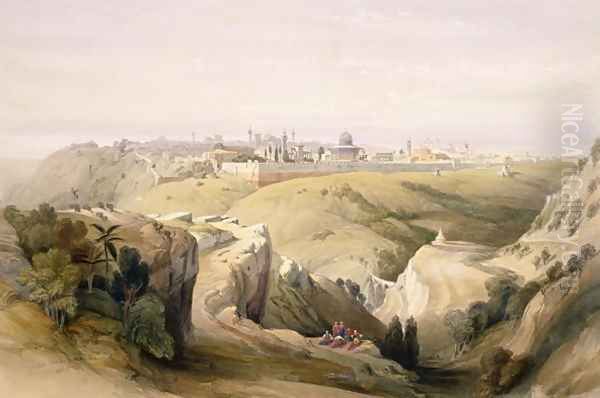
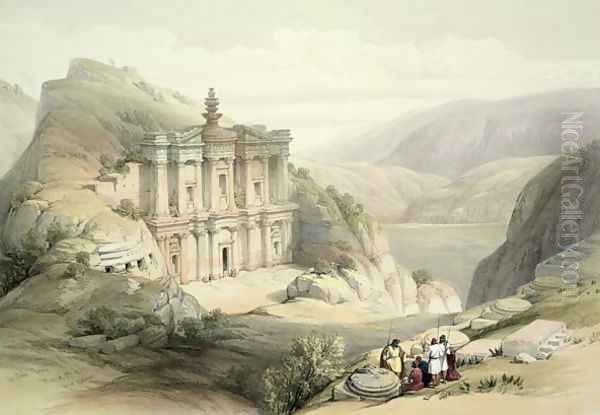
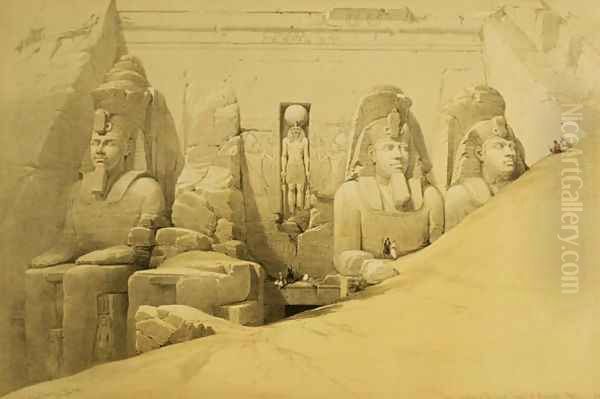
The task of translating Roberts's detailed and atmospheric watercolours and drawings into lithographs for the monumental publication, The Holy Land, Syria, Idumea, Arabia, Egypt & Nubia, fell largely to Louis Haghe. Published in parts between 1842 and 1849 by F.G. Moon, this ambitious project comprised a staggering 250 images. Haghe’s contribution was not merely technical; he demonstrated an extraordinary ability to interpret Roberts's artistic intentions, capturing the subtle gradations of tone, the dramatic play of light and shadow, and the intricate architectural details that characterized Roberts's work.
The resulting lithographs, many of which were tinted with two or three colours (a technique known as "tinted lithography," a precursor to full chromolithography), were masterpieces of the medium. They successfully conveyed the grandeur of ancient monuments, the vastness of desert landscapes, and the vibrant life of the Near East. David Roberts himself was immensely pleased with Haghe's work, famously stating that Haghe "not only surpasses himself, but all that has hitherto been done of a similar nature." This series is widely regarded as one of the pinnacles of 19th-century illustrated book production and a landmark in the history of lithography. The success of The Holy Land series cemented the reputations of both Roberts as a preeminent Orientalist painter and Haghe as a lithographer of unparalleled skill.
Haghe's Lithographic Artistry and Technique
Louis Haghe's mastery of lithography was characterized by several key attributes. His precision in drawing on the stone was exceptional, allowing for the faithful reproduction of even the most intricate details from an original artwork. He possessed a keen understanding of how to build up tones and textures using the lithographic crayon, creating a rich and varied surface that could mimic the effects of watercolour washes or the sharpness of pencil lines.
He was particularly adept at tinted lithography, which involved using multiple stones – one for the black key drawing and one or more additional stones for applying flat areas of tint, typically in buffs, greys, or blues. This technique added depth, atmosphere, and a sense of colour to the prints without resorting to full, complex chromolithography or laborious hand-colouring for every impression, though many deluxe editions were indeed further enhanced by hand-colouring. Haghe's skill lay in choosing the right tints to complement the key drawing, enhancing the composition and mood of the original. For instance, in rendering Roberts's desert scenes, a warm buff tint could evoke the sun-baked sand, while a cool grey or blue could suggest the shadows within ancient temples or the expanse of the sky.
His architectural background, inherited from his father and grandfather, undoubtedly informed his work, particularly when dealing with architectural subjects. He could accurately render complex perspectives, structural details, and decorative elements, bringing a sense of solidity and realism to the buildings depicted. This was evident not only in his work for Roberts but also in other architectural plates produced by Day & Haghe, such as those for Owen Jones's influential The Grammar of Ornament (1856), for which Day & Son (William Day's son, William Jr., continued the firm after his father's death) produced many of the chromolithographic plates.
Beyond Roberts: Other Collaborations and Independent Ventures
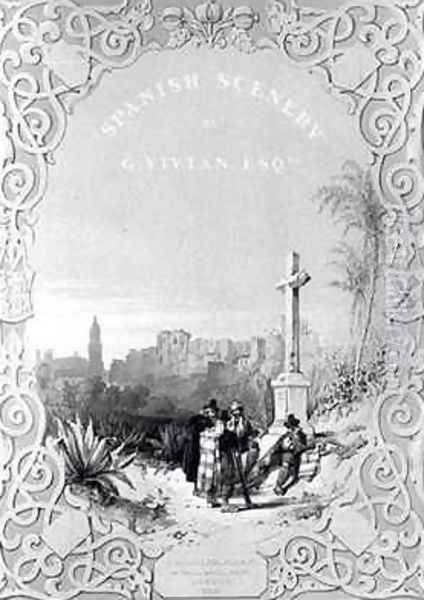
While the collaboration with David Roberts was a defining aspect of Haghe's career, Day & Haghe also worked with numerous other artists and undertook a wide range of projects. They produced plates for scientific works, atlases, and illustrations for various books and periodicals. For example, they lithographed works by the marine painter Clarkson Stanfield (1793-1867), a friend and contemporary of Roberts, and produced plates for George Vivian’s Spanish Scenery (1838) and Scenery of Portugal & Spain (1839), for which Haghe himself executed many of the lithographs.
Haghe also translated the works of artists like James Duffield Harding (1798-1863), a prominent landscape painter and lithographer in his own right, and Thomas Shotter Boys (1803-1874), another pioneer of chromolithography known for his Picturesque Architecture in Paris, Ghent, Antwerp, Rouen, etc. (1839). The firm's output reflected the Victorian era's burgeoning interest in travel, science, and art, making visual information more accessible to a growing middle-class audience.
Haghe was also involved in documenting contemporary events and achievements. For instance, Day & Haghe produced illustrations related to the Great Exhibition of 1851, a landmark event showcasing industrial and artistic innovation from around the world. Haghe himself contributed to the design aspects of this global spectacle, further demonstrating his versatility. His understanding of visual presentation was crucial in an era that increasingly relied on printed images to disseminate knowledge and shape public perception.
The Transition to Watercolour and the New Society
Around 1852, Louis Haghe began to shift his primary focus from lithography to watercolour painting. While he had received training in watercolour in his youth and had likely continued to practice it, this period marked a more concerted effort to establish himself as a painter in this medium. His decision may have been influenced by various factors, including the changing landscape of the printmaking industry, the death of William Day in 1845 (though the firm continued as Day & Son), and perhaps a personal desire to engage more directly in original artistic creation rather than primarily reproductive work.
Haghe became a prominent figure in the watercolour societies of London. He was one of the founding members of the New Society of Painters in Water Colours, established in 1832 as an alternative to the older Society of Painters in Water Colours (now the Royal Watercolour Society). He served as its Vice-President for a time and was later elected President in 1873, a position he held until his death in 1885. This institution played a significant role in promoting watercolour painting as a serious art form in Britain. His colleagues in the New Society included artists like William Callow (1812-1908), known for his marine and landscape watercolours.
As a watercolourist, Haghe often depicted historical genre scenes, particularly interiors of Belgian and Flemish town halls, churches, and guardrooms, populated with figures in 16th and 17th-century costume. These works were characterized by their rich colouring, meticulous attention to architectural detail, and dramatic use of light, reminiscent of the qualities seen in his lithographs. His paintings drew inspiration from the works of earlier Flemish and Dutch masters like David Teniers the Younger (1610-1690) and Pieter de Hooch (1629-1684), showcasing a deep appreciation for the artistic heritage of his native land. His watercolours were well-received and found favour with collectors, including Queen Victoria herself.
Artistic Style and Characteristics: A Synthesis
Louis Haghe's artistic style, whether in lithography or watercolour, was marked by a remarkable consistency in its pursuit of detail, atmospheric effect, and compositional strength. In lithography, his ability to translate the nuances of an original drawing or watercolour onto stone was unparalleled. He could capture the delicate washes of a watercolour by Samuel Prout (1783-1852) or the robust architectural forms in the sketches of a contemporary architect with equal facility. His lines were clean and precise, yet he could also achieve soft, painterly effects. The "clarity, simplicity, and unadorned style" praised by Roberts was a hallmark of his reproductive work, ensuring that the artist's original vision was communicated effectively.
In his own watercolours, Haghe demonstrated a strong sense of historical romanticism. His interiors were often complex architectural spaces, rendered with an accuracy that bespoke his early exposure to architecture. He skillfully managed perspective and populated these scenes with figures engaged in activities that evoked a bygone era. His palette was rich and often featured deep reds, browns, and golds, contributing to the historical ambiance. The play of light, often streaming through windows or illuminating specific areas of a composition, added a theatrical and engaging quality to his paintings. This interest in light and shadow was a consistent thread running from his lithographic interpretations of Roberts's dramatic Eastern scenes to his own evocative European interiors.
His work can be seen in the context of other Victorian artists who specialized in historical and architectural subjects, such as the aforementioned Samuel Prout, or even the detailed historical narratives of painters like William Powell Frith (1819-1909), though Haghe's focus was often more on the setting and atmosphere than complex social commentary.
Representative Works: A Legacy in Print and Paint
Louis Haghe's oeuvre is extensive, but certain works stand out as particularly representative of his talent and impact.
1. _The Holy Land, Syria, Idumea, Arabia, Egypt & Nubia_ (after David Roberts, 1842-1849): This monumental series of 247 (or 250, depending on how they are counted) tinted lithographs is undoubtedly his most famous achievement in printmaking. Specific plates like "Jerusalem from the Mount of Olives," "The Great Temple of Abu Simbel, Nubia," and "Petra" are iconic.
2. _Egypt & Nubia_ (after David Roberts, part of the larger Holy Land series): These volumes specifically focused on the ancient wonders of Egypt and Nubia, with Haghe’s lithographs brilliantly capturing the scale and mystery of sites like Karnak, Luxor, and the Pyramids of Giza. For example, Pyramids of Geezeh, from the Nile showcases this.
3. _Sketches in Belgium and Germany_ (1840, 1845, 1850): Haghe also produced volumes of his own original lithographs, depicting picturesque architectural views and scenes from his native Belgium and Germany. These demonstrate his skill as an original draftsman and lithographer, not just a reproducer of others' work.
4. _Aya Sofia Constantinople_ (after Gaspar Fossati, 1852): Haghe lithographed the plates for Gaspare Fossati's important work on the Hagia Sophia, showcasing the building's magnificent interiors and exteriors after its restoration. This further demonstrated his expertise in architectural subjects.
5. _The Entrance to the Citadel of Cairo_ (after David Roberts): A fine example from the Egypt & Nubia series, highlighting Haghe's ability to render complex architectural forms and lively street scenes.
6. _Approach of the Simoom, Desert at Gizeh_ (after David Roberts): This dramatic plate showcases Haghe's skill in conveying atmospheric effects and the power of nature, as translated from Roberts's original.
7. _A Coptic Christian Woman Dictating a Letter to a Scribe_ (after David Roberts): Illustrative of the ethnographic interest in Roberts's work, skillfully rendered by Haghe.
8. _The Penha Convent, Sintra_ (after George Vivian, from Scenery of Portugal & Spain, 1839): An example of his work for other artists, showcasing picturesque European scenery.
9. Watercolours of Flemish and Belgian Interiors: Numerous works such as "The Audience Chamber, Bruges Town Hall" or "A Guard Room" exemplify his later career. These are held in various collections, including the Victoria and Albert Museum, which recognized his talent by acquiring his works.
Influence and Lasting Legacy
Louis Haghe's influence was multifaceted. As a lithographer, he set new standards for quality and artistry in reproductive printmaking. The success of Day & Haghe, and particularly The Holy Land series, significantly popularized lithography as a medium for high-quality illustration and brought images of distant lands and important artworks to a much wider public than ever before. This contributed to the Victorian fascination with the "Orient" and with travel and exploration. His technical innovations in tinted lithography and chromolithography paved the way for further developments in colour printing. The firm Day & Son (after William Day Sr.'s death) continued to be a major force, producing, for example, many of the plates for Matthew Digby Wyatt's The Industrial Arts of the Nineteenth Century (1851-1853), documenting the Great Exhibition.
His work, especially the Egyptian subjects after Roberts, is cited as having an influence on architectural trends, contributing to the Egyptian Revival style in architecture and design, not only in Britain but also in America. The accuracy and evocative power of these images provided source material and inspiration for architects and designers.
As a watercolourist and President of the New Society of Painters in Water Colours, he played a role in elevating the status of the medium and supporting fellow artists. His own watercolours, with their historical themes and meticulous execution, catered to Victorian tastes for narrative and detail.
While the advent of photomechanical reproduction processes later in the 19th century would eventually supplant manual lithography for many reproductive purposes, the artistic achievements of masters like Louis Haghe remain highly valued. His prints, particularly those from The Holy Land, are sought after by collectors and institutions worldwide, admired both for their historical significance and their intrinsic artistic merit. He stands as a testament to the crucial role that skilled printmakers played in the dissemination of art and knowledge in the 19th century, bridging the gap between the original artist and a public eager for visual experiences. His career exemplifies the fruitful intersection of artistic talent, technical innovation, and entrepreneurial spirit that characterized the Victorian era. His contemporaries in the broader field of British art, such as J.M.W. Turner (1775-1851) with his engraved landscapes, or the Pre-Raphaelites like Dante Gabriel Rossetti (1828-1882) who also saw their works reproduced, all contributed to a rich visual culture of which Haghe was an indispensable part. Even the great French lithographer Honoré Daumier (1808-1879), though working in a very different satirical vein, was a contemporary who demonstrated the power of the lithographic medium. Haghe's unique contribution was his unparalleled ability to translate the painterly qualities of watercolour into the language of lithography with such finesse and impact.