Orazio Ferraro, an artist whose life spanned from approximately 1605 or 1606 to 1657, remains a figure of interest for art historians studying the vibrant artistic exchanges of 17th-century Italy. While not as universally recognized as some of his towering contemporaries, Ferraro carved out a significant career, primarily as a painter of historical subjects in both oil and fresco, and was also involved in the rich tradition of stucco decoration, particularly in Sicily. His work demonstrates a keen understanding of prevailing artistic trends, most notably the dramatic naturalism of Caravaggio, blended with regional sensibilities.
Early Life and Genoese Formation
The precise details of Orazio Ferraro's birth and early years are somewhat debated, with some sources suggesting a Florentine origin, while others point more strongly towards Genoa, a bustling maritime republic with a flourishing artistic scene. The most consistent accounts place his birth around 1606. It is widely accepted that Ferraro was a pupil of Andrea Ansaldo (1584–1638) in Genoa. Ansaldo himself was a prominent Genoese painter, known for his frescoes and altarpieces, whose style evolved from late Mannerism towards a more robust Baroque naturalism, influenced by both Flemish artists like Peter Paul Rubens and Anthony van Dyck (who both spent time in Genoa) and Italian masters.
Under Ansaldo's tutelage, Ferraro would have been immersed in a dynamic artistic environment. Genoa at this time was a wealthy city, attracting artists and commissioning significant works for its palaces and churches. Painters like Bernardo Strozzi (c. 1581–1644), with his rich color and vigorous brushwork, and later, figures such as Giovanni Battista Carlone (1603–1684), known for his extensive fresco cycles, and Valerio Castello (1624–1659), who brought a lighter, more dynamic touch to Genoese painting, defined the artistic landscape. Domenico Fiasella (1589–1669), another key Genoese painter, also contributed to this rich milieu, often drawing inspiration from Roman and Bolognese classicism as well as Caravaggesque naturalism. Ferraro's training with Ansaldo would have equipped him with the skills necessary for large-scale narrative compositions, a hallmark of Baroque art.
The Celebrated "Last Supper" and Genoese Works
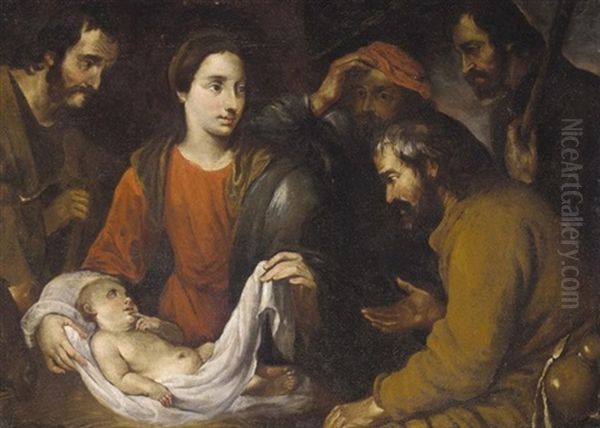
One of Orazio Ferraro's most notable achievements from his Genoese period is the painting "The Last Supper." This work, often cited as a testament to his skill in historical painting, is said to have brought him considerable fame and was located in a chapel within the Church of San Siro in Genoa. San Siro was one of Genoa's oldest and most important churches, and a commission there would have been prestigious. While the exact date of this "Last Supper" is not firmly established, it would likely have been executed during his mature phase in Genoa, showcasing the assimilation of his master Ansaldo's teachings and his own developing style.
The subject of the Last Supper was a popular one, offering artists the chance to depict a range of human emotions and a complex figural arrangement. Ferraro's interpretation would have been viewed alongside those by numerous masters, from Leonardo da Vinci's iconic version to those by Tintoretto or Veronese. In the context of early 17th-century Genoa, a Caravaggesque influence, emphasizing dramatic lighting and realistic portrayal of figures, might well have been evident in Ferraro's approach, a trend visible in the works of many of his Genoese contemporaries who were responding to the revolutionary style emanating from Rome and Naples.
His reputation as a history painter in oil and fresco suggests a versatile artist capable of adapting his technique to different media and scales. Fresco painting, in particular, required speed and confidence, skills honed in busy workshops like Ansaldo's. While specific details of other Genoese commissions are scarce, his work on "The Last Supper" solidified his standing before his activities extended further south.
Artistic Endeavors in Sicily: A New Chapter
A significant portion of Orazio Ferraro's career, or at least the works attributed to him and his family name, unfolded in Sicily. The island, with its unique cultural heritage blending Norman, Arab, and Spanish influences, had a vibrant artistic tradition, particularly in church decoration. The Ferraro name, possibly representing a family workshop, became associated with exquisite stucco work and painting in various Sicilian locales.
Decorations in Sciacca
Historical records indicate that an Orazio Ferraro was responsible for decorative works in the Church of Santa Margherita in Sciacca, a coastal town in southwestern Sicily, around 1610. If this refers to the same Orazio Ferraro born circa 1605-1606, this date would place him as a very young prodigy, or it might suggest an earlier commission date with work executed later, or perhaps involvement of an older family member. Santa Margherita was known for its opulent decorations, and stucco was a favored medium in Sicily for creating elaborate, three-dimensional ornamentation that could transform church interiors into dazzling theatrical spaces.
The art of stucco, using plaster mixed with marble dust and other components, allowed for intricate modeling of figures, garlands, and architectural elements. Sicilian artists like Giacomo Serpotta (1656–1732), though active slightly later than Ferraro, would elevate this medium to unparalleled heights of virtuosity. The Ferraro family, including Orazio, appears to have been significant practitioners of this craft. The works in Sciacca would have involved creating these plastic decorations, possibly combined with painted elements, contributing to the overall splendor of the church.
The Chiesa del Gesù in Palermo
Further evidence of Ferraro's activity in Sicily comes from Palermo, the island's capital. He is documented as one of the artists who contributed to the decoration of the Chiesa del Gesù (also known as Casa Professa), a Jesuit church renowned for its overwhelmingly rich Baroque interior. Specifically, Orazio Ferraro is credited with work in the Chapel of Saint Catherine. This would have involved frescoes and possibly relief sculptures, integral to the complex iconographic programs typical of Jesuit foundations, which aimed to inspire awe and piety through lavish artistry.
Working in Palermo would have placed Ferraro in contact with other artists active on the island. Pietro Novelli (1603–1647), called "il Monrealese," was perhaps the most important Sicilian painter of the era, known for his synthesis of Caravaggesque realism with a more classical and emotive style. The artistic environment in Palermo was dynamic, with influences arriving from Naples, Rome, and Spain. Mario Minniti (1577–1640), a former associate of Caravaggio, had returned to Sicily and was an influential figure, helping to disseminate Caravaggesque principles. Filippo Paladini (c. 1544–1614), though of an earlier generation, had also worked extensively in Sicily, bringing a late Mannerist style that gradually absorbed proto-Baroque elements.
Collaboration with Antonio Ferraro in Castelvetrano
The name Orazio Ferraro is also linked with Antonio Ferraro, presumed to be a relative (perhaps a father, uncle, or brother), in the decoration of the Church of San Domenico in Castelvetrano. This project, documented between 1577 and 1580, involved elaborate stucco work in the choir and presbytery. The dates here clearly point to an earlier Orazio Ferraro, or a very long-term family engagement in the workshop. If our Orazio (b. c. 1605) was involved, it would have been at a much later stage, perhaps completing or adding to an established family commission.
The San Domenico decorations are noted for their high-quality stucco, featuring elements like crucifixes and architectural niches, crafted from a mix of gypsum, limestone, and local clays. This type of intricate, often polychromed or gilded stucco work was a hallmark of the Ferraro workshop and a significant aspect of Sicilian Baroque decoration. The style is described as a fusion of Venetian and "Laurentian" (likely Florentine) influences with indigenous Sicilian Gothic survivals, creating a unique regional aesthetic. This earlier phase of the Ferraro family's activity laid a foundation for the artistic environment in which the younger Orazio would later work.
Crucifix in Castellammare del Golfo
Another specific work attributed to Orazio Ferraro is a significant crucifix sculpture located in the main church (Madrice) of Castellammare del Golfo. This indicates his versatility extended to sculpted devotional objects, not just large-scale decorative schemes. The creation of emotionally resonant religious imagery was central to Baroque art, and a crucifix would demand a profound understanding of anatomy and pathos.
Artistic Style: Caravaggism, Elegance, and Regional Traditions
Orazio Ferraro's artistic style, as gleaned from the descriptions of his works and his training, appears to be a complex amalgamation of influences. His grounding as a history painter under Andrea Ansaldo in Genoa would have provided a solid foundation in figural composition and narrative clarity.
The most prominent stylistic trait associated with him is the influence of Michelangelo Merisi da Caravaggio (1571–1610). Caravaggio's revolutionary use of tenebrism – dramatic contrasts of light and shadow – and his unidealized, naturalistic depiction of figures had a profound impact across Italy and Europe. This influence reached Ferraro, likely through Ansaldo, through Genoese artists who had encountered Caravaggio's work, and later, during his time in Sicily, where Caravaggio himself had briefly worked (1608-1609) and where his followers like Mario Minniti were active. This Caravaggesque leaning would be evident in the strong modeling of figures, the psychological intensity of his characters, and the use of directed light to heighten drama, particularly in works like "The Last Supper."
However, sources also suggest that Ferraro's art was not solely defined by stark Caravaggism. There are mentions of a "more elegant and soft" quality to his work. This could indicate a tempering of Caravaggesque drama with a more classical grace, or an influence from other currents within Baroque art, such as the Bolognese classicism of artists like Guido Reni or Domenichino, whose styles emphasized ideal beauty and harmonious composition. Alternatively, it might reflect an evolution in his style over time, or an adaptation to the specific demands of different patrons or subject matter. The Genoese school itself, while embracing Caravaggism, also maintained a tradition of decorative elegance, seen in the works of Strozzi or Castello.
In Sicily, his involvement with stucco decoration connects him to a vibrant local tradition. The description of the Ferraro family's stucco style as blending Venetian, Florentine, and Sicilian Gothic elements points to a rich, eclectic visual language. While Orazio (1605-1657) was primarily a painter, his participation in these decorative schemes, or his direction of them, would have required an understanding of this plastic medium and its aesthetic possibilities. The interplay between painted surfaces and three-dimensional stucco was a key feature of Sicilian Baroque interiors, creating immersive and spiritually uplifting environments. Artists like Jusepe de Ribera (1591–1652), a Spaniard active in Naples whose powerful Caravaggesque works were highly influential in Southern Italy, and Mattia Preti (1613–1699), who also worked in Naples and Malta with a dynamic, large-scale Baroque style, further shaped the artistic climate of the region, and their impact could have indirectly touched upon Ferraro's Sicilian output.
Collaborations and Workshop Practices
The mention of Orazio Ferraro working with Antonio Ferraro on projects like the San Domenico decorations in Castelvetrano highlights the importance of workshop collaborations in this period. Artistic production, especially for large-scale church decorations involving multiple media like painting and stucco, often relied on teams of artists and artisans working under a master or as a family enterprise. The Ferraro name in Sicily seems to denote such a workshop, active over generations.
Orazio's role within this context, particularly concerning the earlier dated works, might have been as a younger member learning the family trade, or later, as a leading figure directing projects. His training as a painter under Ansaldo would have made him a valuable asset, capable of handling the figural painting aspects of complex decorative schemes, while other specialists might have focused on the stucco modeling or architectural framing. This collaborative environment was typical of the era, allowing for the efficient execution of ambitious commissions.
The influence of his master, Andrea Ansaldo, would have been foundational. Ansaldo's own workshop was a place where various skills were taught, and the master-pupil relationship was crucial for the transmission of artistic knowledge and style. Ferraro's later career, whether in Genoa or Sicily, would have built upon this initial training, adapting and evolving as he encountered new artistic stimuli and regional preferences.
Legacy and Historical Assessment
Orazio Ferraro's historical record positions him as a skilled and respected artist of the Baroque period. His ability to work in both oil painting and fresco, and his association with the intricate art of stucco decoration, mark him as a versatile talent. While perhaps not an innovator on the scale of Caravaggio or Bernini, he was a significant contributor to the artistic fabric of the regions where he worked.
His "Last Supper" in Genoa was evidently a work of considerable impact, establishing his reputation. His activities in Sicily, though sometimes entangled with the broader Ferraro family workshop, point to a sustained engagement with major decorative projects on the island. The churches he helped adorn, such as the Chiesa del Gesù in Palermo and Santa Margherita in Sciacca, remain important monuments of Sicilian Baroque art.
The historical documents that mention his name, from baptismal records confirming his identity to archival notes on church commissions, provide a framework for understanding his career. These records, interpreted by art historians, help to piece together the life of an artist who, like many of his contemporaries, navigated the complex systems of patronage, workshop production, and evolving artistic styles of the 17th century.
His art reflects the broader trends of the Seicento: the dramatic power of Caravaggism, the decorative impulse of the High Baroque, and the regional specificities that gave Italian art of this period its remarkable diversity. Artists like Orazio Ferraro played a crucial role in disseminating and adapting these major stylistic currents, contributing to the rich visual culture of their time. While further research may yet uncover more about his life and specific contributions, Orazio Ferraro stands as a notable representative of the skilled painters and decorators who shaped the artistic landscape of Baroque Italy, leaving a legacy in the churches and chapels that still bear witness to their artistry. His connection to both the sophisticated urban center of Genoa and the culturally unique island of Sicily makes him a fascinating case study of artistic mobility and adaptation in the 17th century.