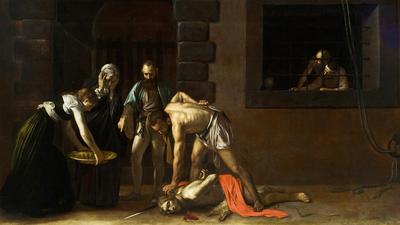
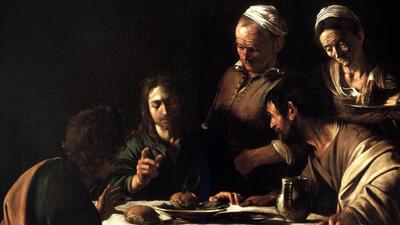
In a dimly lit room in 1600s Rome, a quiet revolution unfolds on canvas. This is The Calling of Saint Matthew, painted by the masterful Caravaggio in 1600. The scene feels immediate, almost cinematic. To the right, a figure emerges from the shadows, his hand extended in a graceful, commanding gesture. This is Christ, his feet already turning away as if he has just stepped in from the street. Following his finger, we find a group of men huddled around a table, counting coins. Among them sits Levi, the tax collector. He points to himself with a look of stunned disbelief, his face caught in a frozen moment of realization while his companions remain buried in their gold.
Caravaggio’s genius lies in his use of chiaroscuro—the dramatic play between piercing light and deep, velvety darkness. A sharp beam of golden sunlight cuts through the murky air, following the line of Christ’s hand to illuminate Levi’s face. This light is tactile; it feels warm against the cold, dark interior. The textures are vivid, from the heavy weight of the velvet sleeves to the dull metallic glint of the coins. By placing a divine encounter in a gritty, everyday setting, Caravaggio brings the sacred down to earth. It is a masterpiece of psychological tension, capturing the exact heartbeat where a mundane life is forever transformed by a single call. It is a silent dialogue between the human and the divine, frozen in light.