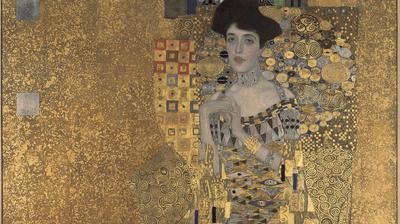
In 1901, the Viennese master Gustav Klimt unveiled Judith I, a breathtaking reimagining of a timeless biblical heroine. This masterpiece stands as a shimmering bridge between the ancient past and the bold spirit of modern expression. As we look closer, Judith emerges from a dark, hazy background, her body bathed in a soft, ethereal glow. Her eyes are heavy-lidded, partially closed in a dreamlike trance, while her lips remain slightly parted. She stands with a quiet, sensual confidence, her hand resting delicately on the head of Holofernes, which is barely visible in the lower corner. The contrast between her pale, luminous skin and the cold, dark weight of the bronze jewelry around her neck creates a captivating tension.
Klimt’s genius lies in the breathtaking fusion of textures. He surrounds Judith with an intricate sea of gold leaf, patterned with delicate geometric shapes and stylized floral motifs. The surface shimmers with a warm radiance, making the canvas feel more like a precious jewel than a mere painting. The light does not fall from a single source; instead, it seems to emanate from the gold itself, wrapping the figure in a decadent, timeless embrace. This work is more than a portrait; it is an exploration of power and seduction. Klimt transforms a scene of violence into one of quiet, intoxicating beauty, focusing on the internal triumph of the woman herself. Judith I remains a hauntingly beautiful vision of gold and grace, frozen in a moment of eternal mystery.