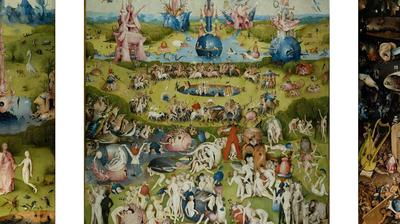
In the year 1500, Hieronymus Bosch completed a singular masterpiece: The Seven Deadly Sins and the Four Last Things. Unlike traditional rectangular canvases, this work unfolds across a large wooden tabletop, inviting the eye to wander in a continuous, rhythmic circle. At the very center, a golden radiant iris surrounds the figure of Christ. Looking outward, the circle expands into seven distinct domestic scenes, each capturing a specific human flaw. We see a man greedily clutching coins, a figure lost in a wine-induced slumber, and neighbors locked in a bitter, physical spat. The characters are small yet vibrantly alive, their gestures stiff but expressive, acting out their quiet dramas within humble, earthy interiors. Bosch uses a palette of warm ochres, deep crimsons, and muted greens to ground these moral tales in reality.
The circular composition creates a sense of constant motion, as if the wheel of life is forever turning. Fine, delicate brushwork brings a soft texture to the fabrics and a gentle glow to the central eye, which seems to follow the viewer from every angle. This deliberate structure ensures that no corner of human nature remains hidden from the light. This painting serves as a mirror, reflecting the fragility and folly of the human condition with both wit and solemnity. It is not merely a warning, but a profound observation of the everyday choices that define a soul. It is a timeless map of the heart, reminding us that every action is seen and every moment carries weight.