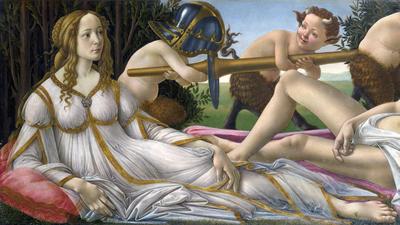
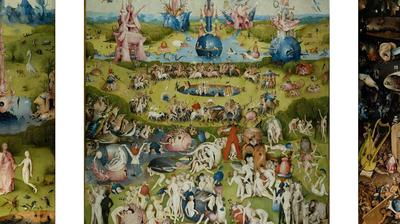
In the year 1509, a masterpiece emerged from the studio of the young Titian, capturing a moment of profound stillness. This is the Sleeping Venus, an oil painting that redefined the essence of grace and natural beauty. At the heart of the canvas lies a goddess in repose, her body tracing a soft, rhythmic curve that mirrors the rolling hills of the Venetian countryside behind her. Her eyes are closed in a dreamless sleep, one arm resting behind her head while the other lies gently across her lap. Every contour of her skin radiates a creamy, pearl-like luminescence against the crumpled textures of the white linen and the deep crimson of the velvet cushion.
Titian’s genius is found in the atmospheric harmony of his palette. He uses a warm, golden light to bathe the landscape, blending the soft glow of the distant horizon with the earthy tones of the rustic architecture. The brushwork is delicate, almost invisible, creating a seamless transition between the warmth of the human form and the cool, muted greens of the earth. This horizontal composition invites a sense of infinite calm, drawing the eye across the canvas like a slow, rhythmic breath. Beyond its physical beauty, the painting captures a rare balance between divine elegance and raw, earthly presence. It is a silent dialogue between humanity and nature, frozen in a state of perfect equilibrium. As the light fades into the background, we are left with a timeless vision of serenity that continues to whisper across the centuries.