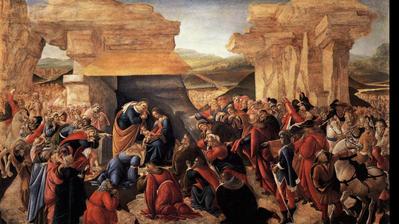
In 1482, Leonardo da Vinci began work on the Adoration of the Magi, an ambitious masterpiece left intentionally unfinished. Though it remains a preliminary sketch in ink and oil on wood, it offers a rare, intimate glimpse into the mind of a genius. At the center, the Virgin Mary sits with the infant Christ, creating a calm, stable anchor amidst a swirling tide of humanity. Surrounding them is a dense crowd of figures—kings, soldiers, and onlookers—whose faces are etched with profound wonder and trembling awe. Their hands reach out in yearning gestures, while in the background, phantom-like horses clash and ancient ruins crumble, suggesting a world in the midst of a great transformation.
Leonardo’s mastery is visible in the delicate sfumato, where warm shadows blend seamlessly into soft, golden light. The composition flows in a sweeping pyramid, drawing the eye from the chaotic outer edges toward the serene faces at the heart of the canvas. Subtle brushstrokes and sepia tones create a misty, dreamlike atmosphere, making the figures feel as though they are emerging from a veil of memory. This work is a profound study of human emotion and movement. By stripping away polished color, Leonardo reveals the raw energy of the soul and the restless curiosity of the human spirit. It stands as a timeless testament to the beauty found in the incomplete.