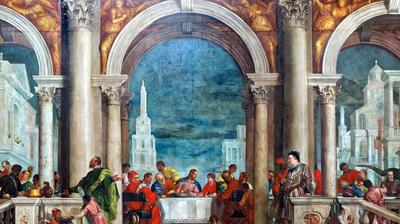
In 1563, Paolo Veronese completed his monumental masterpiece, The Wedding at Cana. This vast canvas captures the biblical miracle of water turning into wine, set against the backdrop of a lavish Venetian banquet. At the very center of the bustling scene sits Jesus, his presence calm and still amidst the surrounding opulence. Around him, over a hundred figures fill the terrace—musicians play softly, servants lean over heavy stone jars, and elegant guests whisper in animated conversation. Notice the rich textures of the silken robes and the shimmering glow of silverware that catches the afternoon light. Every gesture, from the tilt of a head to the pouring of wine, feels fluid and alive. Veronese uses a masterful sense of perspective to pull the gaze upward. The cool, pale blue of the sky contrasts beautifully with the warm, vibrant reds and golden yellows of the fabrics below. The composition is framed by towering Corinthian columns, creating a theatrical space that feels both grand and airy. This play of light and shadow breathes life into the marble architecture, making the entire scene vibrate with a celebratory energy.
Beyond the religious narrative, this painting is a vibrant celebration of life and abundance. It reflects the height of Renaissance beauty, blending the divine with the earthly in a seamless, harmonious spectacle. It remains a timeless invitation to witness a moment where the ordinary is transformed into the extraordinary.