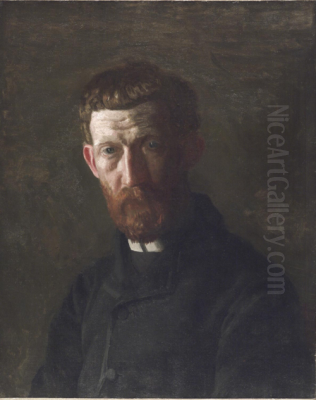
Arthur Burdett Frost Sr. (January 17, 1851 – June 22, 1928) stands as a towering figure in the annals of American illustration, a versatile artist whose work bridged the gap between the detailed engravings of the 19th century and the dynamic, character-driven art that would define the 20th. As an illustrator, graphic artist, pioneering cartoonist, and painter, Frost captured the American spirit with a unique blend of humor, keen observation, and an unparalleled ability to depict motion. His legacy is firmly rooted in the "Golden Age of American Illustration," a period where his talents flourished alongside other luminaries, leaving an indelible mark on how stories were told visually.
Early Life and Artistic Awakenings
Born in Philadelphia, Pennsylvania, Arthur was the son of John Frost, a respected literature professor. This academic environment likely instilled in young Frost an appreciation for narrative and storytelling, though his path to art was not initially straightforward. His early forays into the professional world saw him working in lithography and wood engraving, crafts that demanded precision and a strong understanding of line and form. These foundational skills would prove invaluable throughout his career, even as his style evolved.
Frost's innate talent for observation, particularly of everyday life and the natural world, began to manifest in his drawings. He possessed a remarkable ability to see the humor and character in ordinary situations, a trait that would become a hallmark of his work. Philadelphia, a bustling city with a rich artistic tradition, provided ample subject matter and opportunities for the budding artist.
The Journey to Prominence
A significant turning point in Frost's early career came in 1874 when he was commissioned to illustrate Out of the Hurly Burly, a humorous book by Charles Heber Clark (writing under the pseudonym Max Adeler). The book became a bestseller, and Frost's lively and empathetic illustrations were widely praised, significantly boosting his reputation. His ability to translate Clark's wit into visual gags and expressive characters resonated with a broad audience, demonstrating the commercial and artistic potential of his work.
This success opened new doors. In 1876, Frost joined the art department of Harper & Brothers in New York City, one of the leading publishing houses of the era. This move placed him at the epicenter of American illustration, working alongside a cadre of talented artists who were shaping the visual culture of the nation. The demand for illustrations in books and periodicals was booming, and Harper's was at the forefront of this expansion.
Harper & Brothers and Esteemed Contemporaries
At Harper & Brothers, Frost found himself in a vibrant and competitive artistic environment. He collaborated with and worked alongside some of the most distinguished illustrators of the time, including the influential Howard Pyle, often considered the "father of American illustration," and E.W. Kemble, who would later gain fame for his illustrations of Mark Twain's Adventures of Huckleberry Finn. This period was crucial for Frost's development, exposing him to diverse styles and the high standards of a major publishing house.
Working on assignments for popular magazines like Harper's Weekly and Scribner's Monthly, Frost honed his skills and expanded his repertoire. He illustrated stories by prominent authors, including Charles Dickens, bringing classic characters to life for American readers. The collaborative atmosphere, while undoubtedly fostering a spirit of friendly competition, also allowed for an exchange of ideas and techniques that benefited all involved. Other notable illustrators active during this period, whose work Frost would have been aware of or worked alongside, include Edwin Austin Abbey, known for his historical scenes, and Thomas Nast, the powerful political cartoonist.
Formal Training and Stylistic Development
Despite his growing success, Frost recognized the need for further formal training. In 1877, he traveled to London to study, seeking to refine his technique and broaden his artistic horizons. Upon his return to Philadelphia, he continued his studies at the prestigious Pennsylvania Academy of the Fine Arts (PAFA), where he had the invaluable opportunity to learn from the renowned American realist painter Thomas Eakins. Eakins's emphasis on anatomical accuracy and direct observation of life profoundly impacted Frost, reinforcing his own inclinations towards capturing authentic movement and character.
Another influential teacher mentioned in connection with Frost is William Merritt Chase, a leading American Impressionist, though Eakins's impact on Frost's illustrative style, particularly in depicting figures in motion, is more directly evident. Frost's dedication to learning is also highlighted by his mastery of lithography, which allowed for greater subtlety and tonal range in his printed work compared to wood engraving. This technical proficiency, combined with his innate talent, allowed his style to mature, becoming more fluid and expressive.
The Signature Frost Style: Motion, Humor, and Observation
A.B. Frost's artistic style is immediately recognizable for several key characteristics. Perhaps most famously, he possessed an extraordinary ability to depict motion and sequence. Long before the advent of widespread animation or cinematic techniques, Frost's illustrations, particularly his comic strips and sporting scenes, conveyed a sense of dynamic action that was groundbreaking. He often used multiple panels or sequential images within a single illustration to show the progression of an event, a technique that prefigured modern comic storytelling. This interest in sequential movement was likely influenced by the photographic motion studies of Eadweard Muybridge, whose work was gaining attention during this period.
Humor was another essential ingredient in Frost's art. Whether depicting the misadventures of a hapless hunter, the antics of mischievous animals, or the quirks of rural characters, Frost's work was imbued with a gentle, observational humor that was both relatable and endearing. He avoided caricature for its own sake, instead finding humor in the authentic portrayal of human and animal behavior.
Remarkably, Frost achieved his nuanced visual storytelling despite being red-green colorblind. This condition, which might have been a significant impediment for many artists, was overcome by Frost through an exceptional ability to discern and utilize tonal values. His black and white work is a testament to his mastery of light and shadow, and even in his color pieces, he demonstrated a sophisticated understanding of color harmony, likely relying on careful labeling and an innate sense of composition.
Masterworks of Illustration: Capturing the American Scene
Frost's prolific career spanned illustrations for over ninety books, alongside hundreds of standalone paintings and drawings. Among his most celebrated achievements are his illustrations for Joel Chandler Harris's Uncle Remus stories. Beginning with Uncle Remus: His Songs and His Sayings (1895 edition), Frost brought characters like Br'er Rabbit, Br'er Fox, and Br'er Bear to vivid life. His interpretations became iconic, perfectly capturing the wit, wisdom, and folkloric charm of Harris's tales. These illustrations are considered classics of American book art, demonstrating Frost's deep empathy for his subjects and his skill in visual narrative.
His passion for the outdoors found expression in numerous sporting prints and illustrations, particularly those centered on hunting and fishing. Works like Quail - A Covey Rise showcase his ability to capture the tension and excitement of the hunt, the explosive energy of game birds taking flight, and the subtle beauty of the American landscape. These scenes were not merely documentary; they were filled with character and often a touch of humor, reflecting a genuine love and understanding of rural life. Frost's sporting art was highly sought after and remains popular with collectors today. He also notably illustrated books for Theodore Roosevelt, a fellow enthusiast of the outdoors and robust American life.
Pioneering Comics and Sequential Narratives
Beyond book illustration, A.B. Frost was a significant pioneer in the development of American comic strips and sequential art. His collections, such as Stuff and Nonsense (1884) and The Bull Calf and Other Tales (1892), featured narrative sequences that told stories through a series of panels, complete with humorous dialogue or captions. These works were innovative for their time, showcasing Frost's natural comedic timing and his ability to build a narrative visually.
In these comic works, Frost often explored themes of everyday mishaps, animal antics, and the foibles of human nature. His character "Carlo," a comically expressive dog, became a popular recurring figure. Frost's approach to sequential storytelling, with its emphasis on clear action, expressive characters, and humorous payoffs, laid important groundwork for the comic strip artists who would follow, such as Winsor McCay of Little Nemo in Slumberland fame, and George Herriman, creator of Krazy Kat, both of whom pushed the boundaries of the medium in the early 20th century. While Frost's work was distinct, his exploration of narrative flow and visual rhythm was part of a broader evolution in graphic storytelling.
The Golden Age of American Illustration
A.B. Frost's career coincided with what is now known as the "Golden Age of American Illustration," roughly spanning from the 1880s to the 1920s. This era was characterized by a confluence of factors: advancements in printing technology (like the halftone process) allowed for more faithful reproduction of artwork, the rise of mass-circulation magazines created a huge demand for illustrations, and a public eager for visual storytelling.
Frost was a leading light of this period, alongside other giants such as Howard Pyle, N.C. Wyeth (Pyle's student, known for his adventure illustrations), Maxfield Parrish (celebrated for his luminous colors and fantastical scenes), Frederic Remington (chronicler of the American West), and Charles Dana Gibson (creator of the iconic "Gibson Girl"). These artists, each with their distinct style, elevated illustration to a respected art form, shaping America's visual identity and influencing popular culture profoundly. Frost's contribution was his unique blend of realism, dynamic action, and accessible humor, particularly focused on American rural and sporting life.
Depictions of African Americans: A Complex Legacy
It is important to address a complex aspect of Frost's work: his depictions of African American characters, particularly in the Uncle Remus illustrations and other scenes of Southern life. While these illustrations were widely popular and praised in their time for their perceived authenticity and charm, they often relied on and perpetuated the prevailing racial stereotypes of the era. Characters were frequently depicted in a minstrel-show tradition, with exaggerated features and dialect, reflecting the racial biases common in late 19th and early 20th-century America.
This aspect of Frost's legacy is viewed critically today. While his skill in capturing expression and character remains undeniable, the lens through which he portrayed African Americans was shaped by the societal norms and prejudices of his time, similar to the work of predecessors like Charles Clay and contemporaries like E.W. Kemble in some of his Huckleberry Finn illustrations. Acknowledging this context does not excuse the stereotypes but allows for a more nuanced understanding of Frost's work within its historical framework. It highlights the responsibility of artists and the power of imagery in shaping and reflecting cultural attitudes.
Personal Life and Later Years
In 1883, Arthur Burdett Frost married Emily Louise Phillips, an artist in her own right. The couple had two sons, Arthur Burdett Frost Jr., who also became an artist, and John ("Jack") Frost, who pursued a different path. The family spent several years living abroad in France, partly due to Arthur Jr.'s art studies with Jean-Léon Gérôme and Claude Monet (though Monet was more of an acquaintance and inspiration than a formal teacher for Frost Jr.). A.B. Frost Sr. himself continued to work during this period, though he found the European art scene less aligned with his own thematic interests.
Frost eventually returned to the United States, settling in Pasadena, California, in his later years, though he died in Philadelphia. He remained active as an artist for much of his life, his passion for drawing and observing the world around him undiminished. His work continued to be in demand, and he left behind a vast and varied body of art that testifies to his industrious nature and creative spirit.
Enduring Influence and Lasting Legacy
Arthur Burdett Frost Sr. passed away on June 22, 1928, but his influence on American illustration and cartooning endured. His mastery of depicting motion and his pioneering work in sequential art directly informed the development of comic strips and, later, animation. Artists like Norman Rockwell, who also excelled at capturing everyday American life with humor and warmth, can be seen as inheritors of a tradition that Frost helped to establish, though Rockwell developed his own distinct, more painterly style.
Frost's sporting art remains highly collectible and is admired for its accuracy and vitality. His Uncle Remus illustrations, despite the problematic aspects of their racial depictions, are still recognized for their artistic skill and their role in popularizing these folk tales. More broadly, Frost's commitment to keen observation, his ability to find humor in the mundane, and his technical proficiency set a high standard for illustrators. He demonstrated that illustration could be a powerful form of storytelling, capable of evoking emotion, conveying action, and capturing the essence of a time and place.
His work is preserved in numerous museums and private collections, and his books continue to be reprinted, allowing new generations to discover the charm, wit, and artistic brilliance of A.B. Frost. He remains a pivotal figure, not just of the Golden Age of Illustration, but in the broader narrative of American art, a draftsman of exceptional skill and a storyteller of enduring appeal. His influence can be seen in the lineage of illustrators who value strong drawing, dynamic composition, and character-driven narratives, from the adventure illustrators of the early 20th century to contemporary graphic novelists.