Antoine-Laurent de Jussieu: A Botanist's World and Its Intersection with Art
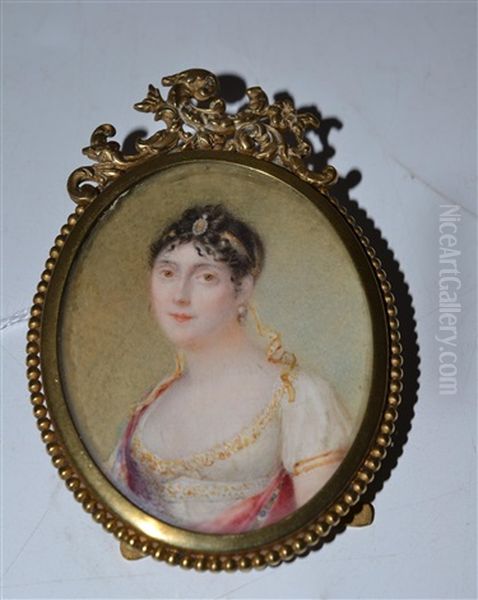
The late 18th and early 19th centuries in France were a period of profound intellectual and artistic ferment. Amidst the sweeping changes of the Enlightenment and the French Revolution, figures emerged who would redefine their respective fields. While the name "Jean Antoine Laurent" might circulate in some contexts, the prominent individual whose life and work align with the biographical details provided is Antoine-Laurent de Jussieu (1748–1836), a monumental figure in the history of botany, not a painter by profession. His contributions to the classification of the plant kingdom were revolutionary, and though he did not wield a painter's brush, his scientific endeavors were deeply intertwined with the visual arts, particularly the exquisite tradition of botanical illustration.
Early Life and Scientific Lineage
Antoine-Laurent de Jussieu was born in Lyon, France, on April 12, 1748, into a family already distinguished in the field of botany. His father was Christophe de Jussieu, and he was the nephew of three other renowned botanists: Bernard, Antoine, and Joseph de Jussieu. This familial immersion in the study of plants undoubtedly shaped his intellectual development from a young age. Bernard de Jussieu, in particular, was a significant influence, having already begun to develop a system of plant classification based on natural affinities at the Royal Garden in Paris (Jardin du Roi).
Educated in medicine in Paris, Antoine-Laurent obtained his doctorate in 1770. His thesis, "An generi Plantarum, naturae ut aut methodi, certior auctoritas?" (Is the authority of genera of plants more certain from nature or from method?), already signaled his deep interest in the principles of plant classification, a field he was destined to revolutionize. This early work laid the groundwork for his lifelong pursuit of a "natural" system of classification, moving away from the more artificial, though highly practical, system established by Carl Linnaeus.
A Career at the Jardin du Roi and the Muséum National d'Histoire Naturelle
Shortly after receiving his doctorate, in 1770, Antoine-Laurent de Jussieu was appointed as a demonstrator (démonstrateur de botanique) at the Jardin du Roi, succeeding Louis Guillaume Le Monnier. This prestigious institution, founded in the 17th century, was a center for botanical research and teaching. Jussieu's role involved not only research but also educating students and the public about the diverse world of plants.
His uncle, Bernard de Jussieu, had already implemented a nascent natural classification system for the arrangement of plants in the Trianon garden at Versailles. Antoine-Laurent built upon this foundation, dedicating years to meticulous observation and comparative analysis of plant structures. The French Revolution brought significant changes to French institutions, and the Jardin du Roi was no exception. In 1793, it was reorganized and renamed the Muséum National d'Histoire Naturelle. Jussieu played an active role in this transformation and became a professor of botany at the newly established museum, a position he held for many years. He also served as director of the museum from 1800 to 1826, further shaping its scientific direction.
The Magnum Opus: Genera Plantarum
The culmination of Antoine-Laurent de Jussieu's decades of research was his seminal work, _Genera Plantarum secundum ordines naturales disposita, juxta methodum in Horto Regio Parisiensi exaratam_ (Genera of Plants Arranged According to Their Natural Orders, Following the Method Developed in the Royal Parisian Garden), published in 1789. This publication was a landmark in the history of botany.
In Genera Plantarum, Jussieu proposed a comprehensive natural system for classifying flowering plants. Unlike Linnaeus's sexual system, which primarily used the number and arrangement of stamens and pistils, Jussieu's system considered a wider array of morphological characters. He emphasized the relative importance or "subordination of characters," giving weight to features like the presence or absence of petals, their fusion, the position of the ovary, and the structure of the embryo (monocotyledonous vs. dicotyledonous). This approach aimed to group plants based on their overall similarities, reflecting what he believed to be their natural relationships.
The Genera Plantarum described approximately 100 "natural orders" (equivalent to modern plant families). While not perfect, and subject to later refinements by botanists like Augustin Pyramus de Candolle and Robert Brown, Jussieu's system provided a robust framework that profoundly influenced the development of plant taxonomy for the next century. It marked a significant shift towards understanding evolutionary relationships, even before Darwin's theory of evolution provided a mechanism for these relationships.
The Intersection with Art: Botanical Illustration
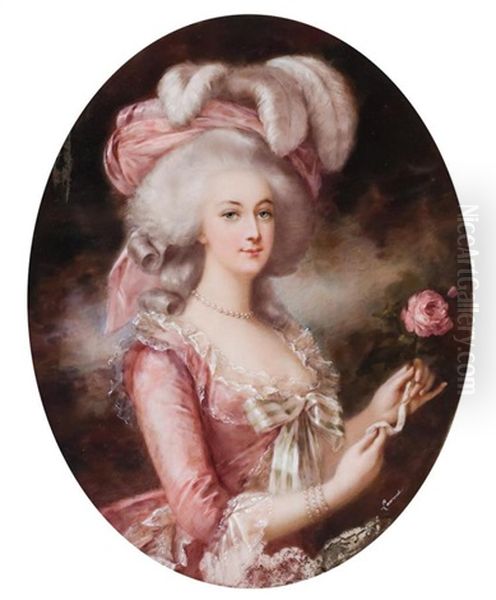
While Antoine-Laurent de Jussieu was a scientist, his work, and indeed the entire field of botany during his era, was inextricably linked to the art of botanical illustration. Accurate and detailed depictions of plants were essential for identification, study, and dissemination of botanical knowledge. Scientific expeditions often included artists to document newly discovered flora and fauna.
The 18th and early 19th centuries are often considered a golden age of botanical art. Artists of immense skill dedicated themselves to capturing the beauty and intricate details of plants with scientific precision. One of the most celebrated botanical artists of this period, and a contemporary of Jussieu, was Pierre-Joseph Redouté (1759–1840). Known as the "Raphael of flowers," Redouté was patronized by French royalty, including Queen Marie Antoinette and later Empress Joséphine Bonaparte. His exquisite stipple engravings for works like Les Liliacées and Les Roses are masterpieces of the genre, combining artistic elegance with botanical accuracy. While there isn't specific documentation of direct collaboration on a publication, Jussieu's work in classifying plants would have provided the scientific framework that artists like Redouté visualized.
Other notable botanical illustrators whose work contributed to the scientific and artistic milieu include:
Georg Dionysius Ehret (1708–1770): A German-born artist who worked extensively in England, Ehret was a leading botanical illustrator of the mid-18th century, known for his vibrant and accurate depictions. His work influenced many who followed.
The Bauer Brothers, Franz (1758–1840) and Ferdinand (1760–1826): Austrian-born artists, Franz became the resident artist at Kew Gardens in London, while Ferdinand accompanied Matthew Flinders on his voyage to Australia, producing stunning illustrations of Australian flora. Their meticulous detail and scientific accuracy were unparalleled.
Nicolas Robert (1614–1685): Though earlier, Robert set a high standard for French botanical illustration as an official painter for Gaston, Duke of Orléans, and later King Louis XIV. His work on the Vélins du Roi (v Hellebore_noir_de_Robert_Nicolas_-_Muséum_national_d'histoire_naturelle_Ms_130_001ellum paintings of plants and animals for the royal collection) established a rich tradition at the Jardin du Roi.
Maria Sibylla Merian (1647–1717): A German naturalist and scientific illustrator, Merian was a pioneer who traveled to Surinam to study and illustrate insects and plants, her work notable for depicting ecological relationships.
Jussieu's Genera Plantarum, while primarily a textual work, relied on the visual understanding of plant morphology that was honed by such illustrations. The descriptions in his work would have been complemented by the visual knowledge available through herbarium specimens and published botanical plates. The clarity of his classifications, in turn, would have aided artists in understanding the key diagnostic features to emphasize in their illustrations.
The Scientific and Artistic Climate of the Era
Jussieu lived and worked during a period of intense scientific inquiry and artistic innovation. The Enlightenment emphasized reason, observation, and the systematic understanding of the natural world. This intellectual climate fostered both scientific exploration and the artistic depiction of its findings.
In France, the Académie Royale des Sciences and the Académie Royale de Peinture et de Sculpture were leading institutions, though sometimes operating in distinct spheres. However, the study of nature provided common ground. Artists like Jean-Honoré Fragonard (1732–1806), known for his Rococo exuberance, also produced landscape drawings showing a keen observation of nature. The Neoclassical movement, championed by Jacques-Louis David (1748–1825), a contemporary of Jussieu, emphasized order, clarity, and idealized forms, principles that, in a different way, resonated with the scientific quest for systematic classification.
The tradition of flower painting also flourished, with artists like Anne Vallayer-Coster (1744–1818), who was admitted to the Académie Royale de Peinture et de Sculpture and known for her exquisite still lifes, including many floral compositions. While distinct from scientific botanical illustration, such still-life paintings reflected a broader cultural appreciation for the beauty of the plant world, an appreciation undoubtedly fueled by the growing scientific understanding promoted by botanists like Jussieu.
The early Romantic movement, which began to emerge towards the end of Jussieu's life, also saw a renewed emphasis on nature, often imbued with emotional and sublime qualities. Artists like Théodore Géricault (1791–1824) and Eugène Delacroix (1798–1863), though known for historical and dramatic scenes, also engaged with nature. Delacroix, for instance, was a keen observer of plants and animals, and his journals reveal an interest in natural forms. Interestingly, Jussieu's nephew, Adrien-Henri de Jussieu (who succeeded him at the Muséum), is known to have discussed flowers with Delacroix.
Jussieu's Contemporaries in Science
Antoine-Laurent de Jussieu was part of a vibrant scientific community in Paris. He interacted with many leading scientists of his day. Among them was Jean-Baptiste Lamarck (1744–1829), another prominent figure at the Muséum National d'Histoire Naturelle, known for his early theories of evolution (Lamarckism) and his work on invertebrate zoology and botany. While their theoretical approaches might have differed, their shared environment at the museum fostered intellectual exchange.
Antoine Lavoisier (1743–1794), the "father of modern chemistry," was another towering figure of the era. Jussieu was related to Lavoisier by marriage (Lavoisier's wife, Marie-Anne Paulze Lavoisier, was Jussieu's cousin). Lavoisier's emphasis on precise measurement and systematic nomenclature in chemistry paralleled the efforts in botany to establish clear and consistent systems of classification. The tragic execution of Lavoisier during the Reign of Terror was a stark reminder of the turbulent times in which these scientists lived.
Other notable scientific contemporaries included chemists like Claude Louis Berthollet (1748–1822) and Antoine François de Fourcroy (1755–1809), who also played roles in the reorganization of scientific institutions during the Revolution. This period saw a concerted effort to systematize knowledge across various scientific disciplines.
The "Art" of Scientific Observation and Classification
While Jussieu was not an artist in the conventional sense, there is an "art" to scientific observation and the creation of a coherent classification system. It requires not only meticulous attention to detail but also an ability to discern patterns, identify significant relationships, and construct a logical framework. Jussieu's Genera Plantarum is a testament to this intellectual artistry.
His work involved examining countless plant specimens, dissecting flowers, studying seeds and embryos, and comparing subtle variations in structure. This process, akin to an artist closely studying their subject, allowed him to develop a deep understanding of plant morphology. The "natural orders" he defined were not arbitrary groupings but were intended to reflect genuine affinities between plants, a concept that has an aesthetic appeal in its pursuit of underlying harmony and order in nature.
The legacy of such scientific work also provided new subjects and deeper understanding for artists. As botanical knowledge expanded, so too did the range of plants available for depiction, and the accuracy with which they could be portrayed. The great voyages of exploration during this era brought back a wealth of new species, many of which were first classified using systems like Jussieu's and then immortalized by botanical artists. Think of the artists who accompanied Captain Cook, such as Sydney Parkinson (c. 1745–1771), whose drawings of Australian and Pacific flora were invaluable.
Later Life and Legacy
Antoine-Laurent de Jussieu continued his work at the Muséum National d'Histoire Naturelle well into the 19th century. He published numerous memoirs and articles on botany, further refining his ideas and describing new plant groups. His son, Adrien-Henri de Jussieu (1797–1853), also became a distinguished botanist, continuing the family tradition and succeeding his father at the museum.
Jussieu's natural system of classification, though modified and expanded over time, remained highly influential throughout the 19th century. It provided a crucial foundation for subsequent botanists, including Augustin Pyramus de Candolle (1778–1841) and his son Alphonse de Candolle (1806–1893), who further developed natural classification systems. The work of British botanist Robert Brown (1773–1858), who meticulously studied Australian flora and made significant contributions to plant morphology and classification, also built upon the Jussieuian framework.
Antoine-Laurent de Jussieu passed away in Paris on September 17, 1836. His contributions had fundamentally reshaped the science of botany. While he left no paintings or sculptures, his Genera Plantarum stands as a monumental intellectual edifice.
The Enduring Connection Between Botany and Art
The connection between botany and art, so vibrant during Jussieu's lifetime, has endured. Botanical illustration continues to be a specialized and valued art form, essential for scientific publications and appreciated for its aesthetic qualities. Artists like Walter Hood Fitch (1817–1892) in the 19th century and contemporary botanical artists continue this tradition.
Moreover, the broader influence of botanical knowledge on art is undeniable. From the detailed floral studies of the Dutch Golden Age painters like Jan van Huysum (1682–1749) or Rachel Ruysch (1664–1750) to the Impressionists' depictions of gardens (e.g., Claude Monet's Giverny) and the Art Nouveau movement's stylized plant motifs (e.g., Alphonse Mucha), the plant kingdom has been an inexhaustible source of inspiration for artists.
The scientific understanding of plants, advanced by figures like Jussieu, enriches this artistic engagement. Knowing the structure, classification, and ecological context of a plant can deepen both the artist's portrayal and the viewer's appreciation. Jussieu's meticulous work in organizing the plant world provided a clearer lens through which to observe and understand its diversity and beauty.
Conclusion: A Scientist in an Artistic Age
Antoine-Laurent de Jussieu was, unequivocally, a man of science. His life's work was dedicated to understanding and classifying the vast diversity of the plant kingdom. His Genera Plantarum is not a work of art in the traditional sense, but it is a masterpiece of scientific synthesis and observation that had a profound and lasting impact.
In an era where the boundaries between disciplines were perhaps more fluid, and where scientific discovery was often accompanied by artistic representation, Jussieu's work existed within a rich visual culture. The botanical artists of his time, like Redouté and the Bauer brothers, provided the visual counterparts to the systematic frameworks developed by scientists like Jussieu. Their collaborative, if sometimes indirect, efforts greatly advanced our understanding and appreciation of the natural world.
Thus, while we cannot speak of "Jean Antoine Laurent" the painter in this context, we can celebrate Antoine-Laurent de Jussieu the botanist, whose scientific vision helped to order our understanding of the plant world, a world that has perennially inspired artists and continues to be a source of wonder and beauty. His legacy is not in canvases, but in the enduring principles of botanical science that continue to inform both scientific research and our artistic engagement with nature.